Bill · H.R. 7094· House(119-HR-7094)
No Aid for Russian Energy Act
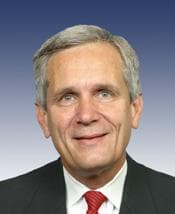
- Introduced
- 1/15/2026
- Last activity
- 1/15/2026 — Referred to the Committee on Foreign Affairs, and in addition to the Committee on the Judiciary, for a period to be subsequently determined by the Speaker, in each case for consideration of such provisions as fall within the jurisdiction of the committee concerned.
- Sponsored by
- Lloyd Doggett
- Cosponsors
- - 10 - 4
- Introduced
- In Committee
What this bill would do
The "No Aid for Russian Energy Act" aims to prohibit United States persons from providing petroleum equipment or services to the Russian Federation. This prohibition includes direct or indirect supply of equipment, software, and various engineering or consulting services. The bill also targets entities owned or controlled by U.S. persons operating outside the country. To enforce these rules, the President is authorized to impose sanctions on foreign persons who violate these terms. These sanctions can include asset blocking and the revocation of visas or entry documentation. Certain exceptions are carved out for specific medical, agricultural, or humanitarian purposes.
Yes· 3 of 4
Does this strengthen ties with allied countries?+2
The bill uses economic pressure to target the Russian energy sector, which aligns with international efforts to respond to Russian actions.
Does this better protect air, water and wildlife?+1
The bill carves out exceptions for petroleum equipment used specifically for environmental purposes such as Carbon-13 studies.
Does this make health care easier to get in general?+1
The bill includes explicit exceptions for the sale of medicine and medical devices to ensure humanitarian needs are met.
The opposite
Would business owners be better off under this?-4
The bill imposes significant compliance burdens and prohibitions on U.S. persons and their controlled foreign subsidiaries.
Does this make it easier to run a small business?-3
The bill imposes strict prohibitions on U.S. persons and their controlled foreign entities from providing specific petroleum services, which may restrict business operations.
Does this protect people from being watched or searched?-2
The bill empowers the President to block transactions and assets, which limits individual financial privacy and control.
Who it would affect, and how
Potential Positive Impacts for People
-
Medical, Agricultural, and Environmental Protections: The bill includes an exception for petroleum equipment and services directly related to isotopes used for medical, agricultural, or environmental purposes, such as Carbon-13 (Section 2(c)). This ensures that essential scientific and health-related materials are not caught in the prohibition.
-
Humanitarian Assistance Safeguards: Sanctions may not be imposed on transactions relating to the sale of food, medicine, or medical devices, or the provision of humanitarian assistance (Section 3(c)(2)). This protects the ability of people to receive necessary life-sustaining goods and services.
-
International Obligation Compliance: The bill allows for the admission of individuals if it is necessary to comply with international obligations, such as those regarding the United Nations Headquarters (Section 3(c)(1)).
Potential Negative Impacts for People
-
Sanctions on Foreign Persons: The President is directed to impose sanctions on foreign persons who engage in the supply of petroleum equipment or services to the Russian Federation (Section 3(a)).
-
Asset Blocking: Under the bill, the President may block all transactions involving property and interests in property of a foreign person if that property is in the United States or controlled by a United States person (Section 3(b)(1)).
-
Visa and Entry Restrictions: Foreign persons, or corporate officers and principal shareholders of such persons, may be deemed inadmissible to the United States and ineligible for visas (Section 3(b)(2)(A)).
-
Visa Revocation: The bill mandates the immediate revocation of any current visas or entry documentation held by individuals described in the prohibition (Section 3(b)(2)(B)).
-
Impact on U.S. Owned Foreign Entities: Entities owned or controlled by a United States person that are established outside the United States are prohibited from engaging in certain transactions (Section 2(b)).
Groups and Interests Ranking
Every group the model scored this bill for, from -10 to +10. Hover a score for the reason it gave.
- Demographic And Interest Groups
- Good For Business Owners-4
- Economy And Finance
- Improves Small Business Support-3
- Governance And Ideology
- Improves Privacy Rights-2
- National Security And Foreign Policy
- Improves International Alliances+2
- Environment Energy And Infrastructure
- Improves Environmental Protections+1
- Healthcare
- Improves Healthcare Access+1
- Social Issues And Justice
- Improves Poverty Reduction+1
- 3/25/2026
- 1 Cosponsor added.
- 3/4/2026
- 1 Cosponsor added.
- 2/24/2026
- 1 Cosponsor added.
- 2/9/2026
- 1 Cosponsor added.
- 2/2/2026
- 1 Cosponsor added.
- 1/22/2026
- 1 Cosponsor added.
- 1/15/2026
- Referred to the Committee on Foreign Affairs, and in addition to the Committee on the Judiciary, for a period to be subsequently determined by the Speaker, in each case for consideration of such provisions as fall within the jurisdiction of the committee concerned.
- 8 Cosponsors added.
- Introduced in House
 Gus Bilirakis
Republican · Florida
 Julia Brownley
Democrat · California
 Don Bacon
Republican · Nebraska
 Steve Cohen
Democrat · Tennessee
 Donald Davis
Democrat · North Carolina
 Brian Fitzpatrick
Republican · Pennsylvania
 Josh Gottheimer
Democrat · New Jersey
 Daniel Goldman
Democrat · New York
 Thomas Kean
Republican · New Jersey
 Greg Landsman
Democrat · Ohio
 Eleanor Norton
Democrat · District of Columbia
 Mike Quigley
Democrat · Illinois
 Brad Sherman
Democrat · California
 Thomas Suozzi
Democrat · New York