Bill · H.R. 7066· House(119-HR-7066)
SHIELD Act
- Introduced
- 1/14/2026
- Last activity
- 1/14/2026 — Referred to the House Committee on Energy and Commerce.
- Sponsored by
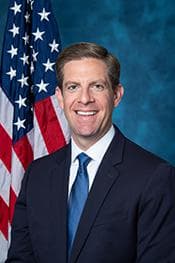
- Mike Levin
- Cosponsors
- - 14 - 0
- Introduced
- In Committee
What this bill would do
The SHIELD Act proposes to amend the Public Utility Regulatory Policies Act of 1978. It introduces a new classification for "large load facilities," which are defined as facilities with a peak demand exceeding 75 megawatts. Under this bill, electric utilities must fully recover costs for grid upgrades from these specific large load consumers. Additionally, utilities are directed to prioritize service requests from these facilities if they use specific energy-reducing features or zero-emission energy. The act also establishes specific timelines for state regulatory authorities and nonregulated utilities to consider and implement these new standards.
Yes· 3 of 9
Does this put more money into wind, solar and other renewable power?+5
The bill encourages the procurement and use of zero-emission energy like solar, wind, and geothermal.
Does this give people more protection from unfair business practices?+5
The bill prevents large load facilities from shifting their infrastructure upgrade costs onto other consumer groups.
Does this cut the pollution that drives climate change?+4
The bill prioritizes service for facilities that utilize zero-emission energy and demand-reduction technologies.
The opposite
Would business owners be better off under this?-4
Large load facility owners face significant financial risks due to mandatory cost recovery requirements even if they cease operations.
Who it would affect, and how
Potential Positive Impacts for People
-
Cost Recovery from Large Consumers: Under Section 2(a)(22)(B), electric utilities must recover all costs associated with grid upgrades—including generation, transmission, or distribution—directly from the large load facility class. This includes cases where the facility stops operating or uses less energy than expected, which ensures the costs of infrastructure upgrades are borne by the large consumer rather than other groups.
-
Prioritized Grid Reliability through Efficiency: Section 2(a)(23) allows utilities to prioritize service requests for large load facilities that agree to use features that reduce demand during peak times, such as energy efficiency, onsite storage, or demand response technologies.
-
Promotion of Zero-Emission Energy: Section 2(a)(23)(A) and (B) encourages the use of zero-emission electric energy, such as solar, wind, geothermal, fission, or fusion, which can be generated onsite or procured through a power purchase agreement to meet the facility's total demand.
Potential Negative Impacts for People
-
Financial Burden on Large Load Facilities: According to Section 2(a)(22)(B), large load facilities are required to fully pay for any upgrades to the electric grid, even if the facility eventually ceases operations or fails to use the projected amount of energy, which could result in significant unrecovered costs for the facility owner.
-
Exclusion of Certain Existing Facilities: As defined in Section 2(b)(1)(B), the "large load facility" classification does not include existing facilities where increased demand is primarily caused by electrification or measures intended to reduce greenhouse gas emissions.
Groups and Interests Ranking
Every group the model scored this bill for, from -10 to +10. Hover a score for the reason it gave.
- Environment Energy And Infrastructure
- Increases Renewable Energy Investment+5Reduces Carbon Emissions+4Improves Environmental Protections+3
- Economy And Finance
- Improves Consumer Protection+5Improves Economic Growth+1
- Governance And Ideology
- Improves Government Transparency+3Increases Federal Power+2
- Demographic And Interest Groups
- Good For Low Income Households+3Good For Middle Class Households+3Good For Business Owners-4
- 7/22/2026
- 1 Cosponsor added.
- 4/2/2026
- 1 Cosponsor added.
- 3/30/2026
- 1 Cosponsor added.
- 3/17/2026
- 1 Cosponsor added.
- 3/3/2026
- 1 Cosponsor added.
- 2/9/2026
- 1 Cosponsor added.
- 2/3/2026
- 1 Cosponsor added.
- 1/14/2026
- Referred to the House Committee on Energy and Commerce.
- 7 Cosponsors added.
- Introduced in House
 Kathy Castor
Democrat · Florida
 Salud Carbajal
Democrat · California
 Sean Casten
Democrat · Illinois
 Daniel Goldman
Democrat · New York
 Chrissy Houlahan
Democrat · Pennsylvania
 Ted Lieu
Democrat · California
 Greg Landsman
Democrat · Ohio
 George Latimer
Democrat · New York
 Seth Magaziner
Democrat · Rhode Island
 Kevin Mullin
Democrat · California
 Chellie Pingree
Democrat · Maine
 Mike Quigley
Democrat · Illinois
 Emilia Sykes
Democrat · Ohio
 Lauren Underwood
Democrat · Illinois