Bill · H.R. 7039· House(119-HR-7039)
Stop Executive Renaming for Vanity and Ego (SERVE) Act of 2026
- Introduced
- 1/13/2026
- Last activity
- 1/14/2026 — Referred to the Subcommittee on Economic Development, Public Buildings, and Emergency Management.
- Sponsored by
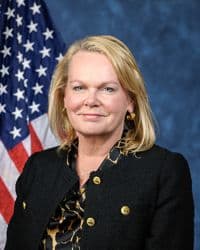
- April McClain Delaney
- Cosponsors
- - 7 - 0
- Introduced
- In Committee
What this bill would do
This bill is known as the Stop Executive Renaming for Vanity and Ego (SERVE) Act of 2026. It stops any federal building, land, or other asset from being named or renamed after a sitting President. The bill also makes it illegal to use federal money for this purpose. If any federal property is named after a sitting President when this bill becomes law, its name must be changed back to what it was called by federal law.
Yes· 3 of 4
Does this make what the government does easier for the public to see?+3
The legislation prevents political self-promotion and enhances accountability regarding the naming of public assets.
Does this make the government pay for what it commits to?+2
By prohibiting vanity projects and the expenditure of public funds on naming assets after sitting presidents, it promotes responsible use of taxpayer money.
Does this give the federal government more power?+1
The bill places a federal statutory restriction on the naming of federal properties.
The opposite
No question was scored the opposite.
Who it would affect, and how
Potential Positive Impacts for People
-
Section 2(a)(1): This provision stops federal buildings, land, and assets from being named after a sitting President, which prevents the use of public property for political self-promotion.
-
Section 2(a)(2): This provision bans the use of federal funds to name or rename properties after a sitting President, ensuring that taxpayer money is not wasted on vanity projects.
-
Section 2(b): This provision requires any federal property currently named after a sitting President to be changed back to its previous federally given name, holding officials accountable and removing sitting presidents' names from public assets.
Potential Negative Impacts for People
- There are no negative impacts explicitly found within the text of the bill for individuals or groups of people in the United States.
Groups and Interests Ranking
Every group the model scored this bill for, from -10 to +10. Hover a score for the reason it gave.
- Governance And Ideology
- Improves Government Transparency+3Increases Federal Power+1
- Economy And Finance
- Improves Fiscal Responsibility+2Reduces Government Spending+1
- 2/25/2026
- 1 Cosponsor added.
- 1/14/2026
- Referred to the Subcommittee on Economic Development, Public Buildings, and Emergency Management.
- 1/13/2026
- Sponsor introductory remarks on measure. (CR H698)
- Referred to the Committee on Transportation and Infrastructure, and in addition to the Committees on Natural Resources, and Oversight and Government Reform, for a period to be subsequently determined by the Speaker, in each case for consideration of such provisions as fall within the jurisdiction of the committee concerned.
- 6 Cosponsors added.
- Introduced in House
2 bills Congress.gov lists as related to this one — companions in the other chamber, earlier versions, and bills this one absorbed or was folded into.
 Brendan Boyle
Democrat · Pennsylvania
 Sarah Elfreth
Democrat · Maryland
 Glenn Ivey
Democrat · Maryland
 Eleanor Norton
Democrat · District of Columbia
 Suhas Subramanyam
Democrat · Virginia
 Shri Thanedar
Democrat · Michigan
 James Walkinshaw
Democrat · Virginia