Bill · H.R. 7032· House(119-HR-7032)
Pay Paraprofessionals and Support Staff Act
- Introduced
- 1/13/2026
- Last activity
- 1/13/2026 — Referred to the House Committee on Education and Workforce.
- Sponsored by
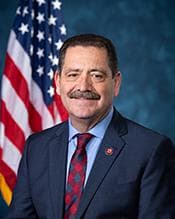
- Jesús García
- Cosponsors
- - 25 - 0
- Introduced
- In Committee
What this bill would do
The Pay Paraprofessionals and Support Staff Act aims to ensure that paraprofessionals and education support staff receive a living wage. This legislation requires States to determine minimum salary and wage levels that increase as staff members gain experience. The bill provides for federal grants to be distributed to States to help local educational agencies meet these new pay standards. It includes specific funding for fiscal years 2026 through 2030, with adjustments for inflation thereafter. The ultimate goal is to recognize these workers as essential public servants and provide them with stable compensation.
Yes· 3 of 6
Does this put more money into public schools?+9
The bill provides $25 billion in federal grants to support the wages of paraprofessionals and school staff.
Does this raise the lowest wage an employer may pay?+8
The bill establishes a minimum annual base salary of $45,000 for full-time staff and a minimum hourly wage of $30.00 for part-time staff.
Would households on low incomes be better off under this?+6
The bill prioritizes substantial subgrant allocations for local educational agencies that serve a high number of students from low-income backgrounds.
The opposite
Does this reduce what the federal government spends?-5
The bill authorizes $25 billion in federal appropriations for fiscal year 2026, which increases government spending.
Who it would affect, and how
Potential Positive Impacts for People
-
Increased pay for full-time staff: The bill establishes a minimum annual base salary for full-time equivalent employees, set at $45,000 for fiscal years 2026 through 2030 (Section 2(a)(3)(B)(i)).
-
Increased pay for part-time staff: The bill establishes a minimum hourly wage for part-time equivalent staff, set at $30.00 an hour for fiscal years 2026 through 2030 (Section 2(a)(4)(B)(i)).
-
Pay growth based on experience: The required minimum salary and wage are designed to increase as the experience of the school staff increases (Section 2(a)(3)(A)(ii) and Section 2(a)(4)(A)(ii)).
-
Protection against inflation: Salary and wage growth is indexed to inflation, using the Consumer Price Index or a 2 percent increase to adjust rates for future years (Section 2(a)(3)(B)(ii) and Section 2(a)(4)(B)(ii)).
-
Professional development opportunities: Subgrant funds may be used to provide staff with opportunities for personnel preparation, professional development, credentials, or certifications (Section 2(g)(2)(B)(ii)).
-
Support for high-need areas: The bill requires a formula that ensures local educational agencies serving a high number of students from low-income backgrounds receive substantial subgrant allocations (Section 2(e)(3)(A)).
Potential Negative Impacts for People
- No specific negative impacts are explicitly detailed in the provided text.
Groups and Interests Ranking
Every group the model scored this bill for, from -10 to +10. Hover a score for the reason it gave.
- Demographic And Interest Groups
- Good For Low Income Households+6Good For Union Workers+5Good For Middle Class Households+4
- Education And Technology
- Increases Public School Funding+9
- Social Issues And Justice
- Improves Poverty Reduction+5
- Economy And Finance
- Increases Minimum Wage+8Reduces Government Spending-5
- 1/13/2026
- Referred to the House Committee on Education and Workforce.
- 25 Cosponsors added.
- Introduced in House
One bill Congress.gov lists as related to this one — companions in the other chamber, earlier versions, and bills this one absorbed or was folded into.
 Brendan Boyle
Democrat · Pennsylvania
 Nikki Budzinski
Democrat · Illinois
 André Carson
Democrat · Indiana
 Judy Chu
Democrat · California
 Salud Carbajal
Democrat · California
 Angie Craig
Democrat · Minnesota
 Sheila Cherfilus-McCormick
Democrat · Florida
 Greg Casar
Democrat · Texas
 Danny Davis
Democrat · Illinois
 Dwight Evans
Democrat · Pennsylvania
 Sylvia Garcia
Democrat · Texas
 Robert Garcia
Democrat · California
 Adelita Grijalva
Democrat · Arizona
 Jahana Hayes
Democrat · Connecticut
 Henry Johnson
Democrat · Georgia
 Raja Krishnamoorthi
Democrat · Illinois
 Greg Landsman
Democrat · Ohio
 Eleanor Norton
Democrat · District of Columbia
 Delia Ramirez
Democrat · Illinois
 Melanie Stansbury
Democrat · New Mexico
 Dina Titus
Democrat · Nevada
 Rashida Tlaib
Democrat · Michigan
 Jill Tokuda
Democrat · Hawaii
 Shri Thanedar
Democrat · Michigan
 Frederica Wilson
Democrat · Florida