Bill · H.R. 697· House(119-HR-697)
End the Deep State Act
- Introduced
- 1/23/2025
- Last activity
- 1/23/2025 — Referred to the House Committee on Oversight and Government Reform.
- Sponsored by
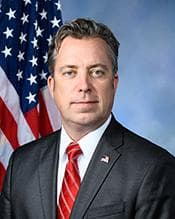
- Andrew Ogles
- Cosponsors
- - 8 - 0
- Introduced
- In Committee
What this bill would do
This bill, titled the "End the Deep State Act," seeks to establish a new category of employment known as "Schedule Policy/Career" within the excepted service. It aims to ensure that Federal employees in roles involving policy-making, policy-determining, or policy-advocating functions are directly accountable to the President. The Act requires agency heads to review their positions and petition to move certain roles into this new schedule. Under this system, Civil Service Rules and Regulations would not apply to removals from these positions. Furthermore, the bill mandates that employees in these roles must faithfully implement administration policies or face dismissal.
Yes
Would students be better off under this?+3
The bill establishes Schedule D specifically to enable more effective recruitment of students through non-competitive means.
Would veterans be better off under this, taking everything together?+2
The bill mandates that agency heads follow the principle of veteran preference for Schedule D and Schedule Policy/Career positions as far as administratively feasible.
The opposite· 3 of 4
Does this protect the right to fair treatment by the courts?-8
The bill removes standard Civil Service Rules and Regulations regarding the removal of employees in Schedule Policy/Career positions.
Does this strengthen the rights of workers to organise?-7
The bill allows agency heads to petition to exclude certain positions from collective bargaining units.
Does this make what the government does easier for the public to see?-3
The bill reduces traditional civil service protections, which could impact the transparency of personnel actions.
Who it would affect, and how
Potential Positive Impacts for People
-
Increased Accountability: The bill states that accountability is essential for all Federal employees and aims to ensure they are accountable to the President, who is elected and directly accountable to the American people (Section 2).
-
Reliable Staffing for Executives: The Act provides that the President and his appointees must be able to rely on men and women in the Federal service employed in positions of a confidential, policy-determining, policy-making, or policy-advocating character (Section 2).
-
Effective Recruitment for Students: Schedule D is intended to enable more effective recruitment from all segments of society by using recruiting and assessing methods that diverge from standard competitive service rules (Section 5(a)(4)).
-
Streamlined Administration for Judges: The bill places the position of administrative law judge in the excepted service to ensure the conditions of good administration (Section 5(a)(5)).
Potential Negative Impacts for People
-
Reduced Job Security: Civil Service Rules and Regulations shall not apply to removals from positions listed in several schedules, including Schedule Policy/Career (Section 5(b)).
-
Strict Dismissal Criteria: Employees in Schedule Policy/Career positions are required to faithfully implement administration policies, and a failure to do so is considered grounds for dismissal (Section 7(b)).
-
Impact on Labor Relations: Agency heads may need to petition the Federal Labor Relations Authority to exclude Schedule Policy/Career positions from collective bargaining units (Section 6(f)).
Groups and Interests Ranking
Every group the model scored this bill for, from -10 to +10. Hover a score for the reason it gave.
- Governance And Ideology
- Improves Due Process-8Improves Government Transparency-3
- Economy And Finance
- Improves Union Protections-7
- Demographic And Interest Groups
- Good For Students+3Good For Veterans+2
- Education And Technology
- Improves School Choice-1
- 3/25/2025
- 1 Cosponsor added.
- 2/6/2025
- 1 Cosponsor added.
- 2/4/2025
- 5 Cosponsors added.
- 1/28/2025
- 1 Cosponsor added.
- 1/23/2025
- Referred to the House Committee on Oversight and Government Reform.
- Introduced in House
 Lauren Boebert
Republican · Colorado
 Eric Burlison
Republican · Missouri
 Andrew Clyde
Republican · Georgia
 Brandon Gill
Republican · Texas
 Clay Higgins
Republican · Louisiana
 Mark Harris
Republican · North Carolina
 Scott Perry
Republican · Pennsylvania
 Randy Weber
Republican · Texas