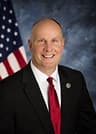
John Moolenaar (R-MI)
Restoring Trade Fairness Act
A Republican bill with 1 Democratic cosponsor · See all 2 cosponsors
Last activity — Referred to the Subcommittee on Coast Guard and Maritime Transportation.
In committee
Introduced and handed to a committee in the chamber it started in.
The committee holds it, and most bills are never heard from again. A hearing or a committee vote would be news; silence is the usual outcome, and it kills the bill without anyone voting against it.
Its path through Congress
- Introduced
- In Committee
What this bill would do
The Restoring Trade Fairness Act seeks to suspend normal trade relations with the People's Republic of China. It mandates the President to revise the Harmonized Tariff Schedule to increase duty rates on many articles imported from China, including a minimum of 35 percent and up to 100 percent for specific items. The bill establishes a tariff-rate quota system for articles imported only from China and creates a trust fund to compensate U.S. producers facing economic retaliation. Additionally, the document contains detailed lists of scientific, medical, navigational, and military equipment.
Yes· 3 of 15
- Scored +5
Does this raise the taxes companies pay?
The bill increases duty rates on many articles imported from China, which functions as a tax on importers and their corporate costs.
- Scored +3
Would farmers be better off under this?
The bill includes specific mechanisms and various tractors to support agricultural producers facing retaliation.
- Scored +3
Would union members be better off under this?
The bill aims to protect domestic manufacturing jobs that have been lost to trade competition.
The opposite
- Scored -1
Does this put more limits on buying or owning guns?
The list includes several categories of firearms and related weapon parts.
Who it would affect, and how
Potential Positive Impacts for People
-
Protection of Jobs and Manufacturing: The bill aims to address the loss of millions of manufacturing jobs and tens of thousands of factories by implementing higher duties. (Section 2(a)(14))
-
National Security and Supply Chain Resilience: The act seeks to build resilience against China's state capitalism and strengthen supply chains by reducing reliance on adversarial governments. (Section 2(a)(11), Section 2(b)(1))
-
Compensation for Affected Producers: A trust fund is established to compensate U.S. producers for lost revenue resulting from Chinese economic retaliation. (Section 8(a), Section 8(d)(1))
-
Agricultural Support: The bill provides a mechanism through the Commodity Credit Corporation to purchase agricultural commodities that were intended for export to China but could not be sold due to retaliation. (Section 8(d)(2))
-
Defense Support: Remaining funds in the trust fund may be used by the Department of Defense to acquire various munitions and defense systems to defend Taiwan and other partners in the Indo-Pacific. (Section 8(d)(5))
-
Medical Technology Availability: The text includes items such as printed circuit assemblies for electrocardiographs (9018.11.60), electro-diagnostic parameter acquisition modules (9018.19.75), and defibrillators (9018.90.68) related to essential healthcare.
-
Safety and Monitoring Tools: Provisions include ionization type smoke detectors (9022.90.70), which are vital for personal and public safety.
-
Environmental and Scientific Research: The text lists various instruments used for scientific purposes, such as seismographs (9015.80.60), hygrometers (9025.80.15), and tools for gas or smoke analysis (9027.10.20), which can assist in environmental monitoring and scientific discovery.
Potential Negative Impacts for People
-
Increased Costs for Certain Goods: The bill mandates significant duty increases, such as a minimum of 35 percent ad valorem for many articles and up to 100 percent for others. (Section 4(b)(1))
-
Impact on Imports Solely from China: For articles imported only from the People's Republic of China, once a specific tariff-rate quota is reached, those articles are subject to a 100 percent ad valorem duty. (Section 4(f)(1)(C))
-
Changes to De Minimis Entries: The bill amends the Tariff Act of 1930 to specify that articles originating in a covered nation may not be admitted free of duty or tax under certain de minimis provisions. (Section 7(a)(1))
-
Valuation Changes: Merchandise imported from the People's Republic of China will be appraised based on the "United States value" rather than current existing methods. (Section 5(a))
-
Military Weaponry: The document lists several types of combat equipment, including artillery weapons (9301.10.00), rocket launchers (9301.20.00), and bombs, grenades, torpedoes, or mines (9306.90.00), which are associated with warfare.
-
Firearms and Arms: The list includes various weapons such as rifles (9304.00.20) and other arms (9304.00.60), which are tools used for combat or weaponry.
Groups and Interests Ranking
Every group the model scored this bill for, from -10 to +10. Tap or hover a score for the reason it gave.
- Economy And Finance
- Does this raise the taxes companies pay? — The bill increases duty rates on many articles imported from China, which functions as a tax on importers and their corporate costs. Is this likely to grow the economy? — The bill aims to foster domestic production and economic resilience through trade protections. Is this likely to create jobs? — The bill seeks to protect domestic manufacturing jobs through higher duties and provides industrial goods that may support employment sectors. Does this make it easier to run a small business? — The bill provides compensation for U.S. producers through a trust fund and includes agricultural machinery that assists small-scale farming operations.
- Demographic And Interest Groups
- Would farmers be better off under this? — The bill includes specific mechanisms and various tractors to support agricultural producers facing retaliation. Would union members be better off under this? — The bill aims to protect domestic manufacturing jobs that have been lost to trade competition. Would business owners be better off under this? — U.S. producers are protected by higher tariffs and a compensation fund, while the inclusion of heavy machinery benefits various commercial enterprises.
- National Security And Foreign Policy
- Does this strengthen ties with allied countries? — The bill aims to strengthen resilient supply chains in concert with allies and partners. Does this increase the pay, pensions or support veterans receive? — The trust fund and the inclusion of military-grade weapons and equipment support defense-related needs.
- Environment Energy And Infrastructure
- Does this invest in rural communities? — The bill provides support for the agricultural sector through the Commodity Credit Corporation to mitigate trade retaliation. Does this put more money into wind, solar and other renewable power? — The list includes electric motor vehicles and electric tractors.
- Education And Technology
- Does this put more money into scientific research? — The inclusion of specialized microscopes, laboratory analysis instruments, and medical tools supports scientific research capabilities.
- Governance And Ideology
- Does this protect people from being watched or searched? — The provision of surveillance-related technology such as telescopes and optical instruments is included under the umbrella of national security.
- Healthcare
- Does this make health care easier to get in general? — The inclusion of various medical diagnostic, monitoring, and essential items like defibrillators supports healthcare infrastructure.
- Social Issues And Justice
- Is this likely to lift people out of poverty? — The bill includes provisions to protect the livelihoods of U.S. producers and workers in sensitive sectors. Does this put more limits on buying or owning guns? — The list includes several categories of firearms and related weapon parts.
- 2/4/2025
- 1 Cosponsor added.
- 1/23/2025
- Referred to the Committee on Ways and Means, and in addition to the Committees on Agriculture, Armed Services, Transportation and Infrastructure, and Energy and Commerce, for a period to be subsequently determined by the Speaker, in each case for consideration of such provisions as fall within the jurisdiction of the committee concerned.
- Referred to the Subcommittee on Coast Guard and Maritime Transportation.
- 1 Cosponsor added.
- Introduced in House
One bill Congress.gov lists as related to this one — companions in the other chamber, earlier versions, and bills this one absorbed or was folded into.
 Mario Diaz-Balart
Republican · Florida
 Thomas Suozzi
Democrat · New York