Bill · H.R. 6938· House(119-HR-6938)
Commerce, Justice, Science; Energy and Water Development; and Interior and Environment Appropriations Act, 2026
- Introduced
- 1/6/2026
- Last activity
- 1/23/2026 — Became Public Law No: 119-74.
- Sponsored by
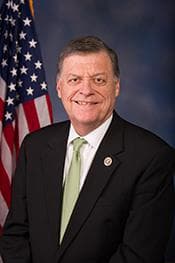
- Tom Cole
- Cosponsors
- None
- Introduced
- Passed House
- Passed Senate
- To President
- Became Law
What this bill would do
This Act establishes consolidated appropriations for the fiscal year ending September 30, 2026, covering various government divisions including Commerce, Energy, the Interior, and the EPA. It provides significant funding for scientific research through NASA and the National Science Foundation, as well as for STEM education and human resources. The legislation allocates resources for water infrastructure, flood control, and the maintenance of National Parks and the Smithsonian Institution. It also addresses social needs such as victim services, Indian healthcare, and minority business development. Additionally, the bill manages funds for wildland fire management, energy efficiency, and economic development assistance. Finally, it establishes specific regulatory restrictions regarding environmental protections, land use, and agency operations.
Yes· 3 of 45
Would Native Americans be better off under this?+7
Significant funding is allocated for Indian programs, education, and land-water claim settlements.
Does this better protect air, water and wildlife?+6
The bill provides substantial funding for hazardous waste cleanup, water infrastructure, and environmental research.
Would women be better off under this?+5
The bill provides significant funding for the Office on Violence Against Women.
The opposite· 3 of 4
Does this make abortion easier to get?-5
The bill includes provisions that restrict federal funding for abortion services.
Does this reduce what the federal government owes?-3
The bill includes significant rescissions of unobligated funds across several agencies to reduce spending.
Does this reduce what the federal government spends?-2
The bill enacts several permanent rescissions to decrease existing agency balances.
What Congress actually voted on
6 recorded votes have been taken on this bill. 4 of them decided something; the rest moved it along.
- The House: a vote in favourPassed 375–47
The chamber's word for yes. The House says "aye" instead on some votes and "yea" on others; the two mean the same thing and are counted together here.
01/08/2026 · Roll call 5 · recorded as “On Retaining Division A”
- The House: a vote in favourPassed 419–6
The chamber's word for yes. The House says "aye" instead on some votes and "yea" on others; the two mean the same thing and are counted together here.
01/08/2026 · Roll call 6 · recorded as “On Retaining Divisions B and C”
- The House: the vote on whether to pass the billPassed 397–28
This is the real decision in this chamber. Passing here sends the bill to the other chamber, which must pass it too before it can go to the President.
01/08/2026 · Roll call 7 · recorded as “On Passage”
- The Senate: the vote on whether to pass the billBill Passed 82–15
This is the real decision in this chamber. Passing here sends the bill to the other chamber, which must pass it too before it can go to the President.
01/15/2026 · Roll call 11 · recorded as “On Passage of the Bill H.R. 6938”
Who it would affect, and how
Potential Positive Impacts for People
-
Economic Development and Business Support: The bill provides $400,000,000 for economic development assistance programs to support trade adjustment and technology innovation (Economic Development Administration).
-
Minority Business Growth: There is $50,000,000 allocated to the Minority Business Development Agency to foster and develop minority business enterprises (Minority Business Development Agency).
-
Support for Victims of Violence: The bill includes $720,000,000 for the Office on Violence Against Women to provide various services, including transitional housing assistance for victims of domestic violence, dating violence, stalking, or sexual assault (Office ons Violence Against Women).
-
Criminal Justice and Victim Support: Funds are allocated for several victim-related causes, such as $83,500,000 for victim services programs for victims of trafficking (State and Local Law Enforcement Assistance) and $50,000,000 to improve responses to sexual assault (State and Local Law Enforcement Assistance).
-
Scientific and Technical Advancement: Large sums are dedicated to scientific research, such as $7,250,000,000 for NASA science research and $7,176,500,000 for the National Science Foundation (National Aeronautics and Space Administration).
-
Salmon Population Restoration: The bill provides $65,000,000 for the restoration of Pacific salmon populations, which can be used for conservation of populations necessary for Tribal treaty fishing rights or native subsistence fishing (National Oceanic and Atmospheric Administration).
-
Support for Science and Education: The bill provides $938,250,000 for science, mathematics, and engineering education and human resources programs through the National Science Foundation (STEM education).
-
Legal Assistance: The Legal Services Corporation is allocated $540,000,000 to carry out its purposes, which includes $4,750,000 for client self-help and information technology (payment to the legal services corporation).
-
Economic Development in Poor Areas: At least 10 percent of funds for Public Works grants must be allocated for assistance in persistent poverty counties (Sec. 533).
-
Water Infrastructure Safety: Funding is provided for the cost of direct and guaranteed loans for safety projects to maintain, upgrade, and repair dams (water infrastructure finance and innovation program account).
-
Flood and Disaster Protection: Significant funds are allocated for the construction of flood and storm damage reduction projects and for preparing for natural disasters through the Army Corps of Engineers (construction; flood control and coastal emergencies).
-
Energy Independence and Efficiency: The bill funds various energy initiatives, including $3,100,000,000 for energy efficiency and renewable energy activities (Energy Efficiency and Renewable Energy).
-
Wildland Fire Management: The bill provides $1,147,171,000 for fire preparedness, suppression, and research, which helps protect communities from wildfires. (Title I, Wildland Fire Management)
-
Energy Infrastructure: $375,000,000 is allocated to enhance the domestic supply chain for the manufacture of power transformers and electric grid components. (Sec. 311(b))
-
National Park Maintenance: Significant funding is directed toward the maintenance, repair, and rehabilitation of constructed assets within the National Park System. (Title I, National Park Service)
-
Tribal Support and Welfare: The bill provides substantial funding for Indian programs, including $78,494,000 for welfare assistance payments. (Title I, Bureau of Indian Affairs)
-
Small Business and Innovation: Funds are directed to Small Business Innovation Research and Technology Commercialization Fund activities. (Sec. 309)
-
Historical Preservation: The bill provides $205,059,000 for the Historic Preservation Fund to support the preservation of nationally significant sites and stories. (Title I, National Park Service)
-
Improved Water Infrastructure: Large sums are allocated for capitalization grants for the Clean Water State Revolving Funds and Drinking Water State Revolving Funds to support the construction of water, wastewater, and storm water infrastructure. (State and Tribal Assistance Grants)
-
Support for Alaska Residents: Specific funding is designated for the State of Alaska to address drinking water and wastewater infrastructure needs for rural and Alaska Native Villages. (State and Tribal Assistance Grants, subsection 3)
-
Enhanced Indian Healthcare: Significant funds are provided for the Indian Health Service to support healthcare services, the Indian Healthcare Improvement Fund, and the implementation of the loan repayment program. (Indian Health Service)
-
Wildfire Preparedness and Response: The bill provides substantial funding for wildland fire management, including forest fire presuppression, emergency suppression, and rehabilitation of burned lands. (Wildland Fire Management)
-
Cultural Preservation and Education: Funding is provided for the Smithsonian Institution, the National Gallery of Art, and the National Endowment for the Arts to support research, public exhibits, and the arts. (Smithsonian Institution; National Gallery of Art; National Endowment for the Arts)
-
Economic Support for Forest Bioenergy: Policies are encouraged to recognize forest biomass as a renewable energy source to encourage private investment in harvesting and manufacturing. (Policies relating to biomass energy)
-
Timber Sale Stability: No timber sale in Alaska's Region 10 will be advertised if the rate is a deficit, ensuring the value covers logging costs and provides a normal profit (Sec. 431).
-
Domestic Timber Availability: Surplus western red cedar from Alaska can be made available to domestic processors in the contiguous 48 United States at prevailing domestic prices (Sec. 431).
-
Extended Health Entity Authorization: The extension of the Alaska Native regional health entities authorization through October 1, 2026, provides continued support for these entities (Sec. 437).
-
Protection of Museum Operations: The bill prevents the reduction of funding or diminishment of operations for the Smithsonian American Women's History Museum and the National Museum of the American Latino (Sec. 442).
-
Extended Grazing Authority: The authorization for Bureau of Land Management actions regarding grazing on public lands is extended through 2027 (Sec. 445).
-
Improved Maintenance Oversight: The Department of the Interior and Forest Service are directed to maintain and provide updated 5-year deferred maintenance plans to the Committee on a quarterly basis (Sec. 440).
Potential Negative Impacts for People
-
Restrictions on Abortion Services: The bill states that no funds provided by the Department of Justice title may be used to pay for an abortion, except in specific circumstances involving the life of the mother, rape, or incest (Department of Justice, Section 202).
-
Prohibition on Certain Uses of Funds: The bill prohibits the use of funds for certain purposes, such as the purchase of cable television services or audiovisual equipment for recreational purposes in federal prisons (Federal Prison System, Section 207).
-
Limitation on Federal Law Enforcement: There is a provision stating that funds cannot be used to investigate or act upon applications for relief from Federal firearms disabilities for individuals, though it allows for use by corporations (Bureau of Alcohol, Tobacco, Firearms and Explosives).
-
Permanent Loss of Funds: The bill includes several "rescissions," which are permanent removals of unobligated balances from various accounts, such as $250,000,000 from the Office of Justice Programs and $60,000,000 from Economic Development Assistance Programs (Sec. 521).
-
Restrictions on Agency Flexibility: Various provisions limit the ability of agencies to move or reorganize funds, which could impact how they respond to changing needs (Administrative provisions; Sec. 505; Sec. 201).
-
Strict Requirements for Government Contracts: Provisions require specific certifications regarding tax filings for any contractor or grantee receiving more than $5,000,000, which could act as a hurdle for some entities (Sec. 520).
-
Restrictions on Nuclear Energy Deployment: Funding is limited to no more than two competitive awards for specific small modular reactor deployment projects. (Sec. 311(a))
-
Limitations on Information Access: Certain agency information requests may be subject to specific internal procedures that could affect transparency. (Sec. 401)
-
Budgetary Restrictions on Reprogramming: Strict limits are placed on how agencies can move money between programs, which could prevent quick responses to changing needs unless specific thresholds are met. (Sec. 301 and Sec. 402)
-
Employment Restrictions: The bill includes provisions that could result in the displacement of individuals or affect existing contracts if certain experienced services programs are implemented. (Sec. 111)
-
Restrictions on Infrastructure Funding: Federal water pollution control revolving fund grants may be restricted if iron and steel products used in projects are not produced in the United States. (Use of American Iron and Steel)
-
Limitations on Mining Patents: Funds cannot be used to accept or process applications for a patent for any mining or mill site claim under certain conditions. (Mining Applications)
-
Restrictions on Certain Land Uses: Funds may not be used for the preleasing or leasing of minerals within the boundaries of certain National Monuments. (Prohibition within national monuments)
-
Inhibiting Competitive Procurement: There are limitations on the use of funds for certain contracts unless they comply with specific competition requirements, which could impact how services are procured. (Prohibition on no-bid contracts)
-
Wind Project Delays: Funds may not be used for the Lava Ridge Wind Project until the Secretary of the Interior completes consultations regarding impacts to wildlife, cultural resources, and other factors (Sec. 438).
-
Restrictions on Environmental Regulation: Funds cannot be used to implement regulations regarding certain emissions from livestock production or mandatory reporting for manure management systems (Sec. 433, Sec. 434).
-
Restrictions on Safety Regulations: Funds are prohibited from being used to regulate the lead content of ammunition, components, or fishing tackle (Sec. 435).
-
Firefighter Pay Limitations: The bill modifies how certain services are applied to pay calculations by disregarding services that generate payments payable in a subsequent calendar year (Sec. 436).
Groups and Interests Ranking
Every group the model scored this bill for, from -10 to +10. Hover a score for the reason it gave.
- Demographic And Interest Groups
- Good For Native Americans+7Good For Women+5Good For African Americans+3Good For Rural Residents+3Good For Students+3Good For Business Owners+2Good For Children+2Good For Low Income Households+2Good For People With Disabilities+2Good For Veterans+2Good For Gun Owners+1Good For Seniors+1Good For Urban Residents+1
- Environment Energy And Infrastructure
- Improves Environmental Protections+6Improves Disaster Relief And F E M A+4Increases Renewable Energy Investment+4Improves Public Land Management+3Improves Rural Development+3Improves Public Transit+2Improves Roads And Bridges+2
- Social Issues And Justice
- Improves Gender Equality+4Improves Racial Equity+4Improves Criminal Sentencing Reform+3Improves Border Security+2Improves Policing Reform+2Improves Poverty Reduction+2Improves Voting Rights+2Improves Freedom Of Speech+1Improves Religious Freedom+1Improves Second Amendment Protections+1
- Education And Technology
- Increases Scientific Research Funding+5Increases Space Exploration+3Improves Intellectual Property Fairness+1
- Healthcare
- Improves Healthcare Access+4Improves Opioid Crisis Response+4Increases Research Funding+3Improves Abortion Access-5
- National Security And Foreign Policy
- Improves International Trade+2Increases Foreign Aid+2Improves Cybersecurity Defense+1Increases Domestic Surveillance-1
- Governance And Ideology
- Improves Government Transparency+1Increase States Rights+1
- Economy And Finance
- Improves Small Business Support+2Improves Economic Growth+1Improves Fiscal Responsibility+1Increases Job Creation+1Reduces National Debt-3Reduces Government Spending-2
- Public Law(1/24/2026)
The text as it became law
- Enrolled Bill
The final version, on its way to the President
| Updated | Bill | Title | Policy Area |
|---|---|---|---|
| 9 months ago | To improve the bill. | ||
| 9 months ago | To improve the bill. | ||
| 9 months ago | To improve the bill. | ||
| 9 months ago | To improve the bill. | ||
| 9 months ago | To improve the bill. |

- 1/23/2026
- Signed by President.
- Became Public Law No: 119-74.
- 1/22/2026
- Presented to President.
- 1/15/2026
- Considered by Senate. (consideration: CR S227-249)
- Cloture on the measure invoked in Senate by Yea-Nay Vote. 85 - 14. Record Vote Number: 10. (CR S230)
- Motion by Senator Thune to commit to Senate Committee on Appropriations with instructions to report back forthwith with the following amendment (SA 4210) fell when cloture on the measure was invoked in Senate.
- Passed/agreed to in Senate: Passed Senate without amendment by Yea-Nay Vote. 82 - 15. Record Vote Number: 11.
- Passed Senate without amendment by Yea-Nay Vote. 82 - 15. Record Vote Number: 11.
- Message on Senate action sent to the House.
- 1/14/2026
- Considered by Senate. (consideration: CR S185-218)
- 1/13/2026
- Motion to proceed to measure considered in Senate.
- Motion to proceed to consideration of measure agreed to in Senate by Voice Vote. (consideration: CR S141-143, S157)
- Measure laid before Senate by motion.
- Motion by Senator Thune to commit to Senate Committee on Appropriations with instructions to report back forthwith with the following amendment (SA 4210) made in Senate.
- Cloture motion on the measure presented in Senate.
- 1/12/2026
- Motion to proceed to measure considered in Senate. (consideration: CR S121-128)
- Cloture on the motion to proceed to the measure invoked in Senate by Yea-Nay Vote. 80 - 13. Record Vote Number: 7. (CR S128)
- 1/8/2026
- Received in the Senate. Read the first time. Placed on Senate Legislative Calendar under Read the First Time. (Legislative Day January 7, 2026).
- Read twice. Placed on Senate Legislative Calendar under General Orders. Calendar No. 299.
- Motion to proceed to consideration of measure made in Senate. (CR S119)
- Cloture motion on the motion to proceed to the measure presented in Senate. (CR S119)
- Motion to reconsider laid on the table Agreed to without objection.
- Passed/agreed to in House: On passage Passed by the Yeas and Nays: 397 - 28 (Roll no. 7). (text: CR H151-199)
- On passage Passed by the Yeas and Nays: 397 - 28 (Roll no. 7). (text: CR H151-199)
- On Retaining Divisions B and C Agreed to by the Yeas and Nays: 419 - 6 (Roll no. 6).
- Mr. Cole moved On Retaining Divisions B and C.
- On Retaining Division A Agreed to by the Yeas and Nays: 375 - 47 (Roll no. 5).
- Mr. Cole moved On Retaining Division A.
- Considered as unfinished business. (consideration: CR H209-211)
- POSTPONED PROCEEDINGS - The Chair put the question on retaining Division A of H.R. 6938 and pursuant to H. Res. 977 the yeas and nays were ordered. The Chair postponed further proceedings until a time to be announced.
- Pursuant to section 4(a) of H. Res. 977, the Chair will put the question on retaining Division A of the bill, and then retaining Divisions B and C.
- The previous question was ordered pursuant to the rule.
- DEBATE - The House proceeded with one hour of debate on H.R. 6938.
- Rule provides for consideration of H.R. 4593, H.R. 5184 and H.R. 6938. The resolution provides for consideration of H.R. 4593, H.R. 5184, and H.R. 6938 under a closed rule with one hour of general debate and provides for one motion to recommit on each bill.
- Considered under the provisions of rule H. Res. 977. (consideration: CR H151-205)
- UNANIMOUS CONSENT REQUEST - Mr. Cole asked unanimous consent that the question of retaining a portion of the bill on H.R. 6938 may be subject to postponement, as though under clause 8 of rule 20. Agreed to without objection.
- 1/7/2026
- Rule H. Res. 977 passed House.
- Rules Committee Resolution H. Res. 977 Reported to House. Rule provides for consideration of H.R. 4593, H.R. 5184 and H.R. 6938. The resolution provides for consideration of H.R. 4593, H.R. 5184, and H.R. 6938 under a closed rule with one hour of general debate and provides for one motion to recommit on each bill.
- 1/6/2026
- Referred to the Committee on Appropriations, and in addition to the Committee on the Budget, for a period to be subsequently determined by the Speaker, in each case for consideration of such provisions as fall within the jurisdiction of the committee concerned.
- Introduced in House
7 bills Congress.gov lists as related to this one — companions in the other chamber, earlier versions, and bills this one absorbed or was folded into.
- 119-HR-4553: Energy and Water Development and Related Agencies Appropriations Act, 2026
- 119-HR-4754: Department of the Interior, Environment, and Related Agencies Appropriations Act, 2026
- 119-HR-5342: Commerce, Justice, Science, and Related Agencies Appropriations Act, 2026
- 119-S-2354: Commerce, Justice, Science, and Related Agencies Appropriations Act, 2026
- 119-S-2431: Department of the Interior, Environment, and Related Agencies Appropriations Act, 2026
- 119-S-3293: Energy and Water Development and Related Agencies Appropriations Act, 2026
- 119-HRES-977: Providing for consideration of the bill (H.R. 4593) to amend the Energy Policy and Conservation Act to revise the definition of showerhead; providing for consideration of the bill (H.R. 5184) to prohibit the Secretary of Energy from enforcing energy efficiency standards applicable to manufactured housing, and for other purposes; and providing for consideration of the bill (H.R. 6938) making consolidated appropriations for the fiscal year ending September 30, 2026, and for other purposes.