Bill · H.R. 6929· House(119-HR-6929)
Thrift Savings Plan Emergency Withdrawal Act of 2025
- Introduced
- 12/23/2025
- Last activity
- 12/23/2025 — Referred to the House Committee on Ways and Means.
- Sponsored by
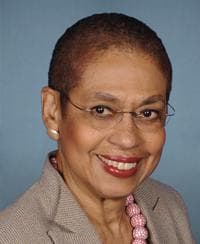
- Eleanor Norton
- Cosponsors
- None
- Introduced
- In Committee
What this bill would do
This bill, known as the ``Thrift Savings Plan Emergency Withdrawal Act of 2025'', aims to amend the Internal Revenue Code of 1986. It focuses on Federal employees who have separated from civil service. The legislation allows these individuals to make penalty-free distributions from their Thrift Savings Plans. These distributions would be included in gross income spread out over a 3-year period. The bill also includes specific rules regarding the repayment of these funds and limits the total amount available for these distributions.
Yes· 3 of 4
Would retired people be better off under this?+6
The bill provides beneficial access to retirement funds for separating civil servants.
Would people over 65 be better off under this?+5
The bill assists those transitioning into retirement by easing access to their Thrift Savings Plan funds.
Would middle-income households be better off under this?+4
Federal employees can access retirement funds more flexibly without immediate heavy tax penalties.
The opposite
No question was scored the opposite.
Who it would affect, and how
Potential Positive Impacts for People
-
Penalty-Free Access to Funds: The bill states that section 72(t) of the Internal Revenue Code of 1986 shall not apply to qualified civil service separation distributions, which allows employees to avoid certain penalties when taking money from their Thrift Savings Plans (Section 2(a)(1)).
-
Tax Relief Through Spreading Income: Instead of being taxed all at once, the amount of the distribution is included in gross income ratably over a 3-taxable-year period (Section 2(a)(2)).
-
Option to Repay Funds: Individuals who receive a distribution can elect to be treated as having received an eligible rollover distribution, allowing them to make contributions to an eligible retirement plan to replace the funds (Section 2(c)).
Potential Negative Impacts for People
-
Distribution Caps: There is a limit on how much an individual can take; the aggregate amount for a qualified civil service separation distribution cannot exceed $100,000 (Section 2(b)).
-
Specific Timing Requirements: To qualify as a "qualified civil service separation distribution," the distribution must occur during a specific window between when an individual elects an annuity payment and one year after they receive their first annuity payment (Section 2(d)(1)).
Groups and Interests Ranking
Every group the model scored this bill for, from -10 to +10. Hover a score for the reason it gave.
- Demographic And Interest Groups
- Good For Retirees+6Good For Seniors+5Good For Middle Class Households+4
- Economy And Finance
- Reduces Middle Class Taxes+3
- 12/23/2025
- Referred to the House Committee on Ways and Means.
- Introduced in House