Bill · H.R. 692· House(119-HR-692)
China Exchange Rate Transparency Act of 2025
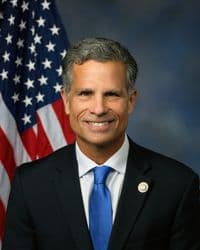
- Introduced
- 1/23/2025
- Last activity
- 2/11/2025 — Received in the Senate and Read twice and referred to the Committee on Foreign Relations.
- Sponsored by
- Daniel Meuser
- Cosponsors
- - 8 - 2
- Introduced
- Passed House
- In Senate committee
What this bill would do
The China Exchange Rate Transparency Act of 2025 requires the United States Executive Director at the International Monetary Fund to advocate for more transparency regarding the exchange rate policies of the People's Republic of China. The Secretary of the Treasury must instruct this director to push for enhanced surveillance of China's exchange rate arrangements, including indirect interventions. This includes calling for the inclusion of any significant policy divergences during IMF consultations. Additionally, the Act calls for stronger consideration of China's performance as a responsible stakeholder when evaluating IMF quota and voting shares. The Act includes a sunset provision that terminates its effect after seven years or once specific compliance conditions are met.
Yes· 3 of 4
Does this make what the government does easier for the public to see?+3
The bill mandates increased transparency regarding China's foreign exchange interventions and policy objectives.
Does this favour talking over confrontation abroad?+2
The bill utilizes existing international institutions like the IMF to advocate for policy transparency through formal diplomatic channels.
Is this likely to grow the economy?+2
The bill aims to increase transparency in China's exchange rate policies, which can mitigate market distortions that impact global economic stability.
The opposite
No question was scored the opposite.
What Congress actually voted on
One recorded vote has been taken on this bill.
- The House: a fast-track vote, needing two-thirds to passPassed 388–7
The House sets aside its normal procedure to move quickly: no amendments, little debate, and a two-thirds bar instead of a simple majority. It is used for measures expected to be uncontroversial, so a bill that fails here failed despite broad expectations that it would not.
02/10/2025 · Roll call 36 · recorded as “On Motion to Suspend the Rules and Pass, as Amended”
Who it would affect, and how
Potential Positive Impacts for People
-
Increased Transparency: The bill seeks increased transparency regarding the exchange rate arrangements of the People's Republic of China, including indirect foreign exchange market intervention through Chinese financial institutions or state-owned enterprises (Section 3, subsection 1).
-
Policy Consistency: The bill advocates for the inclusion of significant divergences in exchange rate policies between China and other currency issuers during IMF consultations (Section 3, subsection 2).
-
Accountability in Global Governance: The bill calls for stronger consideration of China's performance as a responsible stakeholder in the international monetary system when the IMF evaluates quota and voting shares (Section 3, subsection 3).
Potential Negative Impacts for People
- No negative impacts are explicitly mentioned in the text of the bill.
Groups and Interests Ranking
Every group the model scored this bill for, from -10 to +10. Hover a score for the reason it gave.
- Governance And Ideology
- Improves Government Transparency+3
- National Security And Foreign Policy
- Improves Diplomatic Engagement+2Improves International Alliances+1
- Economy And Finance
- Improves Economic Growth+2
- 2/11/2025
- Received in the Senate and Read twice and referred to the Committee on Foreign Relations.
- 2/10/2025
- Motion to reconsider laid on the table Agreed to without objection.
- Passed/agreed to in House: On motion to suspend the rules and pass the bill, as amended Agreed to by the Yeas and Nays: (2/3 required): 388 - 7 (Roll no. 36). (text: CR H597)
- On motion to suspend the rules and pass the bill, as amended Agreed to by the Yeas and Nays: (2/3 required): 388 - 7 (Roll no. 36). (text: CR H597)
- Considered as unfinished business. (consideration: CR H605)
- At the conclusion of debate, the Yeas and Nays were demanded and ordered. Pursuant to the provisions of clause 8, rule XX, the Chair announced that further proceedings on the motion would be postponed.
- DEBATE - The House proceeded with forty minutes of debate on H.R. 692.
- Considered under suspension of the rules. (consideration: CR H596-599)
- Mr. Hill (AR) moved to suspend the rules and pass the bill, as amended.
- 1 Cosponsor added.
- 2/6/2025
- 1 Cosponsor added.
- 1/31/2025
- 1 Cosponsor added.
- 1/28/2025
- 2 Cosponsors added.
- 1/23/2025
- Referred to the House Committee on Financial Services.
- 5 Cosponsors added.
- Introduced in House
 Stephanie Bice
Republican · Oklahoma
 Ben Cline
Republican · Virginia
 Monica De La Cruz
Republican · Texas
 Barry Loudermilk
Republican · Georgia
 Susie Lee
Democrat · Nevada
 Michael Lawler
Republican · New York
 John Moolenaar
Republican · Michigan
 Mark Messmer
Republican · Indiana
 Thomas Suozzi
Democrat · New York
 Glenn Thompson
Republican · Pennsylvania