Bill · H.R. 6893· House(119-HR-6893)
Chesapeake Bay Watershed Advancement for Training, Education, Restoration, and Science (WATERS) Act
- Introduced
- 12/18/2025
- Last activity
- 9/15/2026 — Received in the Senate and Read twice and referred to the Committee on Commerce, Science, and Transportation.
- Sponsored by
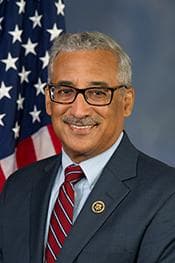
- Robert Scott
- Cosponsors
- - 5 - 2
- Introduced
- Passed House
- In Senate committee
What this bill would do
This bill is known as the Chesapeake Bay Watershed Advancement for Training, Education, Restoration, and Science (WATERS) Act. It reauthorizes the National Oceanic and Atmospheric Administration (NOAA) Chesapeake Bay Office and updates its leadership and administrative duties. The legislation outlines specific program activities, including integrated coastal observations, a watershed education and training program, and a coastal and living resources management and habitat program. It requires the Director of the Office to ensure projects are peer-reviewed and to consult regularly with the Chesapeake Executive Council. Finally, the bill mandates biennial reports and action plans to be submitted to specific congressional committees and the Secretary of Commerce.
Yes· 3 of 17
Does this better protect air, water and wildlife?+8
Provides comprehensive support for the restoration and protection of the Chesapeake Bay watershed.
Does this put more money into scientific research?+7
Reauthorizes and expands funding for coastal observations, habitat mapping, and marine research.
Would students be better off under this?+6
Provides educational grants, internships, and enhanced classroom materials.
The opposite
No question was scored the opposite.
Who it would affect, and how
Potential Positive Impacts for People
-
Under Section 2 (adding subsection (c)(5)), the bill authorizes a Chesapeake Bay watershed education and training program that can provide classroom education, meaningful watershed educational experiences, and professional development for teachers. This is positive because it helps students and educators better understand the local ecosystem and builds the capacity of school districts to deliver quality environmental education.
-
Under Section 2 (adding subsection (c)(6)), the bill establishes a Chesapeake Bay Coastal Living Resources Management and Habitat Program to support the restoration and protection of priority habitats and living resources like oysters, blue crabs, and striped bass. This is a positive outcome for individuals and local communities because it aids in native oyster research, shellfish aquaculture, and habitat resilience.
-
Under Section 2 (adding subsection (c)(4)), the Director is directed to organize scientific information into products that are useful to policymakers, resource managers, scientists, and the public. This is considered beneficial as it ensures everyday people and leaders have clear, accessible environmental data regarding water quality and living marine resources.
Potential Negative Impacts for People
- Based strictly on the provided text, there are no specific sections or provisions identified that outline negative consequences, burdens, or direct harms for individuals or groups of people in the United States.
Groups and Interests Ranking
Every group the model scored this bill for, from -10 to +10. Hover a score for the reason it gave.
- Demographic And Interest Groups
- Good For Students+6Good For Children+5Good For Young Adults+5Good For Business Owners+4Good For Rural Residents+4Good For Farmers+3
- Environment Energy And Infrastructure
- Improves Environmental Protections+8Improves Public Land Management+5Improves Rural Development+3Reduces Carbon Emissions+2
- Education And Technology
- Increases Scientific Research Funding+7Increases Public School Funding+4
- Economy And Finance
- Improves Small Business Support+3Improves Economic Growth+2Increases Job Creation+2
- Governance And Ideology
- Improves Government Transparency+2Increases Federal Power+1
- 9/15/2026
- Received in the Senate and Read twice and referred to the Committee on Commerce, Science, and Transportation.
- 9/14/2026
- Motion to reconsider laid on the table Agreed to without objection.
- Passed/agreed to in House: On motion to suspend the rules and pass the bill, as amended Agreed to by voice vote.
- On motion to suspend the rules and pass the bill, as amended Agreed to by voice vote. (text: CR H5584-5585)
- DEBATE - The House proceeded with forty minutes of debate on H.R. 6893.
- Considered under suspension of the rules. (consideration: CR H5584-5586)
- Mr. Westerman moved to suspend the rules and pass the bill, as amended.
- 8/20/2026
- Reported (Amended) by the Committee on Natural Resources. H. Rept. 119-763.
- Placed on the Union Calendar, Calendar No. 664.
- 7/15/2026
- Subcommittee on Water, Wildlife and Fisheries Discharged
- Committee Consideration and Mark-up Session Held
- Ordered to be Reported in the Nature of a Substitute (Amended) by Unanimous Consent.
- 4/29/2026
- 1 Cosponsor added.
- 3/26/2026
- Subcommittee Hearings Held
- 3/19/2026
- Referred to the Subcommittee on Water, Wildlife and Fisheries.
- 2/24/2026
- 3 Cosponsors added.
- 12/18/2025
- Referred to the House Committee on Natural Resources.
- 3 Cosponsors added.
- Introduced in House
3 bills Congress.gov lists as related to this one — companions in the other chamber, earlier versions, and bills this one absorbed or was folded into.
 Sarah Elfreth
Democrat · Maryland
 Glenn Ivey
Democrat · Maryland
 Jennifer Kiggans
Republican · Virginia
 Jennifer McClellan
Democrat · Virginia
 April McClain Delaney
Democrat · Maryland
 Eleanor Norton
Democrat · District of Columbia
 Robert Wittman
Republican · Virginia