
A Republican bill with 1 Republican cosponsor · See the cosponsor
Last activity — Referred to the House Committee on Education and Workforce.
In committee
Introduced and handed to a committee in the chamber it started in.
The committee holds it, and most bills are never heard from again. A hearing or a committee vote would be news; silence is the usual outcome, and it kills the bill without anyone voting against it.
Its path through Congress
- Introduced
- In Committee
What this bill would do
The Parental Rights Relief Act aims to amend the General Education Provisions Act. It seeks to provide a private right of action to parents and eligible students to protect certain education-related rights. The bill proposes establishing an office and review board within the Department to investigate and adjudicate violations. It also sets a 90-day timeline for the investigation and adjudication of complaints. Furthermore, it allows aggrieved parties to bring civil actions in district court for relief.
Yes· 3 of 7
- Scored +3
Would students be better off under this?
The bill empowers students to directly challenge educational agencies that violate their rights under the PPRA.
- Scored +3
Does this protect the right to fair treatment by the courts?
The bill provides a streamlined path to judicial recourse for parents and students through a private right of action.
- Scored +2
Would children be better off under this?
The bill protects the rights of students, including emancipated minors, through strengthened enforcement mechanisms.
The opposite
- Scored -1
Does this make it easier to use public money at a school other than the local one?
The bill focuses on legal enforcement of existing educational privacy and rights rather than expanding school choice options.
Who it would affect, and how
Potential Positive Impacts for People
-
Ability to sue for violations: Under Section 2(a), parents or students (who are at least eighteen or in postsecondary education) can bring civil actions against educational agencies or institutions for declaratory relief, injunctive relief, or reasonable attorney's fees and costs if they are aggrieved by a violation of FERPA.
-
Streamlined legal access: Section 2(a) states that a civil action can be started without the requirement of first seeking or exhausting any available administrative remedies.
-
Legal standing for minors: Under Section 2(b), students who are emancipated minors under applicable State law may bring civil actions regarding violations of rights established under the Protection of Pupil Rights Amendment.
-
Rapid complaint processing: Section 2(a) and Section 2(b) require the Secretary to ensure that complaints are investigated, processed, reviewed, and adjudicated within 90 days of being filed.
Potential Negative Impacts for People
-
Legal burdens on educational institutions: Under Section 2(a) and Section 2(b), educational agencies or institutions may face civil actions in district court seeking declaratory relief, injunctive relief, or reasonable attorney's fees and costs due to alleged violations.
-
Potential for government intervention in lawsuits: According to Section 2(a) and Section 2(b), a court may permit the Attorney General to intervene in a civil action if the Attorney General certifies that the action is of general public importance.
Groups and Interests Ranking
Every group the model scored this bill for, from -10 to +10. Tap or hover a score for the reason it gave.
- Demographic And Interest Groups
- Would students be better off under this? — The bill empowers students to directly challenge educational agencies that violate their rights under the PPRA. Would children be better off under this? — The bill protects the rights of students, including emancipated minors, through strengthened enforcement mechanisms. Would people in their twenties and thirties be better off under this? — The bill provides students of postsecondary education with a private right of action to protect their rights. Would households on low incomes be better off under this? — The provision of attorney's fees may help low-income families seek relief, though litigation costs remain a factor.
- Governance And Ideology
- Does this protect the right to fair treatment by the courts? — The bill provides a streamlined path to judicial recourse for parents and students through a private right of action. Does this make what the government does easier for the public to see? — The bill increases transparency by establishing a formal office and review board to adjudicate educational violations.
- Education And Technology
- Does this make it easier to use public money at a school other than the local one? — The bill focuses on legal enforcement of existing educational privacy and rights rather than expanding school choice options.
- Social Issues And Justice
- Is this likely to lift people out of poverty? — The bill focuses on educational rights and enforcement rather than direct poverty alleviation.
- 12/18/2025
- Referred to the House Committee on Education and Workforce.
- 1 Cosponsor added.
- Introduced in House
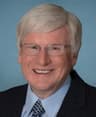 Glenn Grothman
Republican · Wisconsin