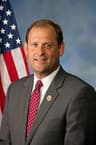
Andy Barr (R-KY)
To amend the Federal Credit Union Act, the Federal Deposit Insurance Act, the Revised Statutes, and the Federal Reserve Act to require Federal banking agencies to consider economic growth when conducting supervisory functions.
A Republican bill with no cosponsors
Last activity — Referred to the House Committee on Financial Services.
In committee
Introduced and handed to a committee in the chamber it started in.
The committee holds it, and most bills are never heard from again. A hearing or a committee vote would be news; silence is the usual outcome, and it kills the bill without anyone voting against it.
Its path through Congress
- Introduced
- In Committee
What this bill would do
H.R. 6838 is a bill that would change how federal banking agencies handle their supervisory roles. It requires these agencies to consider economic growth alongside safety and soundness. The bill amends the Federal Credit Union Act, the Federal Deposit Insurance Act, the National Bank Act, and the Federal Reserve Act to include this mandate.
Yes· 3 of 9
- Scored +6
Would business owners be better off under this?
Business owners benefit from a banking regulatory environment that prioritizes growth and accessibility of capital.
- Scored +5
Is this likely to grow the economy?
The bill explicitly mandates that federal banking agencies consider economic growth in their supervisory functions.
- Scored +3
Would people with substantial wealth be better off under this?
Growth-oriented banking policies often correlate with higher returns on financial investments.
The opposite
- Scored -2
Does this give people more protection from unfair business practices?
Prioritizing economic growth alongside safety and soundness could potentially weaken strict regulatory oversight.
Who it would affect, and how
Potential Positive Impacts for People
- Economic Growth Consideration: By requiring the Board (Section 1(a)), the Corporation (Section 1(b)), the National Bank Act (Section 1(c)), and the Federal Reserve Act (Section 1(d)) to take economic growth into account, agencies may prioritize activities that support the growth of the economy.
Potential Negative Impacts for People
- Shift in Priority: In Section 1(c) of the National Bank Act, the bill strikes "safety and soundness" and replaces it with "safety, soundness, and economic growth," which changes the existing mandate for supervisory functions.
Groups and Interests Ranking
Every group the model scored this bill for, from -10 to +10. Tap or hover a score for the reason it gave.
- Demographic And Interest Groups
- Would business owners be better off under this? — Business owners benefit from a banking regulatory environment that prioritizes growth and accessibility of capital. Would billionaires be better off under this? — Financial deregulation and growth-oriented mandates generally favor the most capitalized entities. Would farmers be better off under this? — Growth-oriented banking may lead to easier access to agricultural loans. Would people with substantial wealth be better off under this? — Growth-oriented banking policies often correlate with higher returns on financial investments. Would the very wealthiest people be better off under this? — Broad economic growth typically increases the value of high-net-worth portfolios. Would high-income households be better off under this? — Economic growth focus generally benefits those with significant assets and investments.
- Economy And Finance
- Is this likely to grow the economy? — The bill explicitly mandates that federal banking agencies consider economic growth in their supervisory functions. Does this make it easier to run a small business? — A shift toward economic growth priorities may lower regulatory hurdles for loans to small businesses. Is this likely to create jobs? — Encouraging economic growth in banking supervision may lead to increased lending and investment in job-creating activities. Does this give people more protection from unfair business practices? — Prioritizing economic growth alongside safety and soundness could potentially weaken strict regulatory oversight.
- 12/18/2025
- Referred to the House Committee on Financial Services.
- Introduced in House