Bill · H.R. 6815· House(119-HR-6815)
Environmental Justice Screening Tool Act of 2025
- Introduced
- 12/17/2025
- Last activity
- 12/17/2025 — Referred to the Committee on Energy and Commerce, and in addition to the Committee on Natural Resources, for a period to be subsequently determined by the Speaker, in each case for consideration of such provisions as fall within the jurisdiction of the committee concerned.
- Sponsored by
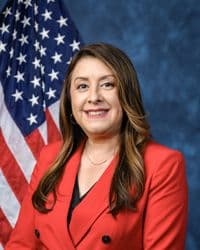
- Luz Rivas
- Cosponsors
- - 15 - 0
- Introduced
- In Committee
What this bill would do
This legislation is known as the Environmental Justice Screening Tool Act of 2025. It requires the Administrator of the Environmental Protection Agency to develop and publish a geospatial mapping tool called the Environmental Justice Screening Tool within one year. This tool will identify disproportionately burdened communities based on specific environmental, climate change, human health, economic, and social factors. The Administrator must also gather feedback from various organizations and government officials regarding the tool's thresholds and categories. Furthermore, the Administrator is required to conduct annual reviews, update the tool as appropriate, and submit annual reports to the appropriate congressional committees. Finally, the legislation directs the head of each Federal department or agency to adopt the tool to help prioritize funding and resources to the identified communities.
Yes· 3 of 22
Would households on low incomes be better off under this?+6
Directs federal funding and resources toward low-income and disproportionately burdened communities.
Does this better protect air, water and wildlife?+6
Establishes an environmental justice mapping tool to identify and assist heavily burdened communities.
Does this narrow racial gaps in how people are treated?+5
The screening tool identifies disproportionately burdened communities, helping address environmental and racial inequities.
The opposite
No question was scored the opposite.
Who it would affect, and how
Potential Positive Impacts for People
-
Section 2(a): The creation and publication of a publicly available Environmental Justice Screening Tool is a positive step because it allows everyday people to clearly see which communities are disproportionately burdened.
-
Section 2(b)(3): The requirement for the Administrator to solicit feedback and data from higher education institutions, nonprofits, community-based organizations, and local and tribal officials is a benefit because it helps ensure that the people most affected have a voice in shaping the tool.
-
Section 2(d): The directive for Federal departments and agencies to adopt the tool and prioritize funding or resources to the identified communities is a positive provision that could directly benefit struggling areas by bringing much-needed federal help where it is most needed.
Potential Negative Impacts for People
Based on the explicit text provided in the bill, there are no specific sections or provisions identified that outline negative consequences or burdens for individuals or groups of people in the United States.
Groups and Interests Ranking
Every group the model scored this bill for, from -10 to +10. Hover a score for the reason it gave.
- Demographic And Interest Groups
- Good For Low Income Households+6Good For African Americans+4Good For Hispanic Americans+4Good For Native Americans+4Good For Urban Residents+4Good For Rural Residents+3Good For Children+2Good For Immigrants+2Good For Middle Class Households+2Good For Retirees+2Good For Seniors+2Good For Women+2
- Environment Energy And Infrastructure
- Improves Environmental Protections+6Improves Disaster Relief And F E M A+3Improves Rural Development+2
- Social Issues And Justice
- Improves Racial Equity+5Improves Poverty Reduction+3Improves Affordable Housing+2
- Governance And Ideology
- Improves Government Transparency+5Increases Federal Power+3
- Healthcare
- Improves Healthcare Access+3
- Economy And Finance
- Improves Economic Growth+2
- 1/12/2026
- 1 Cosponsor added.
- 12/18/2025
- 2 Cosponsors added.
- 12/17/2025
- Referred to the Committee on Energy and Commerce, and in addition to the Committee on Natural Resources, for a period to be subsequently determined by the Speaker, in each case for consideration of such provisions as fall within the jurisdiction of the committee concerned.
- 12 Cosponsors added.
- Introduced in House
 Yassamin Ansari
Democrat · Arizona
 Nanette Barragán
Democrat · California
 André Carson
Democrat · Indiana
 Troy Carter
Democrat · Louisiana
 Cleo Fields
Democrat · Louisiana
 Maxwell Frost
Democrat · Florida
 Jesús García
Democrat · Illinois
 Daniel Goldman
Democrat · New York
 Jared Huffman
Democrat · California
 Pablo Hernández
Democrat · Puerto Rico
 Summer Lee
Democrat · Pennsylvania
 Eleanor Norton
Democrat · District of Columbia
 Stacey Plaskett
Democrat · Virgin Islands
 Darren Soto
Democrat · Florida
 Rashida Tlaib
Democrat · Michigan