Bill · H.R. 6790· House(119-HR-6790)
D-BLOC Act
- Introduced
- 12/17/2025
- Last activity
- 2/2/2026 — Referred to the Subcommittee on Railroads, Pipelines, and Hazardous Materials.
- Sponsored by
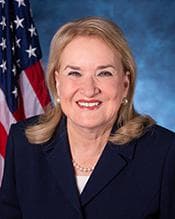
- Sylvia Garcia
- Cosponsors
- - 3 - 0
- Introduced
- In Committee
What this bill would do
The "Don't BLock Our Communities Act" seeks to amend title 49 of the United States Code to limit how long railroad carriers can block public highway-rail grade crossings. It establishes a 10-minute time limit for such incidents, barring specific exceptions like accidents or acts of God. If a crossing is frequently blocked, the Secretary is required to investigate the causes and potential solutions. Railroad carriers may face civil penalties for violations that occur after receiving specific notices. Additionally, the bill mandates that Class I railroads provide active links to the blocked crossing portal on their websites.
Yes· 3 of 6
Does this make what the government does easier for the public to see?+4
The bill requires railroads to maintain specific location data and makes contact information publicly available.
Does this repair or build roads and bridges?+3
The bill improves traffic flow and reduces delays at public highway-rail grade crossings.
Would people in cities be better off under this?+2
The bill reduces traffic delays that can affect urban movement and emergency service response times.
The opposite
No question was scored the opposite.
Who it would affect, and how
Potential Positive Impacts for People
-
Reduced Crossing Blockages: Railroad carriers are prohibited from causing blocked crossing incidents longer than 10 minutes, unless specific exceptions apply, such as an accident, a track obstruction, or a derailment (Section 2).
-
Increased Oversight of Problem Areas: For crossings with 3 or more incidents exceeding the time limit on at least 3 different days within a 30-day period, the Secretary must investigate the causes and possible measures to reduce the frequency and duration of these incidents (Section 2).
-
Improved Accountability via Penalties: The Secretary may issue civil penalties to railroad carriers for violations of the 10-minute limit, especially if there is a pattern of incidents causing delays to State or local emergency services (Section 2).
-
Better Public Information: Class I railroad carriers must publish an active link to the national blocked crossing portal on their home pages to ensure information is publicly available (Section 3).
Potential Negative Impacts for People
-
Exceptions to Time Limits: Certain incidents, such as actions necessary to comply with Federal rail safety laws or regulations, will not be subject to the 10-minute limit (Section 2).
-
Exemption for Specific Rail Services: This Act does not apply to Amtrak or commuter authorities, including operations run or dispatched by a Class I railroad (Section 2).
-
Penalty Exemptions for Specific Locations: Civil penalties may not be issued if a crossing has no alternate route within a half mile by road, or if there is a proposed grade separation project that has received local agreement and has budgeted funding (Section 2).
Groups and Interests Ranking
Every group the model scored this bill for, from -10 to +10. Hover a score for the reason it gave.
- Demographic And Interest Groups
- Good For Rural Residents+2Good For Urban Residents+2
- Governance And Ideology
- Improves Government Transparency+4
- Economy And Finance
- Improves Consumer Protection+2Improves Fiscal Responsibility+1
- Environment Energy And Infrastructure
- Improves Roads And Bridges+3
- 2/2/2026
- Referred to the Subcommittee on Railroads, Pipelines, and Hazardous Materials.
- 12/17/2025
- Referred to the House Committee on Transportation and Infrastructure.
- 3 Cosponsors added.
- Introduced in House
 Timothy Kennedy
Democrat · New York
 Frank Mrvan
Democrat · Indiana
 Eleanor Norton
Democrat · District of Columbia