Bill · H.R. 6785· House(119-HR-6785)
CLEAR Act of 2025
- Introduced
- 12/17/2025
- Last activity
- 12/17/2025 — Referred to the House Committee on Financial Services.
- Sponsored by
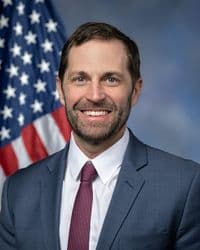
- Jason Crow
- Cosponsors
- - 1 - 3
- Introduced
- In Committee
What this bill would do
The CLEAR Act of 2025 authorizes the Secretary of Housing and Urban Development to provide grants to States, territories, and Indian tribes. These funds are intended to support the creation or maintenance of local resiliency offices. These offices are tasked with developing frameworks to manage risks from extreme weather and other challenges. The bill also focuses on implementing programs for disaster mitigation and community recovery. Finally, it establishes a priority system for awarding these funds to specific communities and entities.
Yes· 3 of 19
Would Native Americans be better off under this?+5
The bill specifically reserves 10 percent of funds for grants to Indian tribes.
Does this improve help for people hit by a disaster?+4
The bill supports long-term community pre-disaster mitigation and recovery efforts.
Would households on low incomes be better off under this?+3
The bill prioritizes disadvantaged communities which often include low-income households.
The opposite
No question was scored the opposite.
Who it would affect, and how
Potential Positive Impacts for People
-
Support for vulnerable communities: The Secretary is directed to give priority to applications that identify risks in disadvantaged communities and prioritize projects to benefit them (Section 2(e)(2)).
-
Disaster preparedness and recovery: Grant funds can be used to support long-term community pre-disaster mitigation and help facilitate access to resources before and after a disaster (Section 2(b)(2)(D)).
-
Protection of essential services: The resiliency framework requires identifying risks in critical areas including health and social services, infrastructure, the economy, and housing (Section 2(b)(1)).
-
Tribal support: The bill includes a specific requirement to reserve 10 percent of the appropriated funds for grants to Indian tribes (Section 2(k)(2)).
-
Local government assistance: The program allows for the provision of technical assistance to local governments to help them implement resilience planning (Section 2(b)(2)(A)).
Potential Negative Impacts for People
-
Reporting burdens: Grantees are required to submit annual reports to the Secretary that include descriptions of activities, specific costs for each service provided, and effectiveness assessments (Section 2(i)).
-
Requirement for office establishment: To be eligible for these grants, a State, territory, or Indian tribe must establish and maintain a specific office dedicated to resilience issues (Section 2(b)).
Groups and Interests Ranking
Every group the model scored this bill for, from -10 to +10. Hover a score for the reason it gave.
- Demographic And Interest Groups
- Good For Native Americans+5Good For Low Income Households+3Good For African Americans+2Good For Hispanic Americans+2Good For Union Workers+2Good For Middle Class Households+1Good For Rural Residents+1Good For Urban Residents+1
- Environment Energy And Infrastructure
- Improves Disaster Relief And F E M A+4Improves Environmental Protections+3Improves Roads And Bridges+2
- Social Issues And Justice
- Improves Racial Equity+3Improves Affordable Housing+2Improves Poverty Reduction+2
- Economy And Finance
- Improves Economic Growth+2Increases Job Creation+2
- Governance And Ideology
- Increase States Rights+2Improves Government Transparency+1
- Healthcare
- Improves Healthcare Access+2
- 1/7/2026
- 1 Cosponsor added.
- 12/17/2025
- Referred to the House Committee on Financial Services.
- 3 Cosponsors added.
- Introduced in House
 Brian Fitzpatrick
Republican · Pennsylvania
 Young Kim
Republican · California
 Carol Miller
Republican · West Virginia
 Gabe Vasquez
Democrat · New Mexico