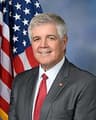
Cliff Bentz (R-OR)
Oregon Owyhee Wilderness and Community Protection Act
A Republican bill with no cosponsors
Last activity — Referred to the House Committee on Natural Resources.
In committee
Introduced and handed to a committee in the chamber it started in.
The committee holds it, and most bills are never heard from again. A hearing or a committee vote would be news; silence is the usual outcome, and it kills the bill without anyone voting against it.
Its path through Congress
- Introduced
- In Committee
What this bill would do
This bill establishes the Malheur County Grazing Management Program to provide authorized grazing permittees with operational flexibility on Federal land in Malheur County, Oregon. It creates the Malheur C.E.O. Group to propose and carry out various ecological and economic projects. The legislation designates specific Special Management Areas and numerous Wilderness Areas within the county. It also outlines land conveyances to the Burns Paiute Tribe, including the Jonesboro Ranch and Castle Rock areas. Finally, the act provides for the future protection of fire suppression, invasive species control, and livestock production values on Federal lands.
Yes· 3 of 10
- Scored +7
Would Native Americans be better off under this?
The bill secures land conveyances and co-stewardship opportunities for the Burns Paiute Tribe.
- Scored +6
Does this better protect air, water and wildlife?
The bill designates extensive wilderness areas and mandates ecological restoration and invasive species management.
- Scored +5
Would business owners be better off under this?
The bill provides grazing permittees with operational flexibility regarding season of use and water structure placement.
The opposite
- Scored -2
Does this make housing cost less?
The withdrawal of lands from all forms of appropriation may limit future land availability for community development.
- Scored -2
Does this leave more decisions to the states?
The bill increases federal land designations and withdrawals, concentrating management under the Secretary of the Interior.
Who it would affect, and how
Potential Positive Impacts for People
-
Operational Flexibility for Grazers: Authorized grazing permittees and lessees can request variances to adjust the season of use, pasture rotation dates, or the placement of water structures to account for changing conditions like weather, fire, or drought (Section 3(b)(2)).
-
Community Project Development: The Malheur C.E.O. Group is authorized to propose and carry out projects related to ecological restoration, range improvements, invasive species management, and economic development (Section 4(d)(2)).
-
Tribal Land Acquisition: The bill provides for the Secretary to accept title to specific lands, such as the Jonesboro Ranch, to be held in trust for the benefit of the Burns Paiute Tribe (Section 6(a)(1)).
-
Protection of Livestock Production: The act specifically allows for the protection of livestock production within designated Special Management Areas (Section 5(b)(3)) and prohibits the Secretary from reducing or restricting grazing on certain Federal lands (Section 5(f)(3)).
-
Wildfire and Invasive Species Management: The Secretary is authorized to take necessary actions, including the use of motorized vehicles and aircraft, to control wildfires and eradicate invasive species (Section 7(b)).
Potential Negative Impacts for People
-
Restrictions on New Roads: The construction of new permanent roads is prohibited within the designated Special Management Areas (Section 5(b)(4)(i)).
-
Land Use Restrictions: The Special Management Areas are withdrawn from all forms of appropriation or disposal under public land laws, as well as from mining and mineral/geothermal leasing (Section 5(b)(5)).
-
Specific Financial Obligations for the Tribe: If the Burns Paiute Tribe decides to cancel grazing within the Trust Land, the Tribe is responsible for paying permittees the market value of cancelled animal unit months and must pay all costs to fence out the land (Section 6(b)(1)(ii)).
-
Withdrawal of Lands: The designated wilderness and special management areas are withdrawn from many forms of land use, including mining and geothermal leasing (Section 5(b)(5) and Section 6(b)(3)).
Groups and Interests Ranking
Every group the model scored this bill for, from -10 to +10. Tap or hover a score for the reason it gave.
- Demographic And Interest Groups
- Would Native Americans be better off under this? — The bill secures land conveyances and co-stewardship opportunities for the Burns Paiute Tribe. Would business owners be better off under this? — The bill provides grazing permittees with operational flexibility regarding season of use and water structure placement. Would farmers be better off under this? — The bill protects livestock production values and provides grazing flexibility for permittees. Would people in rural areas be better off under this? — The bill supports local economic development through the Malheur C.E.O. Group.
- Environment Energy And Infrastructure
- Does this better protect air, water and wildlife? — The bill designates extensive wilderness areas and mandates ecological restoration and invasive species management. Does this better protect public land such as parks and forests? — The act creates the Malheur C.E.O. Group to oversee ecological and range improvement projects. Does this invest in rural communities? — The bill provides for economic development and ecological projects through the Malheur C.E.O. Group.
- Economy And Finance
- Does this make it easier to run a small business? — The bill provides operational flexibility for grazing permittees to adjust terms due to weather or drought. Is this likely to create jobs? — The establishment of the Malheur C.E.O. Group allows for various economic development projects in the county.
- Social Issues And Justice
- Does this narrow racial gaps in how people are treated? — The bill facilitates land conveyances to the Burns Paiute Tribe to be held in trust. Does this make housing cost less? — The withdrawal of lands from all forms of appropriation may limit future land availability for community development.
- Governance And Ideology
- Does this leave more decisions to the states? — The bill increases federal land designations and withdrawals, concentrating management under the Secretary of the Interior.
- 12/17/2025
- Referred to the House Committee on Natural Resources.
- Introduced in House