
Pramila Jayapal (D-WA)
Sunset for the 2001 Authorization for Use of Military Force Act
A Democratic bill with 3 Republican cosponsors · See all 19 cosponsors
Last activity — Referred to the House Committee on Foreign Affairs.
In committee
Introduced and handed to a committee in the chamber it started in.
The committee holds it, and most bills are never heard from again. A hearing or a committee vote would be news; silence is the usual outcome, and it kills the bill without anyone voting against it.
Its path through Congress
- Introduced
- In Committee
What this bill would do
H.R. 6751, known as the "Sunset for the 2001 Authorization for Use of Military Force Act," aims to repeal Public Law 107-40. Congress finds that the original law has been used to justify a broad and open-ended authorization for military force. This interpretation is viewed as inconsistent with the authority of Congress to declare war. The repeal would take effect 240 days after the Act is enacted.
Yes· 3 of 5
- Scored +5
Does this make what the government does easier for the public to see?
Restoring the need for congressional approval for war increases government transparency and accountability.
- Scored +5
Does this protect the right to fair treatment by the courts?
Limiting open-ended military authority reduces the risk of detention without due process.
- Scored +4
Does this protect people from being watched or searched?
Repealing the AUMF may reduce the legal justification for invasive surveillance.
The opposite
- Scored -7
Does this give the federal government more power?
The bill explicitly aims to reduce executive power by repealing an open-ended military authorization.
- Scored -5
Does this give the government more power to monitor people inside the country?
Repealing the AUMF likely limits the legal basis for broad military and intelligence surveillance operations.
- Scored -2
Does this put more money into stopping terrorism?
Repealing the AUMF removes the primary legal justification for many current counter-terrorism operations.
Who it would affect, and how
Potential Positive Impacts for People
- Restoring Congressional Authority: Section 2 suggests that repealing the law addresses the inconsistency with the authority of Congress to declare war and make laws for executing government powers.
Potential Negative Impacts for People
- No negative impacts for individuals or groups are explicitly mentioned in the provided text.
Groups and Interests Ranking
Every group the model scored this bill for, from -10 to +10. Tap or hover a score for the reason it gave.
- Governance And Ideology
- Does this protect the right to fair treatment by the courts? — Limiting open-ended military authority reduces the risk of detention without due process. Does this make what the government does easier for the public to see? — Restoring the need for congressional approval for war increases government transparency and accountability. Does this protect people from being watched or searched? — Repealing the AUMF may reduce the legal justification for invasive surveillance. Does this give the federal government more power? — The bill explicitly aims to reduce executive power by repealing an open-ended military authorization.
- National Security And Foreign Policy
- Does this favour talking over confrontation abroad? — Shift from military authorization toward diplomatic and congressional oversight. Does this reduce what is spent on the military? — Repealing an open-ended military authorization may lead to a reduction in broad military engagements. Does this give the government more power to monitor people inside the country? — Repealing the AUMF likely limits the legal basis for broad military and intelligence surveillance operations. Does this put more money into stopping terrorism? — Repealing the AUMF removes the primary legal justification for many current counter-terrorism operations.
- 11/18/2026
- 1 Cosponsor added.
- 9/14/2026
- 1 Cosponsor added.
- 9/8/2026
- 1 Cosponsor added.
- 9/3/2026
- 11 Cosponsors added.
- 12/16/2025
- Referred to the House Committee on Foreign Affairs.
- 5 Cosponsors added.
- Introduced in House
 Brendan Boyle
Democrat · Pennsylvania
 Everton Blair
Democrat · Georgia
 Greg Casar
Democrat · Texas
 Elijah Crane
Republican · Arizona
 Rosa DeLauro
Democrat · Connecticut
 Valerie Foushee
Democrat · North Carolina
 John Garamendi
Democrat · California
 H. Griffith
Republican · Virginia
 Jesús García
Democrat · Illinois
 James McGovern
Democrat · Massachusetts
 Thomas Massie
Republican · Kentucky
 Sarah McBride
Democrat · Delaware
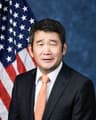 Dave Min
Democrat · California
 Jerrold Nadler
Democrat · New York
 Ilhan Omar
Democrat · Minnesota
 Ayanna Pressley
Democrat · Massachusetts
 Mary Gay Scanlon
Democrat · Pennsylvania
 Rashida Tlaib
Democrat · Michigan
 Maxine Waters
Democrat · California