
Kim Schrier (D-WA)
EAT Healthy Foods from Local Farmers Act
A Democratic bill with 1 Republican cosponsor · See all 2 cosponsors
Last activity — Referred to the Subcommittee on Nutrition and Foreign Agriculture.
In committee
Introduced and handed to a committee in the chamber it started in.
The committee holds it, and most bills are never heard from again. A hearing or a committee vote would be news; silence is the usual outcome, and it kills the bill without anyone voting against it.
Its path through Congress
- Introduced
- In Committee
What this bill would do
This bill, known as the "Expanding Access To Healthy Foods from Local Farmers Act," seeks to amend the Emergency Food Assistance Act of 1983. It aims to provide additional agricultural products for distribution by emergency feeding organizations. The legislation allows States to purchase "priority agricultural products" from specific small businesses to distribute to needy persons. It establishes a framework for States to submit plans for these projects and receive Federal funding. The bill also authorizes $200,000,000 for each fiscal year from 2026 through 2030 to support these efforts. Additionally, it creates a cross-agency working group to review Department procurement goals.
Yes· 3 of 23
- Scored +7
Would households on low incomes be better off under this?
The bill directly increases access to healthy and culturally relevant food for those in need.
- Scored +6
Would farmers be better off under this?
The bill provides significant support for beginning farmers and small/mid-sized family farms.
- Scored +6
Does this make it easier to run a small business?
The bill specifically targets underserved small businesses, including women-owned and veteran-owned entities.
The opposite
No question was scored the opposite.
Who it would affect, and how
Potential Positive Impacts for People
-
Increased Access to Nutritious Food: The bill allows for the purchase of priority agricultural products, such as fruits, vegetables, dairy, meat, seafood, grain, and poultry, to be distributed to needy persons through emergency feeding organizations (Section 2, subsection (d)(1)(B)).
-
Support for Local Communities: States can determine which priority agricultural products are appropriate for distribution based on what is culturally or religiously relevant to the local communities receiving them (Section 2, subsection (d)(1)(B)).
-
Economic Opportunity for Small Businesses: The bill targets "eligible entities," which include small businesses like growers, packers, processors, distributors, food-hubs, or cooperatives (Section 2, subsection (d)(1)(C)).
-
Support for Underserved Producers: The project specifically includes underserved small businesses, such as those that are women-owned or veteran-owned, as well as beginning farmers or small/mid-sized family farms (Section 2, subsection (d)(1)(C)(i)).
-
Improved Food Supply Chains: One of the stated purposes for the State projects is to maintain and improve food and agricultural supply chain resiliency (Section 2, subsection (d)(3)(A)).
Potential Negative Impacts for People
- Risk of Unspent Funds: If a State is determined not to expend all of its allocated funds, those funds will be reallocated to other eligible States (Section 2, subsection (d)(2)(C)(i)(ii)).
Groups and Interests Ranking
Every group the model scored this bill for, from -10 to +10. Tap or hover a score for the reason it gave.
- Demographic And Interest Groups
- Would households on low incomes be better off under this? — The bill directly increases access to healthy and culturally relevant food for those in need. Would farmers be better off under this? — The bill provides significant support for beginning farmers and small/mid-sized family farms. Would business owners be better off under this? — The bill supports small businesses and beginning farmers through new procurement opportunities. Would people in rural areas be better off under this? — The bill supports rural economic opportunities and agricultural supply chain resiliency. Would veterans be better off under this, taking everything together? — The bill includes veteran-owned small businesses as eligible entities. Would women be better off under this? — The bill includes women-owned small businesses as eligible entities. Would Native Americans be better off under this? — The bill explicitly mentions partnerships with Tribal governments. Would Black Americans be better off under this? — The bill supports underserved communities through improved food access. Would Asian Americans be better off under this? — The bill supports underserved communities through improved food access. Would children be better off under this? — Increased access to nutritious food can positively impact children's health. Would Hispanic Americans be better off under this? — The bill supports underserved communities through improved food access. Would people over 65 be better off under this? — Access to culturally relevant and nutritious food is beneficial for seniors in need.
- Social Issues And Justice
- Is this likely to lift people out of poverty? — The bill increases food access for needy persons, which helps mitigate poverty impacts. Does this narrow the gap between how men and women are treated? — The bill specifically includes women-owned small businesses as eligible entities. Does this narrow racial gaps in how people are treated? — The bill aims to support underserved communities and diverse agricultural producers.
- Economy And Finance
- Does this make it easier to run a small business? — The bill specifically targets underserved small businesses, including women-owned and veteran-owned entities. Is this likely to create jobs? — The bill aims to support rural job creation through enhanced agricultural supply chains. Is this likely to grow the economy? — The bill provides economic opportunity expansion for small and diverse agricultural entities.
- Environment Energy And Infrastructure
- Does this invest in rural communities? — The bill focuses on local food systems and small-scale producers which supports rural development.
- Governance And Ideology
- Does this make what the government does easier for the public to see? — The bill includes mandatory financial reporting and evaluation requirements. Does this leave more decisions to the states? — The bill allows States to determine which priority agricultural products are appropriate for their local communities. Does this give the federal government more power? — The bill authorizes federal funds to be administered by and distributed to States.
- National Security And Foreign Policy
- Does this increase the pay, pensions or support veterans receive? — The bill includes veteran-owned small businesses as eligible entities for support.
- 1/13/2026
- Referred to the Subcommittee on Nutrition and Foreign Agriculture.
- 12/12/2025
- Referred to the House Committee on Agriculture.
- 2 Cosponsors added.
- Introduced in House
 Suzanne Bonamici
Democrat · Oregon
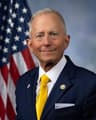 Jefferson Van Drew
Republican · New Jersey