Bill · H.R. 6621· House(119-HR-6621)
Workforce of the Future Act of 2025
- Introduced
- 12/11/2025
- Last activity
- 12/11/2025 — Referred to the Committee on Education and Workforce, and in addition to the Committee on Science, Space, and Technology, for a period to be subsequently determined by the Speaker, in each case for consideration of such provisions as fall within the jurisdiction of the committee concerned.
- Sponsored by
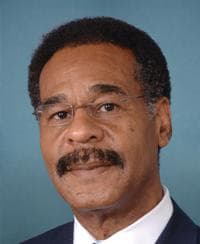
- Emanuel Cleaver
- Cosponsors
- - 10 - 0
- Introduced
- In Committee
What this bill would do
The Workforce of the Future Act of 2025 aims to prepare the American workforce for a rapidly changing economy driven by artificial intelligence. It directs the Secretaries of Labor, Commerce, and Education to collaborate on reports regarding how AI impacts job quality, displacement, and necessary skills. The bill authorizes grants through the Department of Education to expand emerging and advanced technology education in schools. It also authorizes grants through the Department of Labor to provide training for workers most impacted by artificial intelligence. These efforts seek to ensure that all segments of the workforce, including vulnerable and rural communities, have access to new opportunities.
Yes· 3 of 14
Does this put more money into public schools?+6
The bill authorizes $160 million in grants to expand emerging and advanced technology education in schools.
Would children be better off under this?+5
The bill expands technology education access for students from pre-K through middle school.
Would people in their twenties and thirties be better off under this?+5
The bill focuses on preparing the future workforce for high-growth technology sectors.
The opposite
No question was scored the opposite.
Who it would affect, and how
Potential Positive Impacts for People
-
Improved Workforce Readiness: The bill seeks to prepare workers to develop and work alongside new technologies, which can mitigate the negative consequences of job displacement (Sec. 101(1)).
-
Increased Access to Education: Department of Education grants are designed to expand access to emerging and advanced technology education for students, including those in K-12 through various levels of higher education (Sec. 203(a)).
-
Support for Underrepresented Groups: The bill directs the use of funds to reduce academic achievement gaps for groups such as minorities, girls, and youth from low-income families (Sec. 203(b)(2)(C)).
-
Job Security and Upskilling: Department of Labor grants are intended to help individuals through training and skill certifications to enter high-skill, high-wage jobs in in-demand sectors (Sec. 204(b)(2)(A)).
-
Targeted Support for Impacted Workers: The bill identifies and aims to serve individuals whose jobs are projected to be most impacted by the growth of artificial intelligence use (Sec. 204(b)(1)).
Potential Negative Impacts for People
-
Risk of Job Displacement: The text notes that the evolution of artificial intelligence has the potential to disrupt and displace existing jobs (Sec. 101(1)).
-
Economic Vulnerability: The bill identifies that certain demographics may be more vulnerable to career displacement due to the growth of artificial intelligence (Sec. 103(b)(6)).
-
Risk of Being Left Behind: The text states that a lack of universal technology education places low-income, minority, and rural communities at risk of being left behind (Sec. 201(6)).
Groups and Interests Ranking
Every group the model scored this bill for, from -10 to +10. Hover a score for the reason it gave.
- Demographic And Interest Groups
- Good For Children+5Good For Low Income Households+5Good For Rural Residents+5Good For Young Adults+5Good For African Americans+4Good For Hispanic Americans+4Good For People With Disabilities+4Good For Women+4
- Social Issues And Justice
- Improves Gender Equality+4Improves Racial Equity+4Improves Poverty Reduction+3
- Education And Technology
- Increases Public School Funding+6Increases Scientific Research Funding+3
- Economy And Finance
- Increases Job Creation+5
- 9/8/2026
- 1 Cosponsor added.
- 6/3/2026
- 1 Cosponsor added.
- 3/17/2026
- 3 Cosponsors added.
- 1/8/2026
- 1 Cosponsor added.
- 12/11/2025
- Referred to the Committee on Education and Workforce, and in addition to the Committee on Science, Space, and Technology, for a period to be subsequently determined by the Speaker, in each case for consideration of such provisions as fall within the jurisdiction of the committee concerned.
- 4 Cosponsors added.
- Introduced in House
One bill Congress.gov lists as related to this one — companions in the other chamber, earlier versions, and bills this one absorbed or was folded into.
 Ami Bera
Democrat · California
 Suzan DelBene
Democrat · Washington
 Al Green
Democrat · Texas
 Daniel Goldman
Democrat · New York
 John Larson
Democrat · Connecticut
 LaMonica McIver
Democrat · New Jersey
 Eleanor Norton
Democrat · District of Columbia
 Jill Tokuda
Democrat · Hawaii
 Shri Thanedar
Democrat · Michigan
 James Walkinshaw
Democrat · Virginia