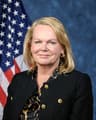
April McClain Delaney (D-MD)
Emergency Alert Grant Fairness Act
A Democratic bill with 13 Democratic cosponsors · See all 13 cosponsors
Last activity — Referred to the Subcommittee on Economic Development, Public Buildings, and Emergency Management.
In committee
Introduced and handed to a committee in the chamber it started in.
The committee holds it, and most bills are never heard from again. A hearing or a committee vote would be news; silence is the usual outcome, and it kills the bill without anyone voting against it.
Its path through Congress
- Introduced
- In Committee
What this bill would do
This bill, titled the "Emergency Alert Grant Fairness Act," directs the Administrator of the Federal Emergency Management Agency to take specific actions regarding grant applications. It requires that applications for the Next Generation Warning System grants be opened for at least 30 days every year. Additionally, the bill expands eligibility for these specific grants. It ensures that public broadcasting entities are eligible to apply for these funds.
Yes
- Scored +5
Does this improve help for people hit by a disaster?
The bill improves FEMA's warning system capabilities by mandating annual grant application windows and expanding eligible entities.
- Scored +3
Does this get reliable internet to more people?
Expanding grant eligibility to public broadcasting entities supports the infrastructure necessary for public information and warning systems.
- Scored +2
Would people in cities be better off under this?
Enhanced warning systems can improve safety outcomes for residents in densely populated areas through better broadcasting capabilities.
The opposite
No question was scored the opposite.
Who it would affect, and how
Potential Positive Impacts for People
-
Increased Access to Warning Systems: By requiring the Administrator to open applications for not less than 30 days each year, the bill ensures a regular window for grant opportunities regarding the Next Generation Warning System (Section 2(a)).
-
Expanded Eligibility for Broadcasters: The bill explicitly includes public broadcasting entities as eligible entities for the Next Generation Warning System grants, which allows these organizations to access funding (Section 2(b)).
Potential Negative Impacts for People
- No negative impacts are explicitly stated in the provided text.
Groups and Interests Ranking
Every group the model scored this bill for, from -10 to +10. Tap or hover a score for the reason it gave.
- Environment Energy And Infrastructure
- Does this improve help for people hit by a disaster? — The bill improves FEMA's warning system capabilities by mandating annual grant application windows and expanding eligible entities.
- Education And Technology
- Does this get reliable internet to more people? — Expanding grant eligibility to public broadcasting entities supports the infrastructure necessary for public information and warning systems.
- Demographic And Interest Groups
- Would people in cities be better off under this? — Enhanced warning systems can improve safety outcomes for residents in densely populated areas through better broadcasting capabilities.
- 2/2/2026
- Referred to the Subcommittee on Economic Development, Public Buildings, and Emergency Management.
- 12/9/2025
- 1 Cosponsor added.
- 12/4/2025
- Sponsor introductory remarks on measure. (CR H5040)
- Referred to the House Committee on Transportation and Infrastructure.
- 12 Cosponsors added.
- Introduced in House
 Wesley Bell
Democrat · Missouri
 André Carson
Democrat · Indiana
 Troy Carter
Democrat · Louisiana
 Cleo Fields
Democrat · Louisiana
 Jared Huffman
Democrat · California
 Pablo Hernández
Democrat · Puerto Rico
 Timothy Kennedy
Democrat · New York
 Gwen Moore
Democrat · Wisconsin
 Kevin Mullin
Democrat · California
 Mary Gay Scanlon
Democrat · Pennsylvania
 Greg Stanton
Democrat · Arizona
 Mike Thompson
Democrat · California
 Dina Titus
Democrat · Nevada