
Sharice Davids (D-KS)
Brownfields Reauthorization Act of 2025
A Democratic bill with 1 Republican cosponsor · See all 3 cosponsors
Last activity — Referred to the Subcommittee on Water Resources and Environment.
In committee
Introduced and handed to a committee in the chamber it started in.
The committee holds it, and most bills are never heard from again. A hearing or a committee vote would be news; silence is the usual outcome, and it kills the bill without anyone voting against it.
Its path through Congress
- Introduced
- In Committee
What this bill would do
This bill, known as the ``Brownfields Reauthorization Act of 2025'', aims to amend the Comprehensive Environmental Response, Compensation, and Liability Act of 1980. It seeks to reauthorize brownfields revitalization funding and perform other specific changes. The legislation increases the amount of money available for each site to be remediated to $1,000,000. It also adjusts the annual funding amounts for fiscal years 2026 through 2030. Additionally, the bill modifies language regarding state response programs.
Yes· 3 of 9
- Scored +6
Does this better protect air, water and wildlife?
The bill increases the cap for site remediation and extends funding to help clean up contaminated land.
- Scored +3
Would business owners be better off under this?
The bill makes it more feasible to clean up land for future commercial or industrial development.
- Scored +3
Would people in cities be better off under this?
Urban areas often have high concentrations of brownfields that this funding helps remediate.
The opposite
No question was scored the opposite.
Who it would affect, and how
Potential Positive Impacts for People
-
Increased remediation funds per site: Under Section 2, paragraph (1), the amount of funding for a site to be remediated is increased to $1,000,000, which provides more money for cleaning up individual sites.
-
Extended funding availability: Section 2, paragraph (2) provides $250,000,000 for each of fiscal years 2026 through 2030, ensuring continued financial support for brownfields revitalization over several years.
-
Expanded capabilities for state programs: Section 3, paragraph (1) changes the language regarding state response programs to include the ability to "implement" programs, which may provide more ways for states to handle environmental issues.
Potential Negative Impacts for People
- No negative impacts are explicitly stated in the provided text.
Groups and Interests Ranking
Every group the model scored this bill for, from -10 to +10. Tap or hover a score for the reason it gave.
- Demographic And Interest Groups
- Would business owners be better off under this? — The bill makes it more feasible to clean up land for future commercial or industrial development. Would people in cities be better off under this? — Urban areas often have high concentrations of brownfields that this funding helps remediate. Would households on low incomes be better off under this? — Land remediation can lead to better local environment and economic opportunities for lower-income areas.
- Environment Energy And Infrastructure
- Does this better protect air, water and wildlife? — The bill increases the cap for site remediation and extends funding to help clean up contaminated land. Does this invest in rural communities? — Increased brownfield remediation funding can aid the development of neglected lands in rural or industrial areas.
- Economy And Finance
- Is this likely to grow the economy? — The bill provides funding to remediate brownfields, which can revitalize land for economic use. Is this likely to create jobs? — Increasing funding for brownfield remediation can stimulate local construction and environmental service jobs.
- Governance And Ideology
- Does this leave more decisions to the states? — The bill expands the authority of state response programs to include the ability to implement programs.
- Social Issues And Justice
- Is this likely to lift people out of poverty? — Remediating contaminated land can improve property values and economic conditions in affected communities.
- 4/23/2026
- 1 Cosponsor added.
- 2/2/2026
- Referred to the Subcommittee on Water Resources and Environment.
- 12/16/2025
- 1 Cosponsor added.
- 12/4/2025
- Referred to the Committee on Energy and Commerce, and in addition to the Committee on Transportation and Infrastructure, for a period to be subsequently determined by the Speaker, in each case for consideration of such provisions as fall within the jurisdiction of the committee concerned.
- 1 Cosponsor added.
- Introduced in House
 Brian Fitzpatrick
Republican · Pennsylvania
 Kristen McDonald Rivet
Democrat · Michigan
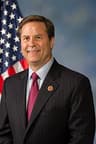 Donald Norcross
Democrat · New Jersey