Bill · H.R. 6371· House(119-HR-6371)
No Robot Bosses Act
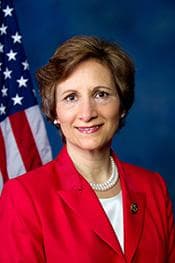
- Introduced
- 12/3/2025
- Last activity
- 12/3/2025 — Referred to the Committee on Education and Workforce, and in addition to the Committees on House Administration, and Oversight and Government Reform, for a period to be subsequently determined by the Speaker, in each case for consideration of such provisions as fall within the jurisdiction of the committee concerned.
- Sponsored by
- Suzanne Bonamici
- Cosponsors
- - 12 - 1
- Introduced
- In Committee
What this bill would do
The "No Robot Bosses Act" aims to regulate how employers use automated decision systems in the workplace. It prohibits employers from relying exclusively on these systems for employment-related decisions. To use such systems, employers must conduct pre-deployment testing for efficacy and legal compliance, as well as annual independent testing for discriminatory impact. The bill requires employers to provide specific disclosures and documentation to workers regarding the system's use. It also establishes a Technology and Worker Protection Division within the Department of Labor to oversee these matters. Additionally, the Act provides for enforcement through investigations, civil actions, and whistleblower protections.
Yes· 3 of 17
Does this make what the government does easier for the public to see?+7
The bill mandates detailed, plain-language disclosures regarding how automated systems influence employment decisions.
Would Black Americans be better off under this?+6
The bill mandates testing of automated systems to prevent racial discrimination in employment.
Would Hispanic Americans be better off under this?+6
The bill mandates testing of automated systems to prevent discriminatory impacts based on national origin or race.
The opposite
Would business owners be better off under this?-5
The bill imposes high operational costs through required testing, annual audits, and documentation mandates.
Does this make it easier to run a small business?-4
The bill imposes significant compliance, testing, and disclosure burdens on employers, including small- and medium-sized businesses.
Does this shorten or soften prison sentences?-1
The bill focuses on civil and administrative enforcement rather than criminal sentencing reforms.
Who it would affect, and how
Potential Positive Impacts for People
-
Protection Against Discrimination: Employers cannot use an automated decision system unless it has been tested for compliance with various employment discrimination laws and lacks potential discriminatory impact based on factors like race, sex, or disability (Section 3(a)(1)(B)(i)).
-
Increased Transparency for Workers: Employers are required to provide detailed disclosures and documentation in plain language regarding how an automated system works, the data it uses, and how it influences decisions (Section s 3(a)(1)(B) and 3(a)(1)(vi)).
-
Right to Human Oversight and Appeal: The bill ensures workers can dispute or appeal automated decisions to a human with relevant experience (Section 3(a)(1)(vii)). It also allows employees managed by an automated system to opt out and be managed by a human instead (Section 3(b)).
-
Whistleblower Protections: The Act prohibits employers from discriminating or retaliating against individuals for exercising their rights under the Act or for reporting violations (Section 6).
-
Access to Legal Redress: Covered individuals and labor organizations have the right to bring civil actions against employers for violations, which can include the recovery of actual or statutory damages (Section 7(a)(3)).
Potential Negative Impacts for People
-
Burden of Implementation on Employers: Employers must adhere to strict requirements, including pre-deployment testing, annual independent testing, providing documentation within 7 days of a decision, and providing specific disclosures (Section 3(a)(1)).
-
Restrictions on Decision-Making: Employers are prohibited from relying exclusively on automated decision systems to make employment-related decisions (Section 3(a)(1)(A)).
Groups and Interests Ranking
Every group the model scored this bill for, from -10 to +10. Hover a score for the reason it gave.
- Demographic And Interest Groups
- Good For African Americans+6Good For Hispanic Americans+6Good For People With Disabilities+6Good For Union Workers+6Good For Women+5Good For Low Income Households+4Good For Middle Class Households+3Good For Seniors+3Good For Young Adults+3Good For Urban Residents+2Good For Business Owners-5
- Governance And Ideology
- Improves Government Transparency+7Improves Privacy Rights+6
- Education And Technology
- Improves Data Privacy+6Increases Big Tech Regulation+5
- Social Issues And Justice
- Improves Disability Rights+6Improves Racial Equity+6Improves Criminal Sentencing Reform-1
- Economy And Finance
- Improves Union Protections+5Improves Small Business Support-4
- 9/3/2026
- 1 Cosponsor added.
- 9/2/2026
- 1 Cosponsor added.
- 8/20/2026
- 1 Cosponsor added.
- 7/27/2026
- 4 Cosponsors added.
- 6/25/2026
- 1 Cosponsor added.
- 6/24/2026
- 1 Cosponsor added.
- 3/20/2026
- 1 Cosponsor added.
- 1/30/2026
- 1 Cosponsor added.
- 12/3/2025
- Referred to the Committee on Education and Workforce, and in addition to the Committees on House Administration, and Oversight and Government Reform, for a period to be subsequently determined by the Speaker, in each case for consideration of such provisions as fall within the jurisdiction of the committee concerned.
- 2 Cosponsors added.
- Introduced in House
 Alma Adams
Democrat · North Carolina
 Yassamin Ansari
Democrat · Arizona
 Steve Cohen
Democrat · Tennessee
 André Carson
Democrat · Indiana
 Judy Chu
Democrat · California
 Greg Casar
Democrat · Texas
 Christopher Deluzio
Democrat · Pennsylvania
 Maxwell Frost
Democrat · Florida
 Daniel Goldman
Democrat · New York
 Adelita Grijalva
Democrat · Arizona
 James Moylan
Republican · Guam
 Eleanor Norton
Democrat · District of Columbia
 Frederica Wilson
Democrat · Florida