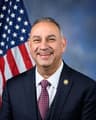
Gilbert Cisneros (D-CA)
Corporal Fernando Ruiz Baltazar Posthumous Citizenship Act of 2025
A Democratic bill with 2 Republican cosponsors · See all 4 cosponsors
Last activity — Referred to the House Committee on the Judiciary.
In committee
Introduced and handed to a committee in the chamber it started in.
The committee holds it, and most bills are never heard from again. A hearing or a committee vote would be news; silence is the usual outcome, and it kills the bill without anyone voting against it.
Its path through Congress
- Introduced
- In Committee
What this bill would do
This bill, known as the ``Corporal Fernando Ruiz Baltazar Posthumous Citizenship Act of 2025'', seeks to amend the Immigration and Nationality Act. It aims to extend honorary citizenship to certain noncitizens who served in the United States military. Specifically, it targets those who enlisted, reenlisted, extended enlistment, or were inducted in the Philippines. These individuals must have died while serving on active duty during the period between September 1, 1939, and December 31, 1946. The bill also addresses the determination process and any applicable benefits or legal requirements for these individuals.
Yes· 3 of 6
- Scored +8
Would Asian Americans be better off under this?
The bill directly benefits individuals who served in the Philippines, providing them and their families the honor of posthumous citizenship.
- Scored +8
Would veterans be better off under this, taking everything together?
The bill recognizes the service of those who died while on active duty by granting posthumous citizenship.
- Scored +8
Does this make it easier for immigrants already here to become citizens?
The bill expands the criteria for posthumous citizenship to include certain military service members who served in the Philippines during WWII.
The opposite
No question was scored the opposite.
Who it would affect, and how
Potential Positive Impacts for People
-
Posthumous Citizenship for Philippine Enlistees: Noncitizens who enlisted, reenlisted, extended enlistment, or were inducted in the Philippines and died between September 1, 1939, and December 31, 1946, while serving honorably on active duty, can receive posthumous citizenship (Section 2(a)(1)(C)(ii)).
-
Relief from Certain Legal Restrictions: For those qualifying under the specific Philippine enlistment criteria, certain existing legal restrictions found in section 319(d) and section 1703 of the National Defense Authorization Act for Fiscal Year 2004 will not apply (Section 2(a)(1)(3)).
Potential Negative Impacts for People
- No specific negative impacts are explicitly stated in the provided text.
Groups and Interests Ranking
Every group the model scored this bill for, from -10 to +10. Tap or hover a score for the reason it gave.
- Demographic And Interest Groups
- Would Asian Americans be better off under this? — The bill directly benefits individuals who served in the Philippines, providing them and their families the honor of posthumous citizenship. Would veterans be better off under this, taking everything together? — The bill recognizes the service of those who died while on active duty by granting posthumous citizenship. Would immigrants be better off under this? — The bill facilitates a pathway to citizenship for specific noncitizens who served honorably in the military. Would Hispanic Americans be better off under this? — The bill benefits individuals who served in the Philippines, a demographic with significant historical and cultural ties to Hispanic and diverse populations.
- Social Issues And Justice
- Does this make it easier for immigrants already here to become citizens? — The bill expands the criteria for posthumous citizenship to include certain military service members who served in the Philippines during WWII.
- National Security And Foreign Policy
- Does this increase the pay, pensions or support veterans receive? — The bill provides honorary citizenship and associated legal relief for military members who died during their service.
- 3/24/2026
- 1 Cosponsor added.
- 12/2/2025
- Referred to the House Committee on the Judiciary.
- 3 Cosponsors added.
- Introduced in House
 Judy Chu
Democrat · California
 James Moylan
Republican · Guam
 Robert Scott
Democrat · Virginia
 Pete Sessions
Republican · Texas