Bill · H.R. 6318· House(119-HR-6318)
No GOUGE Act
- Introduced
- 11/28/2025
- Last activity
- 11/28/2025 — Referred to the Committee on Energy and Commerce, and in addition to the Committees on Ways and Means, and Education and Workforce, for a period to be subsequently determined by the Speaker, in each case for consideration of such provisions as fall within the jurisdiction of the committee concerned.
- Sponsored by
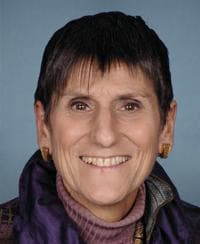
- Rosa DeLauro
- Cosponsors
- - 24 - 0
- Introduced
- In Committee
What this bill would do
This bill, known as the "No GOUGE Act," aims to prohibit price gouging on goods affected by tariffs. It prevents persons from selling tariffed goods at unreasonably high prices for a five-year period following a tariff or a planned tariff. The law defines "unreasonably high prices" based on cost increases that exceed the direct impact of the tariff. It includes specific provisions for final goods, goods assembled in the U.S., and individual components. The Federal Trade Commission is tasked with enforcing these regulations and managing consumer reports.
Yes· 3 of 7
Does this give people more protection from unfair business practices?+7
The bill prohibits companies from using tariffs as a pretext for excessive price hikes and establishes a consumer reporting mechanism.
Does this make it easier to run a small business?+5
The bill explicitly exempts businesses with less than $100,000,000 in gross revenue from the price gouging prohibitions.
Does this make what the government does easier for the public to see?+5
The bill requires annual public reports from the ITC and BLS regarding prices of goods sold by large companies.
The opposite
Would billionaires be better off under this?-5
The bill specifically targets entities with extremely high gross revenue for price gouging investigations.
Would business owners be better off under this?-3
Large-scale business owners face new compliance requirements and a presumption of violation regarding price increases.
Is this likely to grow the economy?-1
The bill imposes new regulatory costs and potential legal liabilities on large-scale commerce.
Who it would affect, and how
Potential Positive Impacts for People
-
Protection Against Excessive Price Hikes: The bill prohibits the sale of tariffed goods at unreasonably high prices for five years after a tariff or a planned tariff is demonstrated (Section 3(a)(1)). This could prevent companies from using tariffs as a pretext to increase prices beyond their actual costs.
-
Accountability for Large Corporations: The act creates a presumption of a violation if a person with "unfair leverage"—defined as earning at least $1,000,000,000 in gross revenue—sells goods at a price higher than the 180-day average during a tariff-related shock date (Section 3(c)(1)). This holds large entities accountable for price increases.
-
Empowerment of State Officials: State attorneys general or officials can bring civil actions in state or federal courts to enjoin unfair practices, enforce compliance, or obtain damages and restitution for residents (Section 3(f)(1)).
-
Consumer Reporting Mechanism: The Federal Trade Commission must establish a way for consumers to report potential violations through telephone, mail, or a website (Section 3(h)).
-
Public Transparency: The bill requires the International Trade Commission and the Bureau of Labor Statistics to submit annual public reports on the prices of goods sold by large companies, specifically focusing on changes in the prices of tariffed goods (Section 4(a)(1)).
Potential Negative Impacts for People
-
Cost Determination Delays: For goods subject to a planned tariff, no costs can be determined to be directly generated by the imposition of that tariff until the tariff actually enters into force (Section 3(a)(2)(B)).
-
Burden of Proof on Companies: To rebut a presumption of a violation during a tariff-related shock date, a person must demonstrate by "clear and convincing evidence" that the price increase was attributable in full to the costs generated by the tariff (Section 3(c)(2)).
Groups and Interests Ranking
Every group the model scored this bill for, from -10 to +10. Hover a score for the reason it gave.
- Economy And Finance
- Improves Consumer Protection+7Improves Small Business Support+5Reduces Inflation+3Improves Economic Growth-1
- Governance And Ideology
- Improves Government Transparency+5Increase States Rights+4
- Demographic And Interest Groups
- Good For Low Income Households+4Good For Middle Class Households+4Good For Billionaires-5Good For Business Owners-3
- 8/6/2026
- 1 Cosponsor added.
- 2/23/2026
- 1 Cosponsor added.
- 2/9/2026
- 2 Cosponsors added.
- 1/30/2026
- 2 Cosponsors added.
- 1/22/2026
- 1 Cosponsor added.
- 1/20/2026
- 1 Cosponsor added.
- 1/15/2026
- 1 Cosponsor added.
- 1/14/2026
- 1 Cosponsor added.
- 1/7/2026
- 4 Cosponsors added.
- 12/18/2025
- 1 Cosponsor added.
- 12/11/2025
- 2 Cosponsors added.
- 11/28/2025
- Referred to the Committee on Energy and Commerce, and in addition to the Committees on Ways and Means, and Education and Workforce, for a period to be subsequently determined by the Speaker, in each case for consideration of such provisions as fall within the jurisdiction of the committee concerned.
- 7 Cosponsors added.
- Introduced in House
 Angie Craig
Democrat · Minnesota
 Gilbert Cisneros
Democrat · California
 Greg Casar
Democrat · Texas
 Mark DeSaulnier
Democrat · California
 Adriano Espaillat
Democrat · New York
 Jesús García
Democrat · Illinois
 Val Hoyle
Democrat · Oregon
 Henry Johnson
Democrat · Georgia
 Pramila Jayapal
Democrat · Washington
 Julie Johnson
Democrat · Texas
 Summer Lee
Democrat · Pennsylvania
 James McGovern
Democrat · Massachusetts
 Jerrold Nadler
Democrat · New York
 Eleanor Norton
Democrat · District of Columbia
 Alexandria Ocasio-Cortez
Democrat · New York
 Chellie Pingree
Democrat · Maine
 Mark Pocan
Democrat · Wisconsin
 Delia Ramirez
Democrat · Illinois
 Emily Randall
Democrat · Washington
 Janice Schakowsky
Democrat · Illinois
 Lateefah Simon
Democrat · California
 Rashida Tlaib
Democrat · Michigan
 Shri Thanedar
Democrat · Michigan
 Nydia Velázquez
Democrat · New York