Bill · H.R. 6312· House(119-HR-6312)
Tri-Share Child Care Pilot Act of 2025
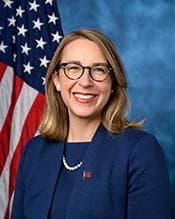
- Introduced
- 11/25/2025
- Last activity
- 11/25/2025 — Referred to the Committee on Ways and Means, and in addition to the Committee on Education and Workforce, for a period to be subsequently determined by the Speaker, in each case for consideration of such provisions as fall within the jurisdiction of the committee concerned.
- Sponsored by
- Hillary Scholten
- Cosponsors
- - 3 - 1
- Introduced
- In Committee
What this bill would do
The Tri-Share Child Care Pilot Act of 2025 establishes a federal pilot program designed to share the costs of child care among employers, employees, and the government. Through competitive grants, state lead agencies can implement a system where parents, participating employers, and the state each pay one-third of eligible child care costs. Employers must apply to participate, and parents must apply for benefits based on specific eligibility and income requirements. The program aims to address unmet demand for affordable, quality child care through a three-year period. This legislation includes specific funding for administration, evaluation, and technical assistance.
Yes· 3 of 8
Does this make child care cost less?+7
The bill establishes a cost-sharing system to make quality child care more affordable for families.
Would children be better off under this?+5
The program aims to increase access to quality child care for eligible children.
Would households on low incomes be better off under this?+4
It provides a way to subsidize child care costs for families within specific income thresholds.
The opposite
Would business owners be better off under this?-2
Participating employers are required to contribute one-third of the eligible child care costs.
Who it would affect, and how
Potential Positive Impacts for People
-
Reduced Cost Burden for Families: The program requires that costs be split three ways, meaning the parent pays only one-third of the eligible child care costs (Section 2(a)(1)(A)(iii)).
-
Increased Access to Quality Care: The Secretary approves applications based on a State's ability to ensure equitable statewide geographic access to affordable quality child care (Section 2(a)(1)(B)(v)).
-
Employment Benefits: The Secretary is tasked with evaluating how the program affects hiring, employment, and employee retention (Section 2(a)(9)(A)(ii)).
-
Flexible Payment Options: The lead agency is required to offer more than one payment schedule for paying child care providers (Section 2(a)(4)(C)(i)).
-
Protections for Existing Benefits: Participation in this program will not affect a person's eligibility for or the amount of benefits received under the Child Care and Development Block Grant Act of 1990 (Section 2(a)(7)).
Potential Negative Impacts for People
-
Strict Income Limitations: To be considered an "eligible child," the family income must fall within a specific range—not less than the State threshold for child care assistance and not more than 300 percent of that threshold (Section 2(a)(11)(A)(iii)).
-
Financial Responsibility for Employers: Participating employers are required to pay one-third of the eligible child care costs (Section 2(a)(1)(A)(iii)).
-
Financial Responsibility for Parents: Parents are required to pay one-third of the eligible child care costs (Section 2(a)(1)(A)(iii)).
-
Program Expiration: The pilot program is scheduled to terminate at the end of the three-year program period (Section 2(a)(8)).
Groups and Interests Ranking
Every group the model scored this bill for, from -10 to +10. Hover a score for the reason it gave.
- Demographic And Interest Groups
- Good For Children+5Good For Low Income Households+4Good For Middle Class Households+3Good For Women+3Good For Business Owners-2
- Social Issues And Justice
- Improves Childcare Affordability+7Improves Poverty Reduction+2
- Economy And Finance
- Increases Job Creation+2
- Governance And Ideology
- Increases Federal Power+1
- 9/14/2026
- 1 Cosponsor added.
- 2/12/2026
- 1 Cosponsor added.
- 1/22/2026
- 1 Cosponsor added.
- 11/25/2025
- Referred to the Committee on Ways and Means, and in addition to the Committee on Education and Workforce, for a period to be subsequently determined by the Speaker, in each case for consideration of such provisions as fall within the jurisdiction of the committee concerned.
- 1 Cosponsor added.
- Introduced in House
 John James
Republican · Michigan
 Julie Johnson
Democrat · Texas
 Sarah McBride
Democrat · Delaware
 Deborah Ross
Democrat · North Carolina