Bill · H.R. 6271· House(119-HR-6271)
Food Bank Emergency Support Act of 2025
- Introduced
- 11/21/2025
- Last activity
- 1/13/2026 — Referred to the Subcommittee on Nutrition and Foreign Agriculture.
- Sponsored by
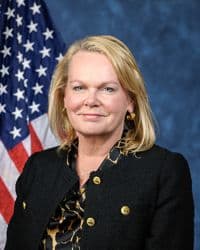
- April McClain Delaney
- Cosponsors
- - 23 - 0
- Introduced
- In Committee
What this bill would do
This bill, titled the "Food Bank Emergency Support Act of 2025," seeks to provide supplemental appropriations for the emergency food assistance program. It appropriates $462,500,000 to be used under the authority of section 27 of the Food and Nutrition Act of 2008. These funds are intended to be available if there is a lapse in funding for the supplemental nutrition assistance program. The funds will be used specifically if there is insufficient money to provide full benefit payments to all eligible households. Additionally, the bill classifies certain services related to this program as emergencies involving human life or property protection.
Yes· 3 of 24
Would households on low incomes be better off under this?+7
The bill specifically protects the continuity and amount of food benefits for those receiving supplemental nutrition assistance.
Is this likely to lift people out of poverty?+5
The bill ensures the continuity of food assistance benefits, which helps mitigate food insecurity for low-income households.
Would Black Americans be better off under this?+4
Protecting food assistance programs disproportionately benefits minority communities that rely on these services.
The opposite· 3 of 7
Would high-income households be better off under this?-1
The bill utilizes $462,500,000 from the Treasury to fund social assistance programs.
Would business owners be better off under this?-1
The bill increases federal spending which may have indirect impacts on the broader economy.
Would people with substantial wealth be better off under this?-1
The bill increases federal spending which may have indirect impacts on the broader economy.
Who it would affect, and how
Potential Positive Impacts for People
-
Ensures food assistance continuity: The appropriation of $462,500,000 is designed to carry out the emergency food assistance program even if there is a lapse in funding for the supplemental nutrition assistance program under the Food and Nutrition Act of 2008 (Section 2, Subsection a).
-
Protects benefit amounts for eligible households: The funds become available if there is insufficient money to carry out the Food and Nutrition Act of 2008 without reducing benefit amounts, or if the Secretary of Agriculture determines that budget authority is insufficient to provide full payments to all eligible households (Section 2, Subsection b).
-
Maintains essential services during emergencies: The bill deems services required to carry out the emergency food assistance program, including executing orders for commodity distribution, as services for emergencies involving the safety of human life or the protection of property (Section 2, Subsection c).
Potential Negative Impacts for People
- No negative impacts are explicitly stated in the provided text.
Groups and Interests Ranking
Every group the model scored this bill for, from -10 to +10. Hover a score for the reason it gave.
- Demographic And Interest Groups
- Good For Low Income Households+7Good For African Americans+4Good For Asian Americans+4Good For Hispanic Americans+4Good For Immigrants+4Good For Native Americans+4Good For People With Disabilities+4Good For Retirees+4Good For Veterans+4Good For White Americans+4Good For Children+3Good For Farmers+3Good For L G B T Q Community+3Good For Men+3Good For Middle Aged+3Good For Rural Residents+3Good For Seniors+3Good For Students+3Good For Urban Residents+3Good For Women+3Good For Young Adults+3Good For Union Workers+2Good For Middle Class Households+1Good For Billionaires-1Good For Business Owners-1Good For Gun Owners-1Good For High Income Households-1Good For High Net Worth Individuals-1Good For Ultra High Net Worth Individuals-1
- Social Issues And Justice
- Improves Poverty Reduction+5
- Economy And Finance
- Reduces Government Spending-1
- 1/13/2026
- Referred to the Subcommittee on Nutrition and Foreign Agriculture.
- 12/9/2025
- 1 Cosponsor added.
- 12/4/2025
- 1 Cosponsor added.
- 12/3/2025
- 3 Cosponsors added.
- 12/2/2025
- Sponsor introductory remarks on measure. (CR H4977)
- 12/1/2025
- 1 Cosponsor added.
- 11/25/2025
- 1 Cosponsor added.
- 11/21/2025
- Referred to the Committee on Appropriations, and in addition to the Committee on Agriculture, for a period to be subsequently determined by the Speaker, in each case for consideration of such provisions as fall within the jurisdiction of the committee concerned.
- 16 Cosponsors added.
- Introduced in House
 Yassamin Ansari
Democrat · Arizona
 Joyce Beatty
Democrat · Ohio
 Wesley Bell
Democrat · Missouri
 Steve Cohen
Democrat · Tennessee
 André Carson
Democrat · Indiana
 Debbie Dingell
Democrat · Michigan
 Sarah Elfreth
Democrat · Maryland
 Cleo Fields
Democrat · Louisiana
 Shomari Figures
Democrat · Alabama
 Henry Johnson
Democrat · Georgia
 Kweisi Mfume
Democrat · Maryland
 John Mannion
Democrat · New York
 Kelly Morrison
Democrat · Minnesota
 Eleanor Norton
Democrat · District of Columbia
 Donald Norcross
Democrat · New Jersey
 Luz Rivas
Democrat · California
 Terri Sewell
Democrat · Alabama
 Kim Schrier
Democrat · Washington
 Mike Thompson
Democrat · California
 Dina Titus
Democrat · Nevada
 Rashida Tlaib
Democrat · Michigan
 Shri Thanedar
Democrat · Michigan
 James Walkinshaw
Democrat · Virginia