
A Republican bill with 3 Republican cosponsors · See all 3 cosponsors
Last activity — Referred to the Subcommittee on Water Resources and Environment.
In committee
Introduced and handed to a committee in the chamber it started in.
The committee holds it, and most bills are never heard from again. A hearing or a committee vote would be news; silence is the usual outcome, and it kills the bill without anyone voting against it.
Its path through Congress
- Introduced
- In Committee
What this bill would do
This bill, titled the ``Northwest Energy Security Act,'' directs the operation of the Federal Columbia River Power System (FCRPS). It instructs the Secretaries of the Interior, Energy, and Army to operate the system according to the reasonable and prudent alternative described in the September 2020 Supplemental Opinion. However, it allows the Secretaries to amend that opinion if they determine it is necessary for public safety, grid reliability, or if certain requirements are no longer warranted. Additionally, the bill prohibits any actions or studies that would restrict electrical generation at FCRPS dams or limit navigation on the Snake River unless specifically authorized by a future Federal statute.
Yes· 3 of 7
- Scored +5
Does this give the federal government more power?
The bill grants Secretaries significant discretion to amend environmental opinions without new legislation.
- Scored +4
Does this put more money into wind, solar and other renewable power?
The bill protects the continued and expanded electrical generation capacity of existing hydroelectric dams.
- Scored +3
Would business owners be better off under this?
Securing electrical generation and river navigation provides a predictable environment for energy and maritime businesses.
The opposite
- Scored -5
Does this better protect air, water and wildlife?
The bill allows Secretaries to amend environmental opinions at their discretion, potentially reducing protections.
- Scored -2
Does this cut the pollution that drives climate change?
By preventing actions that might restrict electrical generation, the bill may impede transition efforts toward different environmental standards.
Who it would affect, and how
Potential Positive Impacts for People
-
Grid Reliability and Safety: The bill allows the Secretaries to amend the Supplemental Opinion if an amendment is necessary for public safety or transmission and grid reliability (Section 4(a)(1)).
-
Protection of Electrical Generation and Navigation: The bill prevents structural modifications, actions, or studies that would restrict electrical generation at F限りFCRPS hydroelectric dams or limit navigation on the Snake River in Washington, Oregon, or Idaho, unless authorized by a subsequent Federal statute (Section 5(a)).
-
Maintenance and Improvements: The bill ensures that the Secretaries can still conduct operation and maintenance activities or make capital improvements needed for authorized project purposes (Section 5(b)).
Potential Negative Impacts for People
-
Potential Deviation from Environmental Standards: The Secretaries are granted the ability to amend the Supplemental Opinion at their sole discretion if they determine certain requirements are no longer warranted (Section 4(a)(2)).
-
Restrictions on Future Changes: The bill creates a requirement that any proposal to restrict electrical generation or limit Snake River navigation must be specifically authorized by a new Federal statute enacted after this Act, which may prevent certain future actions (Section 5(a)).
Groups and Interests Ranking
Every group the model scored this bill for, from -10 to +10. Tap or hover a score for the reason it gave.
- Demographic And Interest Groups
- Would business owners be better off under this? — Securing electrical generation and river navigation provides a predictable environment for energy and maritime businesses. Would people in rural areas be better off under this? — Protecting hydropower and navigation supports the economic and energy stability of rural areas in the Northwest.
- Economy And Finance
- Is this likely to create jobs? — The bill protects electrical generation and navigation, which supports related industries and jobs. Does this make it easier to run a small business? — The protection of electrical generation and river navigation provides stability for local commerce and industries.
- Governance And Ideology
- Does this give the federal government more power? — The bill grants Secretaries significant discretion to amend environmental opinions without new legislation.
- Environment Energy And Infrastructure
- Does this put more money into wind, solar and other renewable power? — The bill protects the continued and expanded electrical generation capacity of existing hydroelectric dams. Does this improve buses, trains and other public transport? — The focus on grid reliability and electrical generation supports the energy infrastructure used for public services. Does this better protect air, water and wildlife? — The bill allows Secretaries to amend environmental opinions at their discretion, potentially reducing protections. Does this cut the pollution that drives climate change? — By preventing actions that might restrict electrical generation, the bill may impede transition efforts toward different environmental standards.
- 1/23/2025
- Referred to the Subcommittee on Water Resources and Environment.
- 1/22/2025
- Referred to the Committee on Natural Resources, and in addition to the Committee on Transportation and Infrastructure, for a period to be subsequently determined by the Speaker, in each case for consideration of such provisions as fall within the jurisdiction of the committee concerned.
- 3 Cosponsors added.
- Introduced in House
One bill Congress.gov lists as related to this one — companions in the other chamber, earlier versions, and bills this one absorbed or was folded into.
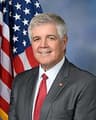 Cliff Bentz
Republican · Oregon
 Michael Baumgartner
Republican · Washington
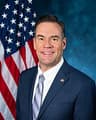 Russ Fulcher
Republican · Idaho