Bill · H.R. 6235· House(119-HR-6235)
End Child Poverty Act
- Introduced
- 11/20/2025
- Last activity
- 11/20/2025 — Referred to the House Committee on Ways and Means.
- Sponsored by
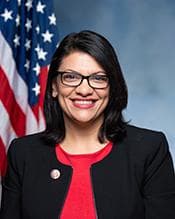
- Rashida Tlaib
- Cosponsors
- - 10 - 0
- Introduced
- In Committee
What this bill would do
The bill establishes a universal child assistance program under the Social Security Administration to provide monthly payments for qualifying children residing in the United States. It creates the Office of Universal Child Assistance to manage applications, determine eligibility, and disburse payments. The legislation ends the current child tax credit and earned income tax credit for taxable years beginning after December 31, 2025. Additionally, the bill introduces a new refundable tax credit for adult dependents aged over 18. Finally, it creates a new refundable credit for adults and families between the ages of 19 and 65, subject to income limitations.
Yes· 3 of 24
Would children be better off under this?+9
Provides universal monthly financial assistance directly for qualifying children under 19.
Would households on low incomes be better off under this?+9
Substantially reduces poverty by providing direct monthly payments and income-disregard protections.
Is this likely to lift people out of poverty?+8
The bill explicitly aims to end child poverty by providing universal monthly stipends to qualifying children.
The opposite· 3 of 7
Does this reduce what the federal government spends?-5
The legislation creates a new major federal entitlement program and additional refundable tax credits, expanding government spending.
Does this make the government pay for what it commits to?-4
Creating large-scale entitlement programs without offsetting revenue increases weighs on fiscal balance.
Does this reduce what the federal government owes?-3
Establishing a universal child assistance program and new refundable tax credits will significantly increase federal spending.
Who it would affect, and how
Potential Positive Impacts for People
-
Universal Child Assistance Payments: Under Section 2, qualifying children under 19 years old who are citizens, nationals, or qualified aliens can receive regular monthly child assistance payments. This could provide direct financial support to families and children.
-
Income Disregard Protection: Under Section 2(f), child assistance payments are not counted as income for federal taxes and cannot be used as income or resources to reduce eligibility or benefits under other federal, state, or local assistance programs. This ensures families do not lose other benefits for receiving the child payment.
-
Adult Dependent Credit: Under Section 4, eligible taxpayers can receive a $700 refundable tax credit, adjusted for inflation, for each qualifying dependent over the age of 18. This offers financial relief to individuals caring for adult dependents.
-
Credit for Adults and Families: Under Section 5, eligible individuals aged 19 through 65 can receive a $700 credit, or $1,400 for joint returns, subject to income thresholds and inflation adjustments. This puts money directly back into the pockets of working-age adults and families.
Potential Negative Impacts for People
-
Termination of Existing Tax Credits: Under Section 3, the bill terminates both the child tax credit and the earned income tax credit for taxable years beginning after December 31, 2025. This removes long-standing tax benefits that many families and workers rely on each year.
-
Income-Based Reduction for Adults and Families Credit: Under Section 5(b), the credit for adults and families is reduced by 5 percent for taxpayers with an adjusted gross income exceeding $40,000 for joint returns or $20,000 for any other case. This means individuals and families earning above these relatively low thresholds will see a reduction in their credit amount.
Groups and Interests Ranking
Every group the model scored this bill for, from -10 to +10. Hover a score for the reason it gave.
- Demographic And Interest Groups
- Good For Children+9Good For Low Income Households+9Good For Middle Class Households+5Good For African Americans+4Good For Hispanic Americans+4Good For Immigrants+4Good For Middle Aged+4Good For Women+4Good For Young Adults+4Good For Native Americans+3Good For People With Disabilities+3Good For Rural Residents+3Good For Urban Residents+3Good For Asian Americans+2Good For Men+2Good For White Americans+2Good For Billionaires-2Good For High Income Households-2Good For High Net Worth Individuals-2Good For Ultra High Net Worth Individuals-2
- Social Issues And Justice
- Improves Poverty Reduction+8Improves Childcare Affordability+6Improves Racial Equity+3Reduces Homelessness+3
- Governance And Ideology
- Increases Federal Power+5Improves Government Transparency+2
- Economy And Finance
- Reduces Middle Class Taxes+5Improves Economic Growth+2Reduces Government Spending-5Improves Fiscal Responsibility-4Reduces National Debt-3
- 2/2/2026
- 1 Cosponsor added.
- 1/12/2026
- 1 Cosponsor added.
- 11/28/2025
- 1 Cosponsor added.
- 11/20/2025
- Referred to the House Committee on Ways and Means.
- 7 Cosponsors added.
- Introduced in House
 Jesús García
Democrat · Illinois
 Ro Khanna
Democrat · California
 Summer Lee
Democrat · Pennsylvania
 Kweisi Mfume
Democrat · Maryland
 LaMonica McIver
Democrat · New Jersey
 Eleanor Norton
Democrat · District of Columbia
 Ilhan Omar
Democrat · Minnesota
 Ayanna Pressley
Democrat · Massachusetts
 Shri Thanedar
Democrat · Michigan
 Bonnie Watson Coleman
Democrat · New Jersey