Bill · H.R. 6234· House(119-HR-6234)
Baby Bonus Act
- Introduced
- 11/20/2025
- Last activity
- 11/20/2025 — Referred to the House Committee on Ways and Means.
- Sponsored by
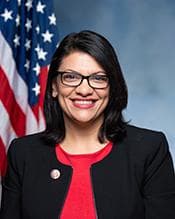
- Rashida Tlaib
- Cosponsors
- - 11 - 0
- Introduced
- In Committee
What this bill would do
This bill creates a baby bonus program within the Social Security Administration to provide financial payments for qualifying children. Eligible parents who are U.S. citizens or qualified aliens residing in the country can apply for these payments. The initial payment amount is set at $2,000 for the year 2026, with adjustments for the cost of living in later years. The bill allows eligible parents to receive advanced payments up to 60 days before the expected due date if their application is approved. It also includes rules for handling custody disputes, protecting privacy, and recovering accidental overpayments.
Yes· 3 of 38
Would children be better off under this?+8
Provides direct financial support for newborns and qualifying children beginning in 2026.
Would people in their twenties and thirties be better off under this?+8
Young adults starting families are the primary demographic beneficiaries of the baby bonus payments.
Would households on low incomes be better off under this?+8
Provides crucial financial assistance to low-income parents without reducing eligibility for other public benefits.
The opposite· 3 of 4
Does this reduce what the federal government spends?-4
The legislation introduces a new federal entitlement and benefit payment program that increases federal expenditures.
Does this reduce what the federal government owes?-3
Creating a new federal baby bonus payment program will increase government spending and contribute to the national debt.
Does this make the government pay for what it commits to?-2
The creation of a major new benefit program expands federal fiscal commitments without offsetting revenue measures.
Who it would affect, and how
Potential Positive Impacts for People
-
Section 3(a)(3)(A) establishes a baby bonus payment of $2,000 for calendar year 2026, which provides direct financial assistance to parents for a qualifying child.
-
Section 3(b)(2) allows eligible parents with approved applications to receive advanced payments up to 60 days before the expected due date, helping families prepare financially before the child arrives.
-
Section 3(f) ensures that baby bonus payments are not counted as income or resources for federal, state, or local benefit programs, meaning families will not lose existing assistance because they receive this bonus.
-
Section 3(g) prohibits the information submitted in applications from being used for any purpose other than determining eligibility for the baby bonus, protecting the privacy of applicants.
Potential Negative Impacts for People
-
Section 3(e)(1) allows the Commissioner to recover overpayments made to individuals using adjustment methods similar to those under the Social Security Act, which could create a financial burden for families if they are forced to repay funds they already spent.
-
Section 3(e)(2) applies penalty provisions from the Social Security Act to baby bonus payments, meaning individuals who violate the rules face legal penalties and fines.
Groups and Interests Ranking
Every group the model scored this bill for, from -10 to +10. Hover a score for the reason it gave.
- Demographic And Interest Groups
- Good For Children+8Good For Low Income Households+8Good For Young Adults+8Good For Middle Class Households+7Good For Women+7Good For Men+5Good For Immigrants+4Good For African Americans+3Good For Hispanic Americans+3Good For L G B T Q Community+3Good For Students+3Good For Asian Americans+2Good For High Income Households+2Good For Native Americans+2Good For Rural Residents+2Good For Union Workers+2Good For Urban Residents+2Good For Veterans+2Good For White Americans+2Good For Farmers+1Good For Middle Aged+1Good For People With Disabilities+1
- Social Issues And Justice
- Improves Childcare Affordability+8Improves Poverty Reduction+6Improves Gender Equality+1Improves L G B T Q Rights+1Improves Racial Equity+1Improves Social Security+1Reduces Homelessness+1
- Governance And Ideology
- Increases Federal Power+3Improves Government Transparency+2Improves Privacy Rights+2Improves Due Process+1
- Economy And Finance
- Improves Economic Growth+2Improves Consumer Protection+1Increases Job Creation+1Reduces Government Spending-4Reduces National Debt-3Improves Fiscal Responsibility-2Reduces Inflation-1
- Education And Technology
- Improves Data Privacy+2
- Healthcare
- Improves Healthcare Access+1
- 1/12/2026
- 1 Cosponsor added.
- 11/28/2025
- 1 Cosponsor added.
- 11/21/2025
- 1 Cosponsor added.
- 11/20/2025
- Referred to the House Committee on Ways and Means.
- 8 Cosponsors added.
- Introduced in House
 Ro Khanna
Democrat · California
 Timothy Kennedy
Democrat · New York
 Summer Lee
Democrat · Pennsylvania
 Kweisi Mfume
Democrat · Maryland
 LaMonica McIver
Democrat · New Jersey
 Eleanor Norton
Democrat · District of Columbia
 Ilhan Omar
Democrat · Minnesota
 Ayanna Pressley
Democrat · Massachusetts
 Brittany Pettersen
Democrat · Colorado
 Shri Thanedar
Democrat · Michigan
 Bonnie Watson Coleman
Democrat · New Jersey