Bill · H.R. 6228· House(119-HR-6228)
Unlocking Affordable Housing Act
- Introduced
- 11/20/2025
- Last activity
- 11/20/2025 — Referred to the House Committee on Transportation and Infrastructure.
- Sponsored by
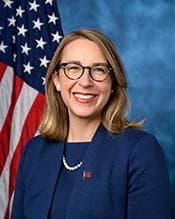
- Hillary Scholten
- Cosponsors
- - 5 - 2
- Introduced
- In Committee
What this bill would do
The Unlocking Affordable Housing Act directs the Secretary of Transportation to establish creditworthiness standards for residential and mixed-use development projects. These standards apply to projects seeking eligibility for TIFIA and RRIF funds. The Secretary must consult with the Secretary of Housing and Urban Development when determining these standards. The goal is to align requirements with those used by the Department of Housing and Urban Development while protecting the financial stability of the programs. The Secretary is required to prescribe regulations to implement these changes within 180 days of enactment.
Yes· 3 of 7
Does this make the government pay for what it commits to?+5
The bill directs the Secretary to establish creditworthiness standards specifically to safeguard the financial stability of the TIFIA and RRIF programs.
Does this make housing cost less?+4
The bill aims to unlock affordable housing by aligning TIFIA and RRIF creditworthiness standards with HUD requirements for residential and mixed-use projects.
Would households on low incomes be better off under this?+3
By facilitating residential development through TIFIA and RRIF, the bill seeks to increase the availability of affordable housing.
The opposite
No question was scored the opposite.
Who it would affect, and how
Potential Positive Impacts for People
-
Standardized Creditworthiness for Housing Projects: The bill allows the Secretary of Transportation, in consultation with the Secretary of Housing and Urban Development, to determine appropriate creditworthiness standards for residential and mixed-use development activities (Section 2(a)(1)(C)). This may help align requirements across different federal agencies.
-
Program Stability: The standards are designed to safeguard the financial stability of the TIFIA program (Section 2(a)(1)(C)(i)) and the RRIF program (Section 2(b)(1)(E)(ii)).
-
Regulatory Alignment: The bill aims to align creditworthiness standards with requirements established by the Secretary of Housing and Urban Development for its own assistance programs (Section 2(a)(1)(C)(ii) and Section 2(b)(1)(E)(i)).
Potential Negative Impacts for People
-
Increased Regulatory Burdens: The Secretary of Transportation must prescribe new regulations to carry out these creditworthiness standards (Section 2(c)).
-
New Requirements for Lines of Credit: Under the updated provisions for the TIFIA program, the funding of a line of credit for residential or mixed-use projects will be contingent on evidence of creditworthiness determined by the Secretary (Section 2(a)(2)(B)(ii)).
Groups and Interests Ranking
Every group the model scored this bill for, from -10 to +10. Hover a score for the reason it gave.
- Demographic And Interest Groups
- Good For Low Income Households+3Good For Middle Class Households+3Good For Urban Residents+3
- Economy And Finance
- Improves Fiscal Responsibility+5
- Social Issues And Justice
- Improves Affordable Housing+4
- Environment Energy And Infrastructure
- Improves Roads And Bridges+2
- Governance And Ideology
- Improves Government Transparency+2
- 3/4/2026
- 1 Cosponsor added.
- 2/2/2026
- 1 Cosponsor added.
- 12/16/2025
- 1 Cosponsor added.
- 12/11/2025
- 1 Cosponsor added.
- 12/4/2025
- 1 Cosponsor added.
- 11/20/2025
- Referred to the House Committee on Transportation and Infrastructure.
- 2 Cosponsors added.
- Introduced in House
 Robert Bresnahan
Republican · Pennsylvania
 Robert Garcia
Democrat · California
 Steven Horsford
Democrat · Nevada
 Michael Lawler
Republican · New York
 Sarah McBride
Democrat · Delaware
 Andrea Salinas
Democrat · Oregon
 Eugene Vindman
Democrat · Virginia