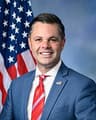
Zachary Nunn (R-IA)
Fostering the Future for American Children and Families Act
A Republican bill with 2 Democratic cosponsors · See all 5 cosponsors
Last activity — Referred to the Committee on Education and Workforce, and in addition to the Committee on Ways and Means, for a period to be subsequently determined by the Speaker, in each case for consideration of such provisions as fall within the jurisdiction of the committee concerned.
In committee
Introduced and handed to a committee in the chamber it started in.
The committee holds it, and most bills are never heard from again. A hearing or a committee vote would be news; silence is the usual outcome, and it kills the bill without anyone voting against it.
Its path through Congress
- Introduced
- In Committee
What this bill would do
This bill is known as the Fostering the Future for American Children and Families Act. It requires the Secretary of Health and Human Services and the Secretary of Labor to study existing programs that support job training and apprenticeships for foster youth. The bill also requires these officials to submit a report of their findings and recommendations to Congress within one year. After the study is complete, the bill establishes the Fostering the Future Pipeline Program to provide competitive grants for expanding job training access. Additionally, the bill allows certain education and training vouchers to be used for short-term, career-focused, credential-granting programs. The Act and its amendments take effect six months after enactment.
Yes· 3 of 13
- Scored +8
Would people in their twenties and thirties be better off under this?
Young adults aging out of the foster care system benefit significantly from increased training voucher flexibility and job pipelines.
- Scored +7
Would children be better off under this?
The legislation directly targets current and former foster youth by expanding their career and educational opportunities.
- Scored +6
Would households on low incomes be better off under this?
Foster youth transitioning to adulthood frequently come from low-income backgrounds and benefit from targeted financial and career support.
The opposite
No question was scored the opposite.
Who it would affect, and how
Potential Positive Impacts for People
-
Section 2: This section requires a comprehensive study on programs supporting technical job training, on-the-job training, and apprenticeships for current and former foster youth. This might be considered positive because it evaluates program effectiveness, service gaps, access barriers, and opportunities to expand career pathways.
-
Section 3: This section establishes the Fostering the Future Pipeline Program to make grants to States, academic institutions, private-sector employers, and nonprofit or faith-based organizations. This is positive because it aims to expand access to industry-aligned technical job training and apprenticeships in high-demand fields like skilled trades, manufacturing, health care, information technology, and agriculture.
-
Section 4: This section amends the Social Security Act to make education and training vouchers available for short-term, career-focused, credential-granting programs, including registered apprenticeships, certificate programs, and other rapid-employment pathways. This is positive because it increases flexibility for youth exiting foster care.
Potential Negative Impacts for People
- No potential negative impacts or burdens for individuals or groups of people are explicitly found within the provided text.
Groups and Interests Ranking
Every group the model scored this bill for, from -10 to +10. Tap or hover a score for the reason it gave.
- Demographic And Interest Groups
- Would people in their twenties and thirties be better off under this? — Young adults aging out of the foster care system benefit significantly from increased training voucher flexibility and job pipelines. Would children be better off under this? — The legislation directly targets current and former foster youth by expanding their career and educational opportunities. Would households on low incomes be better off under this? — Foster youth transitioning to adulthood frequently come from low-income backgrounds and benefit from targeted financial and career support. Would students be better off under this? — Provides students leaving foster care with enhanced flexibility to use education and training vouchers for short-term credential programs. Would business owners be better off under this? — Business owners gain access to a larger pool of trained workers through industry-aligned apprenticeship programs. Would farmers be better off under this? — Agriculture is specifically noted as one of the high-demand fields supported by the job training pipeline program.
- Economy And Finance
- Is this likely to create jobs? — The bill establishes grant programs and expands training vouchers to help foster youth enter high-demand career pathways and apprenticeships. Is this likely to grow the economy? — Improving workforce readiness and job training for foster youth contributes positively to long-term economic productivity. Does this make it easier to run a small business? — Private-sector employers and businesses can participate in grant opportunities to train foster youth for high-demand fields.
- Social Issues And Justice
- Is this likely to lift people out of poverty? — The legislation enhances support systems and career opportunities to help foster youth transition successfully to adulthood and self-sufficiency. Is this likely to reduce homelessness? — Providing better job training and career pathways helps vulnerable youth avoid housing instability.
- Governance And Ideology
- Does this make what the government does easier for the public to see? — The bill mandates a comprehensive study and report to Congress regarding foster youth programs and outcomes. Does this give the federal government more power? — The bill authorizes federal agencies to study programs and administer competitive grants to states and organizations.
- 2/3/2026
- 1 Cosponsor added.
- 12/17/2025
- 1 Cosponsor added.
- 11/20/2025
- Referred to the Committee on Education and Workforce, and in addition to the Committee on Ways and Means, for a period to be subsequently determined by the Speaker, in each case for consideration of such provisions as fall within the jurisdiction of the committee concerned.
- 3 Cosponsors added.
- Introduced in House
 Don Bacon
Republican · Nebraska
 Vince Fong
Republican · California
 Glenn Grothman
Republican · Wisconsin
 Greg Landsman
Democrat · Ohio
 Eugene Vindman
Democrat · Virginia