Bill · H.R. 6217· House(119-HR-6217)
Revitalize Our Neighborhoods Act of 2025
- Introduced
- 11/20/2025
- Last activity
- 11/20/2025 — Referred to the House Committee on Financial Services.
- Sponsored by
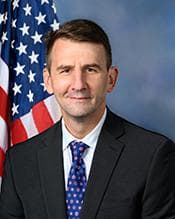
- Frank Mrvan
- Cosponsors
- - 12 - 0
- Introduced
- In Committee
What this bill would do
The Revitalize Our Neighborhoods Act of 2025 authorizes the Secretary of Housing and Urban Development to provide competitive grants to eligible entities. These grants are intended to eliminate blight and assist in neighborhood revitalization within low-income communities. Eligible entities include States, local governments, and multi-jurisdictional entities. Funds can be used for activities such as demolition, renovation, and the construction of affordable housing. Recipients must also provide matching funds of at least 15 percent.
Yes· 3 of 13
Would households on low incomes be better off under this?+7
The bill specifically directs resources to low-income communities for blight removal and affordable housing.
Does this make housing cost less?+7
The bill authorizes funds for the construction and preservation of affordable rental and owner-soccupied housing.
Would people in cities be better off under this?+6
The bill's focus on blight and demolition is highly relevant to urban community revitalization efforts.
The opposite
No question was scored the opposite.
Who it would affect, and how
Potential Positive Impacts for People
-
Neighborhood Revitalization: The bill allows for the demolition, clearance, and removal of blighted structures, as well as the renovation of abandoned or blighted existing structures, to improve communities (Section 2(a), 2(d)(1)).
-
Increased Affordable Housing: Grants can be used for the construction or preservation of affordable rental or owner-occupied housing as a result of eliminating blight (Section 2(d)(1)(F)).
-
Community Management: The bill provides for the removal of waste, site clearance, and the management of vacant land (Section 2(d)(1)(D)).
-
Support for Local Entities: States may pass grant amounts to local governments to carry out activities within low-income communities (Section 2(d)(2)(B)).
Potential Negative Impacts for People
-
Restrictions on Property Acquisition: Grant funds are prohibited from being used to acquire any occupied residential dwelling unit (Section 2(d)(3)).
-
Financial Burden on Grantees: Every eligible entity that receives a grant is required to contribute matching funds that are equal to or greater than 15 percent of the grant amount (Section 2(e)(1)).
Groups and Interests Ranking
Every group the model scored this bill for, from -10 to +10. Hover a score for the reason it gave.
- Demographic And Interest Groups
- Good For Low Income Households+7Good For Urban Residents+6Good For African Americans+5Good For Asian Americans+5Good For Hispanic Americans+5Good For Native Americans+5Good For White Americans+5Good For Middle Class Households+3
- Social Issues And Justice
- Improves Affordable Housing+7Improves Poverty Reduction+5
- Governance And Ideology
- Improves Government Transparency+4
- Economy And Finance
- Improves Small Business Support+2
- Environment Energy And Infrastructure
- Improves Rural Development+2
- 2/2/2026
- 1 Cosponsor added.
- 12/11/2025
- 1 Cosponsor added.
- 12/9/2025
- 1 Cosponsor added.
- 11/20/2025
- Referred to the House Committee on Financial Services.
- 9 Cosponsors added.
- Introduced in House
 Nikki Budzinski
Democrat · Illinois
 Herbert Conaway
Democrat · New Jersey
 Pablo Hernández
Democrat · Puerto Rico
 Raja Krishnamoorthi
Democrat · Illinois
 Timothy Kennedy
Democrat · New York
 Greg Landsman
Democrat · Ohio
 Morgan McGarvey
Democrat · Kentucky
 Eleanor Norton
Democrat · District of Columbia
 Emily Randall
Democrat · Washington
 Eric Sorensen
Democrat · Illinois
 Rashida Tlaib
Democrat · Michigan
 Shri Thanedar
Democrat · Michigan