
A Democratic bill with 5 Democratic cosponsors · See all 5 cosponsors
Last activity — Referred to the Committee on Ways and Means, and in addition to the Committee on Energy and Commerce, for a period to be subsequently determined by the Speaker, in each case for consideration of such provisions as fall within the jurisdiction of the committee concerned.
In committee
Introduced and handed to a committee in the chamber it started in.
The committee holds it, and most bills are never heard from again. A hearing or a committee vote would be news; silence is the usual outcome, and it kills the bill without anyone voting against it.
Its path through Congress
- Introduced
- In Committee
What this bill would do
The FORCE Act of 2025 aims to amend the Social Security Act to expand Medicare benefits to specific first responders. Eligible individuals can enroll in Medicare starting at age 57 rather than waiting until age 65. To qualify, a person must have worked at least 10 years in specific occupations identified by certain Standard Occupational Classification System codes. These individuals would receive benefits and protections similar to those found in Medicare Parts A, B, and D. The bill also establishes a Medicare First Responder Trust Fund to handle the collected premiums.
Yes· 3 of 8
- Scored +7
Does this make health care easier to get in general?
The bill allows eligible first responders to access Medicare benefits, including Part D and Medicare Advantage, much earlier than the standard age of 65.
- Scored +5
Does this put more money into Medicare, the health coverage for people over 65?
The bill establishes a new Medicare First Responder Trust Fund to provide coverage for eligible individuals starting at age 57.
- Scored +5
Does this strengthen Social Security?
The bill expands Medicare eligibility, which is a key component of the social safety net managed under the Social Security Act.
The opposite
- Scored -2
Would households on low incomes be better off under this?
The bill prohibits the use of this specific Medicare option for individuals who are currently eligible for coverage under a State Medicaid plan.
- Scored -1
Does this reduce what the federal government spends?
The creation of the Medicare First Responder Trust Fund represents a new expenditure of federal resources for early healthcare coverage.
Who it would affect, and how
Potential Positive Impacts for People
-
Early Access to Medicare Benefits: Individuals meeting the specific age and work requirements can access Medicare benefits earlier, specifically starting at age 57 instead of 65 (Section 2(a)(2)).
-
Comprehensive Coverage Options: Eligible first responders are entitled to the same benefits and protections as standard Medicare recipients, including the ability to join prescription drug plans under Part D or Medicare Advantage plans (Section 2(a)(2)(3)).
-
Protection via Ombudsman: Enrolled individuals would have access to the Medicare Beneficiary Ombudsman (Section 2(a)(2)(3)).
-
Medigap Accessibility: The bill ensures that coverage through Medicare supplemental policies is made available to these eligible individuals (Section 2(g)(3)).
-
Guaranteed Medigap Enrollment: The Secretary is directed to work with the National Association of Insurance Commissioners to update standards so that Medicare supplemental policies accept these eligible individuals (Section 2(b)).
Potential Negative Impacts for People
-
Monthly Premium Costs: Individuals must pay monthly premiums which consist of the amount for Part B plus the amount for Part A (Section 2(c)(1)).
-
Restrictions on Medicaid Integration: States are prohibited from buying Medicaid beneficiaries ages 57 to 64 into this Medicare option, and individuals eligible for coverage under a State plan are prohibited from using this specific Medicare enrollment (Section 2(g)(2)).
Groups and Interests Ranking
Every group the model scored this bill for, from -10 to +10. Tap or hover a score for the reason it gave.
- Healthcare
- Does this make health care easier to get in general? — The bill allows eligible first responders to access Medicare benefits, including Part D and Medicare Advantage, much earlier than the standard age of 65. Does this put more money into Medicare, the health coverage for people over 65? — The bill establishes a new Medicare First Responder Trust Fund to provide coverage for eligible individuals starting at age 57. Does this strengthen the Affordable Care Act? — The bill ensures that the new Medicare coverage qualifies as minimum essential coverage under the Affordable Care Act.
- Demographic And Interest Groups
- Would people over 65 be better off under this? — The bill provides a mechanism for early health coverage that transitions into standard Medicare at age 65. Would veterans be better off under this, taking everything together? — The bill provides specific healthcare advantages for professionals in high-risk public service roles. Would people in their twenties and thirties be better off under this? — The bill benefits individuals in their late 50s by providing healthcare security earlier than the standard age. Would households on low incomes be better off under this? — The bill prohibits the use of this specific Medicare option for individuals who are currently eligible for coverage under a State Medicaid plan.
- Social Issues And Justice
- Does this strengthen Social Security? — The bill expands Medicare eligibility, which is a key component of the social safety net managed under the Social Security Act.
- Economy And Finance
- Does this reduce what the federal government spends? — The creation of the Medicare First Responder Trust Fund represents a new expenditure of federal resources for early healthcare coverage.
- National Security And Foreign Policy
- Does this increase the pay, pensions or support veterans receive? — While primarily for first responders, the early Medicare access provides a benefit structure similar to those available to many service members.
- 5/29/2026
- 1 Cosponsor added.
- 5/12/2026
- 1 Cosponsor added.
- 2/5/2026
- 1 Cosponsor added.
- 11/19/2025
- Referred to the Committee on Ways and Means, and in addition to the Committee on Energy and Commerce, for a period to be subsequently determined by the Speaker, in each case for consideration of such provisions as fall within the jurisdiction of the committee concerned.
- 2 Cosponsors added.
- Introduced in House
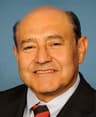 J. Correa
Democrat · California
 Salud Carbajal
Democrat · California
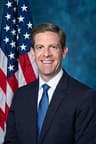 Mike Levin
Democrat · California
 Kelly Morrison
Democrat · Minnesota
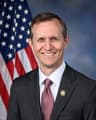 George Whitesides
Democrat · California