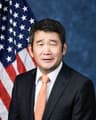
Dave Min (D-CA)
Regional Leadership in Wildland Fire Research Act of 2025
A Democratic bill with 1 Republican cosponsor · See the cosponsor
Last activity — Referred to the Subcommittee on Conservation, Research, and Biotechnology.
In committee
Introduced and handed to a committee in the chamber it started in.
The committee holds it, and most bills are never heard from again. A hearing or a committee vote would be news; silence is the usual outcome, and it kills the bill without anyone voting against it.
Its path through Congress
- Introduced
- In Committee
What this bill would do
The Regional Leadership in Wildland Fire Research Act of 2025 aims to establish regional wildland fire research centers across the United States. These centers will be selected from at least eight institutions of higher education or land-grant colleges and universities. The initiative includes a pilot program followed by the establishment of remaining centers within two years. A National Center Coordination Board will be created to oversee research priorities and data management. Additionally, regional advisory boards will be established at each center to connect research with operational needs. The bill provides authorized appropriations to fund these centers and the national board through fiscal year 2030.
Yes· 3 of 14
- Scored +7
Does this put more money into scientific research?
The bill authorizes hundreds of millions of dollars specifically for wildland fire research and center administration.
- Scored +5
Does this better protect air, water and wildlife?
The bill funds research into understanding and mitigating the impacts of wildland fires on landscapes and watersheds.
- Scored +4
Would Native Americans be better off under this?
The bill includes representatives from Indian Tribes or Tribal organizations on the regional advisory boards.
The opposite
- Scored -2
Does this reduce what the federal government spends?
The bill authorizes significant new federal spending through fiscal year 2030 for research centers and a national board.
Who it would affect, and how
Potential Positive Impacts for People
-
Improved Fire Understanding and Safety: The creation of regional centers is intended to improve the understanding of wildland fire, develop technologies to predict fire spread and behavior, and create tools to improve the safety of firefighters (Section 3(b)(4)).
-
Community Protection: Research efforts aim to leverage predictive capabilities to reduce the impact of smoke on communities and wildfire incident management teams (Section 3(b)(4)(E)).
-
Environmental and Risk Management: The centers will work to understand post-fire risks, such as flash flooding and watershed impacts, and develop tools for land management (Section 3(b)(4)(F) and (G)).
-
Educational and Career Opportunities: The bill mandates the development of career pathway training programs related to wildland fire research (Section 3(b)(4)(H)).
-
Support for Minority Institutions: The selection process for regional centers prioritizes institutions that are minority-serving (Section 3(b)(3)(A)(iv)).
Potential Negative Impacts for People
-
Financial Requirement: The bill requires significant federal spending, authorizing billions of dollars in appropriations for the regional centers and the National Center Coordination Board through 2030 (Section 3(g)(1)).
-
Uncompensated Service: Members of the Regional Advisory Boards are required to serve on a voluntary basis without compensation (Section 3(d)(3)).
Groups and Interests Ranking
Every group the model scored this bill for, from -10 to +10. Tap or hover a score for the reason it gave.
- Demographic And Interest Groups
- Would Native Americans be better off under this? — The bill includes representatives from Indian Tribes or Tribal organizations on the regional advisory boards. Would people in rural areas be better off under this? — The establishment of regional research centers provides direct scientific and economic investment in various geographic regions. Would students be better off under this? — The bill creates new career pathways and research opportunities within higher education institutions. Would Black Americans be better off under this? — The prioritization of minority-serving institutions can benefit minority-serving student populations. Would farmers be better off under this? — The research into wildland fire and vegetation response can benefit those involved in agricultural land management. Would households on low incomes be better off under this? — The emphasis on minority-serving institutions may provide more opportunities for students from diverse economic backgrounds. Would people in cities be better off under this? — Predictive modeling for smoke impacts can help mitigate public health risks for communities near fires.
- Education And Technology
- Does this put more money into scientific research? — The bill authorizes hundreds of millions of dollars specifically for wildland fire research and center administration. Does this make college cost less? — The bill mandates the development of career pathway training programs within institutions of higher education.
- Environment Energy And Infrastructure
- Does this better protect air, water and wildlife? — The bill funds research into understanding and mitigating the impacts of wildland fires on landscapes and watersheds. Does this invest in rural communities? — The establishment of regional research centers across various US regions can provide economic and scientific benefits to rural areas.
- Social Issues And Justice
- Does this narrow racial gaps in how people are treated? — The bill prioritizes the selection of institutions that are minority-serving institutions for the regional centers.
- Governance And Ideology
- Does this make what the government does easier for the public to see? — The bill requires research data to be fully and openly available and mandates public meetings for the coordination board.
- Economy And Finance
- Is this likely to create jobs? — The bill establishes research centers and career pathway training programs which may lead to new roles in wildland fire science. Does this reduce what the federal government spends? — The bill authorizes significant new federal spending through fiscal year 2030 for research centers and a national board.
- 5/20/2026
- Referred to the Subcommittee on Forestry and Horticulture.
- Referred to the Subcommittee on Conservation, Research, and Biotechnology.
- 11/19/2025
- Referred to the Committee on Natural Resources, and in addition to the Committees on Agriculture, and Science, Space, and Technology, for a period to be subsequently determined by the Speaker, in each case for consideration of such provisions as fall within the jurisdiction of the committee concerned.
- 1 Cosponsor added.
- Introduced in House
 Gabe Evans
Republican · Colorado