Bill · H.R. 611· House(119-HR-611)
Justice for Victims of Sanctuary Cities Act of 2025
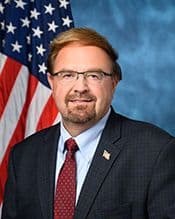
- Introduced
- 1/22/2025
- Last activity
- 1/22/2025 — Referred to the Subcommittee on Economic Development, Public Buildings, and Emergency Management.
- Sponsored by
- Chuck Edwards
- Cosponsors
- - 3 - 0
- Introduced
- In Committee
What this bill would do
The "Justice for Victims of Sanctuary Cities Act of 2025" aims to create a civil remedy for people harmed by sanctuary jurisdiction policies. It defines a sanctuary jurisdiction as a State or political subdivision that restricts sharing immigration status information or complying with Department of Homeland Security detainers. The bill allows victims of specific violent crimes to sue these jurisdictions for compensatory damages if the entity failed to comply with federal requests. It also establishes specific rules regarding the waiver of immunity for jurisdictions that accept certain federal grants. Additionally, the Act provides legal protections and status changes for local officials who comply with federal detainers.
Yes
Does this give the federal government more power?+7
The bill increases federal oversight and authority by creating a federal civil remedy against state/local jurisdictions.
The opposite· 3 of 4
Would immigrants be better off under this?-6
The bill creates legal and financial liabilities for jurisdictions that provide certain levels of protection or non-cooperation with immigration authorities.
Does this leave more decisions to the states?-6
The bill limits the autonomy of states and political subdivisions by imposing civil liability for sanctuary policies.
Would Hispanic Americans be better off under this?-5
The bill targets jurisdictions that often protect immigrant populations, potentially increasing legal friction for those communities.
Who it would affect, and how
Potential Positive Impacts for People
-
Victims of violent crimes may seek compensation: Under Section 3(a)(1), individuals (or their families) who are victims of murder, rape, or specific felonies may bring an action for compensatory damages against a State or political subdivision if that entity failed to comply with a Department of Homeland Security detainer or notification request.
-
Legal costs for victims may be covered: According to Section 3(a)(3), a prevailing plaintiff in these civil actions may recover reasonable attorney's fees and expert fees as part of the litigation costs.
-
Protections for local officials cooperating with federal authorities: Under Section 4(a), local officers or agents who comply with a detainer issued by the Department of Homeland Security are deemed to be acting as agents of the Department of Homeland Security.
-
Legal protections against lawsuits for complying with detainers: As stated in Section 4(b)(1), a State or political subdivision shall not be liable for actions taken in accordance with a detainer. Furthermore, Section 4(b)(2)(A) ensures that officers acting in accordance with a detainer are deemed employees of the Federal Government and law enforcement officers.
Potential Negative Impacts for People
-
Burden on victims to litigate against jurisdictions: While the bill provides a right to sue, Section 3(a)(1) requires the victim to prove the crime was committed by an alien who benefited from a sanctuary policy and that the harm would not have occurred if the jurisdiction had complied with federal requests.
-
Potential loss of immunity for certain jurisdictions: Under Section 3(b)(1), any State or political subdivision that accepts specific federal grants must agree to waive its immunity regarding sanctuary-related civil actions.
Groups and Interests Ranking
Every group the model scored this bill for, from -10 to +10. Hover a score for the reason it gave.
- Demographic And Interest Groups
- Good For Immigrants-6Good For Hispanic Americans-5Good For Urban Residents-4
- Governance And Ideology
- Increases Federal Power+7Increase States Rights-6
- 12/23/2025
- 1 Cosponsor added.
- 12/18/2025
- 1 Cosponsor added.
- 2/6/2025
- 1 Cosponsor added.
- 1/22/2025
- Referred to the Committee on the Judiciary, and in addition to the Committees on Transportation and Infrastructure, and Financial Services, for a period to be subsequently determined by the Speaker, in each case for consideration of such provisions as fall within the jurisdiction of the committee concerned.
- Referred to the Subcommittee on Economic Development, Public Buildings, and Emergency Management.
- Introduced in House
2 bills Congress.gov lists as related to this one — companions in the other chamber, earlier versions, and bills this one absorbed or was folded into.
 Tim Moore
Republican · North Carolina
 John McGuire
Republican · Virginia
 David Taylor
Republican · Ohio