Bill · H.R. 6085· House(119-HR-6085)
Stop Ballroom Bribery Act
- Introduced
- 11/18/2025
- Last activity
- 11/18/2025 — Referred to the Committee on Oversight and Government Reform, and in addition to the Committees on Natural Resources, and Transportation and Infrastructure, for a period to be subsequently determined by the Speaker, in each case for consideration of such provisions as fall within the jurisdiction of the committee concerned.
- Sponsored by
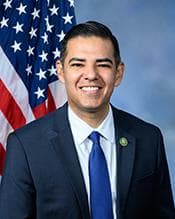
- Robert Garcia
- Cosponsors
- - 13 - 0
- Introduced
- In Committee
What this bill would do
The Stop Ballroom Bribery Act aims to prevent corruption by limiting donations for specific public properties and events. This includes work on or near the White House and Number One Observatory Circle, as well as monuments for certain high-ranking officials. The bill restricts donations from people involved in litigation, government investigations, or seeking federal contracts and appointments. It also requires strict approval processes involving the National Park Service and the Office of Government Ethics. Furthermore, it mandates transparency through quarterly reports and disclosures of meetings with officials. Finally, the act establishes significant civil and criminal penalties for those who violate these rules.
Yes· 3 of 4
Does this make what the government does easier for the public to see?+8
The bill mandates quarterly reports in the Federal Register and disclosure of meetings with high-ranking officials.
Does this give people more protection from unfair business practices?+2
The bill aims to prevent corruption and undue influence of government contracts through donations.
Does this better protect public land such as parks and forests?+2
The bill implements strict oversight for donations related to the maintenance of public property and monuments.
The opposite
Would business owners be better off under this?-3
The bill imposes strict donation bans and a two-year lobbying cooling-off period for those seeking government business.
Does this protect people from being watched or searched?-2
The bill requires donors to disclose meetings and communications with high-ranking officials.
Does this change how police departments operate?-1
The bill focuses on executive corruption rather than police department operations.
Who it would affect, and how
Potential Positive Impacts for People
-
Increased Transparency: The bill requires the National Park Service to publish quarterly reports in the Federal Register detailing donations, including the identity of contributors and circumstances of acceptance (Section 2(d)(2)).
-
Prevention of Conflicts of Interest: By prohibiting donations from individuals seeking government contracts, grants, pardons, or federal appointments, the bill aims to prevent people from using money to influence official actions (Section 2(b)(2)(A)).
-
Mandatory Meeting Disclosures: Donors must disclose any meetings or communications with the President, Vice President, or their families that occurred around the time of a donation, which helps track potential influence (Section 2(d)(1)).
-
Protection Against Coercion: The law prohibits accepting donations that are coerced through the authority of a government official or that include conditions intended to receive a government benefit (Section 2(b)(2)(B)).
-
Accountability Through Enforcement: The bill allows for civil and criminal penalties, including fines and imprisonment, to ensure that the rules are followed (Section 2(e)(5)).
Potential Negative Impacts for People
-
Strict Restrictions on Donors: Individuals involved in legal disputes or seeking business with the government are barred from making donations for covered projects, which limits their ability to contribute (Section 2(b)(2)(A)).
-
Lobbying Restrictions: People who make a donation are prohibited from engaging in lobbying activities directed at executive branch officers for a two-year period following the donation (Section 2(c)(2)).
-
Burden of Disclosure: Donors are required to disclose meetings with high-ranking officials, which adds a layer of reporting requirements to their communications (Section 2(d)(1)).
-
Severe Penalties: Individuals found in violation of the act face heavy fines and potential imprisonment, which could be a significant burden depending on the nature of the violation (Section 2(e)(5)).
Groups and Interests Ranking
Every group the model scored this bill for, from -10 to +10. Hover a score for the reason it gave.
- Governance And Ideology
- Improves Government Transparency+8Improves Privacy Rights-2
- Demographic And Interest Groups
- Good For Business Owners-3
- Economy And Finance
- Improves Consumer Protection+2
- Environment Energy And Infrastructure
- Improves Public Land Management+2
- National Security And Foreign Policy
- Improves International Alliances+1
- Social Issues And Justice
- Improves Policing Reform-1
- 9/2/2026
- 1 Cosponsor added.
- 2/4/2026
- 1 Cosponsor added.
- 1/7/2026
- 4 Cosponsors added.
- 12/18/2025
- 7 Cosponsors added.
- 11/18/2025
- Referred to the Committee on Oversight and Government Reform, and in addition to the Committees on Natural Resources, and Transportation and Infrastructure, for a period to be subsequently determined by the Speaker, in each case for consideration of such provisions as fall within the jurisdiction of the committee concerned.
- Introduced in House
One bill Congress.gov lists as related to this one — companions in the other chamber, earlier versions, and bills this one absorbed or was folded into.
 Yassamin Ansari
Democrat · Arizona
 Jasmine Crockett
Democrat · Texas
 Danny Davis
Democrat · Illinois
 Lizzie Fletcher
Democrat · Texas
 Maxwell Frost
Democrat · Florida
 Henry Johnson
Democrat · Georgia
 Raja Krishnamoorthi
Democrat · Illinois
 Stephen Lynch
Democrat · Massachusetts
 Jennifer McClellan
Democrat · Virginia
 Eleanor Norton
Democrat · District of Columbia
 Rashida Tlaib
Democrat · Michigan
 Bonnie Watson Coleman
Democrat · New Jersey
 James Walkinshaw
Democrat · Virginia