Bill · H.R. 6077· House(119-HR-6077)
HEAL-AI Act
- Introduced
- 11/18/2025
- Last activity
- 11/18/2025 — Referred to the House Committee on Energy and Commerce.
- Sponsored by
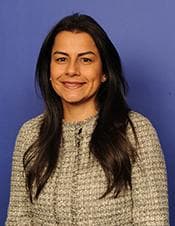
- Nanette Barragán
- Cosponsors
- - 2 - 0
- Introduced
- In Committee
What this bill would do
The Healthcare Education in AI Literacy Act, or HEAL-AI Act, creates a grant program run by the Health Resources and Services Administration. These grants provide funding to qualified medical schools and residency sponsoring institutions to train medical students, residents, and faculty on using artificial intelligence in medicine. The program focuses on AI competencies, including diagnostics, ethics, and data privacy. Grants are awarded on a competitive basis and are capped at $100,000 per institution annually. The act prioritizes institutions serving medically underserved communities and seeks geographic diversity across the U.S.
Yes· 3 of 24
Would students be better off under this?+5
Provides specific funding for the education and training of medical students.
Would people in their twenties and thirties be better off under this?+4
Directly benefits medical students and residents through enhanced training and education.
Would households on low incomes be better off under this?+3
Prioritizes medical institutions serving underserved communities.
The opposite
No question was scored the opposite.
Who it would affect, and how
Potential Positive Impacts for People
-
Improved Patient Care: By providing education on AI for diagnostics, treatment recommendations, and predictive analytics, the bill aims to improve health outcomes and patient care (Sec. 749D(2)(A) and Sec. 749E(c)(1)(A)).
-
Ethical Safeguards: The bill requires training on the ethical implications of AI, specifically addressing algorithm transparency, patient data privacy, and bias (Sec. 749E(c)(1)(C)).
-
Support for Underserved Areas: The Secretary is required to give priority to institutions that provide care to medically underserved communities (Sec. 749E(e)(2)).
-
Broad Resource Access: The bill mandates that educational materials funded by these grants be made publicly available on websites or research portals (Sec. 749F(b)).
-
Geographic Equity: The act requires that grants be distributed across diverse areas, including rural, suburban, and urban locations (Sec. 749E(g)).
Potential Negative Impacts for People
-
Limited Funding Availability: With a total appropriation of $1,000,000 per year and a competitive application process, many medical schools or residents may not receive the training or funding (Sec. 749G).
-
Strict Funding Caps: The limit of $100,000 per institution per year may restrict the scale or depth of AI education programs that can be implemented (Sec. 749E(h)).
-
Administrative Burden: Institutions must provide annual reports and detailed assurances, with a 10 percent cap on funds that can be used to cover these administrative costs (Sec. 749E(b)(2) and Sec. 749E(c)(2)).
Groups and Interests Ranking
Every group the model scored this bill for, from -10 to +10. Hover a score for the reason it gave.
- Demographic And Interest Groups
- Good For Students+5Good For Young Adults+4Good For African Americans+3Good For Hispanic Americans+3Good For Low Income Households+3Good For Native Americans+3Good For Rural Residents+3Good For Asian Americans+2Good For Middle Aged+2Good For Retirees+2Good For Seniors+2Good For Urban Residents+2Good For White Americans+2Good For High Income Households+1Good For Middle Class Households+1
- Governance And Ideology
- Improves Government Transparency+2Improves Privacy Rights+2Increases Federal Power+1
- Healthcare
- Improves Healthcare Access+3Increases Research Funding+2
- Education And Technology
- Improves Data Privacy+2Increases Scientific Research Funding+2
- Environment Energy And Infrastructure
- Improves Rural Development+2
- Social Issues And Justice
- Improves Racial Equity+2
- 11/18/2025
- Referred to the House Committee on Energy and Commerce.
- 2 Cosponsors added.
- Introduced in House
 Josh Gottheimer
Democrat · New Jersey
 Ted Lieu
Democrat · California