Bill · H.R. 6066· House(119-HR-6066)
CARE Act of 2025
- Introduced
- 11/17/2025
- Last activity
- 11/17/2025 — Referred to the House Committee on Education and Workforce.
- Sponsored by
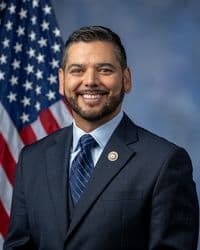
- Raul Ruiz
- Cosponsors
- - 6 - 0
- Introduced
- In Committee
What this bill would do
The CARE Act of 2025 seeks to strengthen child labor protections by amending the Fair Labor Standards Act of 1938. It targets the agricultural industry, where children often face hazardous conditions, low pay, and high fatality rates. The bill adjusts age requirements for agricultural work and increases civil penalties for labor violations. It also introduces criminal penalties for willful or repeated violations resulting in serious injury or death. Additionally, the act mandates new data analysis, employer reporting requirements, and prohibitions on children handling pesticides.
Yes· 3 of 9
Would children be better off under this?+8
The bill significantly strengthens age-based labor protections and safety standards for minors.
Would people in their twenties and thirties be better off under this?+5
The bill limits hazardous work for those under 18 and provides better safety through pesticide prohibitions.
Would households on low incomes be better off under this?+5
The bill provides stronger protections for poor children working in the agricultural industry.
The opposite
Would business owners be better off under this?-5
The bill increases the risk of significant civil fines and criminal penalties for agricultural employers.
Does this make it easier to run a small business?-3
The bill imposes stricter age requirements and increased civil and criminal penalties on agricultural employers.
Who it would affect, and how
Potential Positive Impacts for People
-
Increased protections for young workers: The bill updates the definition of "oppressive child labor" to include employment of 16 and 17-year-olds in occupations declared hazardous or detrimental to health (Section 3).
-
Stricter age limits for farm work: The act revises age requirements so that those under 16 can only work for a parent or person standing in place of a parent in non-hazardous roles (Section 4).
-
Stronger financial consequences for employers: Civil penalties for violations are adjusted, with fines reaching between $15,000 and $60,115 for violations causing serious injury, illness, or death (Section 5).
-
Criminal accountability for dangerous violations: Individuals who repeatedly or willfully violate laws resulting in the death or serious injury of a minor may face up to 5 years in prison or fines (Section 6).
-
Improved safety through data and reporting: The bill requires the Secretary of Labor to analyze data on injuries and deaths of child farmworkers (Section 7) and requires employers to report serious incidents within 5 days (Section 8).
-
Protection from chemical hazards: The act requires the Secretary of Labor to prohibit children under 18 from performing tasks defined as "pesticide handler" duties (Section 9).
Potential Negative Impacts for People
-
Increased burdens on employers: Employers are now required to submit specific reports within 5 days of a serious injury, illness, or death, with failure to do so resulting in civil penalties (Section 8).
-
Higher financial risks for businesses: Employers face significant civil penalties for violations, which can be doubled for repeated or willful offenses (Section 5).
Groups and Interests Ranking
Every group the model scored this bill for, from -10 to +10. Hover a score for the reason it gave.
- Demographic And Interest Groups
- Good For Children+8Good For Low Income Households+5Good For Young Adults+5Good For Hispanic Americans+4Good For Women+4Good For Rural Residents+3Good For Business Owners-5
- Social Issues And Justice
- Improves Gender Equality+4Improves Racial Equity+3
- Governance And Ideology
- Improves Government Transparency+5
- Economy And Finance
- Improves Small Business Support-3
- 12/15/2025
- 1 Cosponsor added.
- 12/5/2025
- 5 Cosponsors added.
- 11/17/2025
- Referred to the House Committee on Education and Workforce.
- Introduced in House
 Julia Brownley
Democrat · California
 André Carson
Democrat · Indiana
 Eleanor Norton
Democrat · District of Columbia
 Rashida Tlaib
Democrat · Michigan
 Shri Thanedar
Democrat · Michigan
 Frederica Wilson
Democrat · Florida