Bill · H.R. 6064· House(119-HR-6064)
Protecting Homes from Trains Act of 2025
- Introduced
- 11/17/2025
- Last activity
- 11/18/2025 — Referred to the Subcommittee on Railroads, Pipelines, and Hazardous Materials.
- Sponsored by
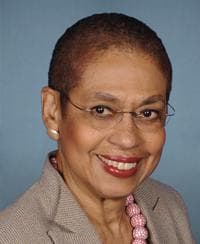
- Eleanor Norton
- Cosponsors
- None
- Introduced
- In Committee
What this bill would do
This bill is known as the Protecting Homes from Trains Act of 2025. It directs the Secretary of Transportation to set up a grant program within 180 days of enactment. The program will provide grants to design or construct barriers near rail lines that are next to residential structures. These barriers are meant to mitigate negative rail impacts like derailment damage, noise, and vibrations. Eligible recipients include states, public agencies, and rail carriers. The bill authorizes $100,000,000 to be appropriated for each of fiscal years 2026 through 2030.
Yes· 3 of 31
Does this improve buses, trains and other public transport?+5
Enhances rail infrastructure safety by investing in protective barriers near transit and freight lines.
Would people in cities be better off under this?+4
Urban areas with dense housing adjacent to rail lines will see direct mitigation of noise, vibration, and hazards.
Does this make housing cost less?+4
Protects residential areas and homes adjacent to rail lines from physical damage, noise, and vibrations.
The opposite
Does this reduce what the federal government spends?-3
The bill creates a new federal grant program requiring substantial ongoing appropriations.
Does this reduce what the federal government owes?-2
Authorizes $100 million annually in federal appropriations, contributing slightly to federal spending.
Does this make the government pay for what it commits to?-1
Allocates new federal spending without offsetting revenue measures.
Who it would affect, and how
Potential Positive Impacts for People
-
Section 2(a): This section directs the Secretary of Transportation to establish a grant program to design or construct barriers that mitigate rail activity, including damage from a train derailment, train noise, and train vibrations. This is positive because it helps protect residential structures and their use from negative impacts.
-
Section 2(b): This section allows grant funds to be used for barriers located adjacent to rail lines and between the rail line and affected residential areas. This is positive because it directly targets the placement of protections where people live.
-
Section 2(f): This section authorizes $100,000,000 to be appropriated for each of fiscal years 2026 through 2030 to carry out the program. This is positive because it provides dedicated funding to address rail problems near homes.
Potential Negative Impacts for People
- Section 2(f): This section authorizes $100,000,000 to be appropriated for each of fiscal years 2026 through 2030 for the grant program. This could be considered a negative burden because it requires significant federal spending.
Groups and Interests Ranking
Every group the model scored this bill for, from -10 to +10. Hover a score for the reason it gave.
- Demographic And Interest Groups
- Good For Urban Residents+4Good For Children+3Good For Low Income Households+3Good For Middle Aged+3Good For Middle Class Households+3Good For Retirees+3Good For Seniors+3Good For Union Workers+3Good For African Americans+2Good For Business Owners+2Good For Farmers+2Good For Hispanic Americans+2Good For People With Disabilities+2Good For Rural Residents+2Good For Young Adults+2Good For Asian Americans+1Good For High Income Households+1Good For Immigrants+1Good For Men+1Good For Native Americans+1Good For Students+1Good For Veterans+1Good For White Americans+1Good For Women+1
- Environment Energy And Infrastructure
- Improves Public Transit+5Improves Rural Development+2
- Governance And Ideology
- Improves Interstate Commerce+2Increase States Rights+2Increases Federal Power+2
- Social Issues And Justice
- Improves Affordable Housing+4
- Economy And Finance
- Increases Job Creation+3Reduces Government Spending-3Reduces National Debt-2Improves Fiscal Responsibility-1
- 11/18/2025
- Referred to the Subcommittee on Railroads, Pipelines, and Hazardous Materials.
- 11/17/2025
- Sponsor introductory remarks on measure. (CR E1069)
- Referred to the House Committee on Transportation and Infrastructure.
- Introduced in House