
Andrea Salinas (D-OR)
Rural Partnership and Prosperity Act
A Democratic bill with 1 Republican cosponsor · See all 6 cosponsors
Last activity — Referred to the Subcommittee on Commodity Markets, Digital Assets, and Rural Development.
In committee
Introduced and handed to a committee in the chamber it started in.
The committee holds it, and most bills are never heard from again. A hearing or a committee vote would be news; silence is the usual outcome, and it kills the bill without anyone voting against it.
Its path through Congress
- Introduced
- In Committee
What this bill would do
The Rural Partnership and Prosperity Act authorizes the Secretary of Agriculture to establish two major grant programs. The first is the Rural Partnership Program, which provides multiyear grants to coordinate investments in rural areas. The second is the Rural Partnership Technical Assistance Grant program, intended to assist rural community organizations. This bill also renames and expands the Rural Partners Network to improve the efficiency of Federal assistance. These programs aim to support economic development, planning, and community investment.
Yes· 3 of 11
- Scored +8
Would people in rural areas be better off under this?
The bill specifically targets rural areas for economic coordination, technical assistance, and investment.
- Scored +7
Would Native Americans be better off under this?
The bill guarantees that Indian Tribes receive at least 5 percent of the appropriated funds for the Rural Partnership Program.
- Scored +5
Would households on low incomes be better off under this?
The bill prioritizes resource allocation to areas with high nonmetropolitan poverty levels.
The opposite
No question was scored the opposite.
Who it would affect, and how
Potential Positive Impacts for People
-
Coordinated Investment: The Rural Partnership Program aims to coordinate Federal, nonprofit, and for-sprofit investment to benefit rural areas (Section 3(a)).
-
Targeted Support for High-Need Areas: Grant priority and allocation formulas are designed to favor areas with higher nonmetropolitan poverty levels and lower population levels (Section 3(b)(4) and Section 3(c)(2)(A)).
-
Dedicated Tribal Funding: Indian Tribes are guaranteed that their funding will not be less than 5 percent of the amount appropriated for the program, with higher levels of funding directed to those in high-poverty or low-population areas (Section 3(c)(1)(B)).
-
Economic Recovery Assistance: Grant funds can be used to address economic recovery following emergencies or natural and man-made disasters (Section 3(e)(8)).
-
Technical Capacity Building: Technical assistance grants can help rural organizations with Federal grant management, financial management systems, and the development of community economic development projects (Section 4(a) and Section 4(c)).
-
Increased Efficiency: The expanded Rural Partners Network is intended to reduce administrative burdens and streamline the application process for Federal funding for rural communities (Section 5).
Potential Negative Impacts for People
-
Matching Fund Requirements: Recipients of the Rural Partnership Program must provide non-Federal matching funds of at least 25 percent (Section 3(h)(1)).
-
Higher Matching Requirements for Technical Assistance: Recipients of the Technical Assistance grants are required to provide non-Federal matching funds of at least 30 percent (Section 4(f)(1)).
-
Restrictions on Fund Usage: Grant funds cannot be used to purchase or lease real property or buildings (Section 3(f)(2) and Section 4(d)(2)).
-
For-Profit Restrictions: While for-profit entities can be part of a partnership, they are strictly prohibited from using grant funds for operational activities or staffing (Section 3(f)(1) and Section 4(d)(1)).
Groups and Interests Ranking
Every group the model scored this bill for, from -10 to +10. Tap or hover a score for the reason it gave.
- Demographic And Interest Groups
- Would people in rural areas be better off under this? — The bill specifically targets rural areas for economic coordination, technical assistance, and investment. Would Native Americans be better off under this? — The bill guarantees that Indian Tribes receive at least 5 percent of the appropriated funds for the Rural Partnership Program. Would households on low incomes be better off under this? — The bill prioritizes resource allocation to areas with high nonmetropolitan poverty levels. Would middle-income households be better off under this? — Economic development in rural areas can support local employment and economic stability.
- Economy And Finance
- Is this likely to grow the economy? — The bill aims to stimulate rural economies through coordinated federal, nonprofit, and for-profit investments. Is this likely to create jobs? — The bill establishes grant programs designed to coordinate investments and support economic development in rural areas. Does this make it easier to run a small business? — The technical assistance grants help rural community organizations with economic development projects and grant management.
- Social Issues And Justice
- Is this likely to lift people out of poverty? — The bill prioritizes funding for areas with higher nonmetropolitan poverty levels to drive economic development. Does this make housing cost less? — Technical assistance grants include support for community economic development projects that can include housing.
- Governance And Ideology
- Does this make what the government does easier for the public to see? — The expanded Rural Partners Network aims to improve the efficiency of Federal assistance to rural communities.
- Environment Energy And Infrastructure
- Does this improve buses, trains and other public transport? — Technical assistance can assist in identifying consultants for designing physical infrastructure.
- 8/10/2026
- 1 Cosponsor added.
- 1/27/2026
- 1 Cosponsor added.
- 12/10/2025
- 1 Cosponsor added.
- 12/5/2025
- Referred to the Subcommittee on Commodity Markets, Digital Assets, and Rural Development.
- 11/20/2025
- 1 Cosponsor added.
- 11/19/2025
- 1 Cosponsor added.
- 11/12/2025
- Referred to the House Committee on Agriculture.
- 1 Cosponsor added.
- Introduced in House
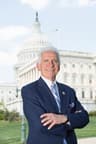 Jim Costa
Democrat · California
 Donald Davis
Democrat · North Carolina
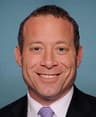 Josh Gottheimer
Democrat · New Jersey
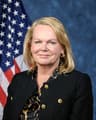 April McClain Delaney
Democrat · Maryland
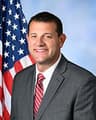 David Valadao
Republican · California
 Gabe Vasquez
Democrat · New Mexico