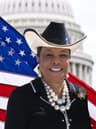
Frederica Wilson (D-FL)
Tribal Water Infrastructure Grants Expansion Act
A Democratic bill with no cosponsors
Last activity — Referred to the Subcommittee on Water Resources and Environment.
In committee
Introduced and handed to a committee in the chamber it started in.
The committee holds it, and most bills are never heard from again. A hearing or a committee vote would be news; silence is the usual outcome, and it kills the bill without anyone voting against it.
Its path through Congress
- Introduced
- In Committee
What this bill would do
The Tribal Water Infrastructure Grants Expansion Act amends the Federal Water Pollution Control Act to change how assistance is provided to Indian Tribes. It requires the Administrator to reserve either 2 percent of title VI funds or $30,000,000, whichever is greater, for these grants. These funds support eligible projects, activities, and training for the operation and management of treatment works. Additionally, the bill authorizes $500,000,000 in extra appropriations for fiscal years 2026 through 2031. These additional grants are provided in cooperation with the Director of the Indian Health Service.
Yes· 3 of 21
- Scored +10
Would Native Americans be better off under this?
The bill is specifically designed to provide massive funding and assistance for Indian Tribes.
- Scored +8
Would households on low incomes be better off under this?
Removes matching fund requirements, making infrastructure accessible to the poorest communities.
- Scored +8
Would people in rural areas be better off under this?
Directly benefits rural tribal lands with significant infrastructure funding.
The opposite
- Scored -5
Does this reduce what the federal government spends?
The bill increases government spending through expanded grants and new appropriations.
- Scored -2
Does this reduce what the federal government owes?
The bill authorizes additional spending of $500 million annually from 2026 to 2031.
- Scored -2
Does this make the government pay for what it commits to?
Increases federal expenditures without specifying an offset.
Who it would affect, and how
Potential Positive Impacts for People
-
Increased Funding for Tribal Water Projects: Section 2(a) ensures a minimum of $30,000,000 or 2 percent of funds are reserved for grants, providing more resources for eligible projects and activities.
-
Support for Technical Training: Section 2(a)(2)(A)(ii) and Section 2(b)(1)(B) provide funds for training, technical assistance, and educational programs to help manage treatment works.
-
Substantial Additional Appropriations: Section 2(b)(1) authorizes an additional $500,000,000 per year from 2026 through 2031 for grants to eligible entities.
-
Removal of Financial Barriers: Section 2(b)(2) states the Administrator cannot require a grant recipient to provide a share of the project cost, removing matching fund requirements.
Potential Negative Impacts for People
- Spending Caps on Training: Section 2(a)(2)(B) and Section 2(b)(3) limit the amount of funds that can be used for training, technical assistance, and educational programs to $2,000,000 per year for each funding source.
Groups and Interests Ranking
Every group the model scored this bill for, from -10 to +10. Tap or hover a score for the reason it gave.
- Demographic And Interest Groups
- Would Native Americans be better off under this? — The bill is specifically designed to provide massive funding and assistance for Indian Tribes. Would households on low incomes be better off under this? — Removes matching fund requirements, making infrastructure accessible to the poorest communities. Would people in rural areas be better off under this? — Directly benefits rural tribal lands with significant infrastructure funding. Would children be better off under this? — Children in tribal communities benefit significantly from improved clean water and sanitation. Would farmers be better off under this? — Water infrastructure improvements often benefit agricultural activities in tribal lands. Would business owners be better off under this? — Increased infrastructure spending creates opportunities for local contractors. Would people in middle age be better off under this? — Improves overall health and infrastructure for adults in tribal areas. Would middle-income households be better off under this? — General improvement of regional public health and infrastructure. Would people over 65 be better off under this? — Improved public health infrastructure benefits the elderly population in tribal areas. Would students be better off under this? — Provides funding for training and educational programs in water management. Would union members be better off under this? — Infrastructure construction typically employs unionized labor. Would people in their twenties and thirties be better off under this? — Provides educational and training opportunities in water management.
- Environment Energy And Infrastructure
- Does this invest in rural communities? — Directly funds critical water infrastructure in predominantly rural tribal lands. Does this better protect air, water and wildlife? — Expanding water pollution control and treatment works protects the environment and water quality.
- Social Issues And Justice
- Does this narrow racial gaps in how people are treated? — Specifically targets funding for Indian Tribes to address historical infrastructure disparities. Is this likely to lift people out of poverty? — Improving basic infrastructure like water and sanitation is a key component of poverty reduction.
- Healthcare
- Does this make health care easier to get in general? — Improving water treatment infrastructure directly improves public health outcomes in tribal communities.
- Economy And Finance
- Is this likely to create jobs? — Increased funding for water infrastructure projects typically creates construction and engineering jobs. Is this likely to grow the economy? — Investment in critical infrastructure supports local economic stability and growth in tribal areas. Does this make it easier to run a small business? — Infrastructure projects often provide contracts for local small businesses. Does this reduce what the federal government spends? — The bill increases government spending through expanded grants and new appropriations. Does this make the government pay for what it commits to? — Increases federal expenditures without specifying an offset. Does this reduce what the federal government owes? — The bill authorizes additional spending of $500 million annually from 2026 to 2031.
- Governance And Ideology
- Does this give the federal government more power? — Expands the scope and funding of a federal grant program administered by the EPA.
- 10/29/2025
- Referred to the Subcommittee on Water Resources and Environment.
- 10/28/2025
- Referred to the House Committee on Transportation and Infrastructure.
- Introduced in House