
A Democratic bill with 2 Democratic cosponsors · See all 2 cosponsors
Last activity — Referred to the Subcommittee on Nutrition and Foreign Agriculture.
In committee
Introduced and handed to a committee in the chamber it started in.
The committee holds it, and most bills are never heard from again. A hearing or a committee vote would be news; silence is the usual outcome, and it kills the bill without anyone voting against it.
Its path through Congress
- Introduced
- In Committee
What this bill would do
This bill, known as the "SNAP BACK Act," aims to ensure that nutrition assistance remains available without interruption. It requires the immediate release of funds appropriated for the supplemental nutrition assistance program (SNAP) and the special supplemental nutrition program for women, infants, and children (WIC). The Act mandates that the Secretary of Agriculture obligate and make available all appropriated funds immediately upon the bill's enactment. It also prevents any executive branch official from withholding or delaying these funds. Furthermore, the bill protects the continuity of EBT card operations and the enrollment process. Finally, it provides for the reimbursement of States or Tribes that use their own funds to cover funding lapses.
Yes· 3 of 8
- Scored +9
Would children be better off under this?
The bill ensures uninterrupted WIC benefits which are essential for the nutrition of infants and young children.
- Scored +9
Would households on low incomes be better off under this?
The act guarantees that SNAP and WIC benefits remain available and that EBT cards continue to function during funding gaps.
- Scored +8
Is this likely to lift people out of poverty?
The mandate for immediate fund release and continued enrollment protects vulnerable families from food insecurity.
The opposite
No question was scored the opposite.
Who it would affect, and how
Potential Positive Impacts for People
-
Uninterrupted Nutrition Benefits: The bill ensures that benefits for SNAP and WIC continue even if full-year appropriations have not been enacted (Section 2). This provides stability for individuals relying on these programs.
-
Protection Against Funding Delays: The Act prohibits any official from withholding or delaying the release of funds for reasons not authorized by law (Section 3). This prevents bureaucratic delays from affecting food access.
-
Guaranteed Enrollment and Access: The bill requires that State agencies continue to accept and process applications and that eligible individuals receive benefits within five days of funds being obligated (Section 3). This ensures that people can still sign up for help even during funding gaps.
-
Protection of EBT Card Use: The Secretary must ensure that EBT systems continue to work and that no agency can suspend or deactivate cards due to funding delays (Section 4). This means people can continue to use their cards to buy food without interruption.
-
Financial Support for Local Governments: The Secretary is required to reimburse States or federally recognized American Indian Tribes that use their own funds to cover a lapse in Federal funding (Section 5). This helps local governments recover money used to keep programs running during a crisis.
Potential Negative Impacts for People
- No specific negative impacts are mentioned in the text provided.
Groups and Interests Ranking
Every group the model scored this bill for, from -10 to +10. Tap or hover a score for the reason it gave.
- Demographic And Interest Groups
- Would children be better off under this? — The bill ensures uninterrupted WIC benefits which are essential for the nutrition of infants and young children. Would households on low incomes be better off under this? — The act guarantees that SNAP and WIC benefits remain available and that EBT cards continue to function during funding gaps. Would Native Americans be better off under this? — The bill includes specific provisions to reimburse federally recognized American Indian Tribes for covering funding lapses. Would women be better off under this? — The bill protects the continuity of WIC benefits, which serves a significant population of women.
- Governance And Ideology
- Does this leave more decisions to the states? — The bill provides for the reimbursement of States or Tribes that use their own funds to cover federal funding lapses. Does this make what the government does easier for the public to see? — The bill limits the ability of executive branch officials to withhold or delay appropriated funds without statutory authorization.
- Social Issues And Justice
- Is this likely to lift people out of poverty? — The mandate for immediate fund release and continued enrollment protects vulnerable families from food insecurity.
- Economy And Finance
- Does this reduce what the federal government spends? — The bill ensures funds are released immediately rather than being withheld, which maintains steady spending patterns for nutrition programs.
- 12/2/2025
- Referred to the Subcommittee on Nutrition and Foreign Agriculture.
- 10/28/2025
- Referred to the Committee on Appropriations, and in addition to the Committees on Agriculture, and Education and Workforce, for a period to be subsequently determined by the Speaker, in each case for consideration of such provisions as fall within the jurisdiction of the committee concerned.
- 2 Cosponsors added.
- Introduced in House
 Teresa Leger Fernandez
Democrat · New Mexico
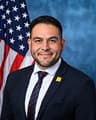 Gabe Vasquez
Democrat · New Mexico