Bill · H.R. 5830· House(119-HR-5830)
Guaranteed Income Pilot Program Act of 2025
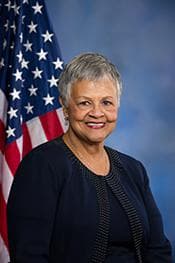
- Introduced
- 10/24/2025
- Last activity
- 10/24/2025 — Referred to the House Committee on Ways and Means.
- Sponsored by
- Bonnie Watson Coleman
- Cosponsors
- - 11 - 0
- Introduced
- In Committee
What this bill would do
This bill creates a 3-year pilot program to provide a guaranteed monthly income to certain individuals and study its effects. The Secretary, working with the Commissioner of Internal Revenue and an external partner, will select 20,000 eligible individuals to participate. Out of these participants, 10,000 will receive a monthly cash payment equal to the fair market rent for a 2-bedroom home in their ZIP Code or a substantially similar amount. Participants will receive their cash payments on the 15th day of each month. The bill also requires interim and final reports to be provided to Congress regarding the outcomes of the program. Finally, the legislation authorizes appropriations of $495,000,000 for each of the fiscal years 2026 through 2030 to carry out the Act.
Yes· 3 of 29
Would households on low incomes be better off under this?+6
Directly provides cash subsidies to help low-income individuals achieve stability.
Is this likely to lift people out of poverty?+5
Provides a direct guaranteed monthly income to help alleviate financial hardship for participants.
Does this make housing cost less?+3
The income subsidy is directly tied to local fair market rent to help cover housing costs.
The opposite
Does this reduce what the federal government spends?-3
The legislation requires substantial new federal expenditures for the pilot program and research.
Does this reduce what the federal government owes?-2
The bill authorizes significant appropriations totaling nearly $2.5 billion over five years.
Does this make the government pay for what it commits to?-2
It creates a new federally funded entitlement pilot without offsetting revenue measures.
Who it would affect, and how
Potential Positive Impacts for People
-
Cash Payments for Living Expenses: Under Section 3(b)(2), 10,000 participating eligible individuals will receive a cash payment each month equal to the fair market rent for a 2-bedroom home in their ZIP Code or a substantially similar amount, which could directly help individuals cover their housing and living costs.
-
Protection of Existing Benefits: Under Section 3(e), any payments made to participating individuals will not be counted as income or resources for 12 months from receipt when determining eligibility or benefit amounts for any Federal, State, or local program financed with Federal funds. This ensures that getting the pilot money does not cause people to lose other government assistance they rely on.
-
Studying Solutions for Financial Instability: Under Section 4, the Secretary is required to study the outcomes of the program, including micro-economic outcomes, health, and social costs, and report back to Congress, which could help lawmakers understand how to better address income volatility and financial stress for the American people.
Potential Negative Impacts for People
-
Limited Program Availability: Under Section 3(b)(1), the program is restricted to only 20,000 total eligible individuals, and under Section 3(b)(2), only 10,000 of those individuals will receive the monthly income subsidy, meaning the vast majority of Americans struggling with financial instability will be left out of the program.
-
Use of Taxpayer Funds: Under Section 6, the bill authorizes $495,000,000 to be appropriated for each fiscal year from 2026 through 2030 to carry out the Act, which places a heavy financial burden on taxpayers.
Groups and Interests Ranking
Every group the model scored this bill for, from -10 to +10. Hover a score for the reason it gave.
- Demographic And Interest Groups
- Good For Low Income Households+6Good For Children+2Good For Young Adults+2Good For African Americans+1Good For Asian Americans+1Good For Hispanic Americans+1Good For L G B T Q Community+1Good For Men+1Good For Middle Aged+1Good For Middle Class Households+1Good For Native Americans+1Good For People With Disabilities+1Good For Rural Residents+1Good For Students+1Good For Urban Residents+1Good For Veterans+1Good For White Americans+1Good For Women+1
- Social Issues And Justice
- Improves Poverty Reduction+5Improves Affordable Housing+3Reduces Homelessness+3Improves Childcare Affordability+1Improves Racial Equity+1
- Economy And Finance
- Improves Economic Growth+1Reduces Government Spending-3Improves Fiscal Responsibility-2Reduces National Debt-2
- Governance And Ideology
- Increases Federal Power+2Improves Government Transparency+1
- Healthcare
- Improves Healthcare Access+1Improves Mental Health Access+1
- Education And Technology
- Increases Scientific Research Funding+1
- 10/24/2025
- Referred to the House Committee on Ways and Means.
- 11 Cosponsors added.
- Introduced in House
 Danny Davis
Democrat · Illinois
 Henry Johnson
Democrat · Georgia
 Sara Jacobs
Democrat · California
 Summer Lee
Democrat · Pennsylvania
 Kevin Mullin
Democrat · California
 LaMonica McIver
Democrat · New Jersey
 Eleanor Norton
Democrat · District of Columbia
 Janice Schakowsky
Democrat · Illinois
 Rashida Tlaib
Democrat · Michigan
 Ritchie Torres
Democrat · New York
 Shri Thanedar
Democrat · Michigan