Bill · H.R. 5815· House(119-HR-5815)
District of Columbia Medicaid Fairness Act
- Introduced
- 10/24/2025
- Last activity
- 10/24/2025 — Referred to the House Committee on Energy and Commerce.
- Sponsored by
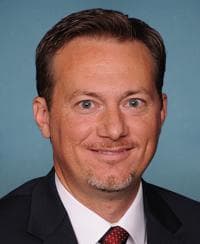
- Michael Cloud
- Cosponsors
- - 18 - 0
- Introduced
- In Committee
What this bill would do
This bill is called the District of Columbia Medicaid Fairness Act. It aims to change how the federal government helps fund Medicaid in the District of Columbia. Right now, the federal medical assistance percentage for the District is set at 70 percent. This bill adjusts that percentage downward over several fiscal years. For fiscal year 2027, the percentage becomes 65 percent, for fiscal year 2028 it drops to 60 percent, and for fiscal year 2029 it drops to 55 percent. Starting in fiscal year 2030, the percentage will be determined without the special clause or the specific percentages listed for those earlier years.
Yes
Does this reduce what the federal government spends?+4
Lowering federal Medicaid matching rates for D.C. directly decreases federal expenditures in the healthcare sector.
Does this reduce what the federal government owes?+3
By reducing the Federal medical assistance percentage (FMAP) for the District of Columbia over time, the bill decreases federal spending on Medicaid.
Does this make the government pay for what it commits to?+3
The legislation reduces federal outlays by stepping down the special Medicaid match rate for the District of Columbia.
The opposite· 3 of 16
Does this put more money into Medicaid, the health coverage for people on low incomes?-6
The bill explicitly reduces the federal Medicaid matching rate (FMAP) for the District of Columbia from 70 percent down to 55 percent by fiscal year 2029.
Would households on low incomes be better off under this?-5
Low-income households in the District of Columbia rely heavily on Medicaid, which will see reduced federal matching funds under this bill.
Does this make health care easier to get in general?-5
Lowering federal Medicaid support for the District of Columbia could strain local healthcare resources and reduce access for low-income residents.
Who it would affect, and how
Potential Positive Impacts for People
- As the text does not explicitly mention any positive outcomes or benefits for individuals or groups, no specific sections or provisions can be identified for this category.
Potential Negative Impacts for People
- Section 2 changes the Federal medical assistance percentage for the District of Columbia by lowering the federal funding support over time. Specifically, it reduces the percentage to 65 percent for fiscal year 2027, 60 percent for fiscal year 2028, and 55 percent for fiscal year 2029. This reduction in federal funding support could be considered a burden since it lowers the financial assistance provided compared to the flat 70 percent rate.
Groups and Interests Ranking
Every group the model scored this bill for, from -10 to +10. Hover a score for the reason it gave.
- Demographic And Interest Groups
- Good For Low Income Households-5Good For People With Disabilities-4Good For Urban Residents-4Good For Children-3Good For Seniors-3Good For African Americans-2Good For Hispanic Americans-2Good For Immigrants-2Good For Middle Aged-2Good For Retirees-2Good For Women-2Good For Young Adults-2
- Healthcare
- Increases Medicaid Funding-6Improves Healthcare Access-5
- Economy And Finance
- Reduces Government Spending+4Improves Fiscal Responsibility+3Reduces National Debt+3
- Social Issues And Justice
- Improves Poverty Reduction-3
- Governance And Ideology
- Increases Federal Power-2
- 1/13/2026
- 1 Cosponsor added.
- 1/6/2026
- 2 Cosponsors added.
- 12/3/2025
- 1 Cosponsor added.
- 12/1/2025
- 1 Cosponsor added.
- 11/18/2025
- 1 Cosponsor added.
- 11/12/2025
- 1 Cosponsor added.
- 11/4/2025
- 2 Cosponsors added.
- 10/31/2025
- 1 Cosponsor added.
- 10/24/2025
- Referred to the House Committee on Energy and Commerce.
- 8 Cosponsors added.
- Introduced in House
 Rick Allen
Republican · Georgia
 Jodey Arrington
Republican · Texas
 Josh Brecheen
Republican · Oklahoma
 Sheri Biggs
Republican · South Carolina
 Andrew Clyde
Republican · Georgia
 Ben Cline
Republican · Virginia
 Pat Fallon
Republican · Texas
 Brandon Gill
Republican · Texas
 Andy Harris
Republican · Maryland
 Clay Higgins
Republican · Louisiana
 Harriet Hageman
Republican · Wyoming
 Mike Kennedy
Republican · Utah
 August Pfluger
Republican · Texas
 John Rose
Republican · Tennessee
 Chip Roy
Republican · Texas
 W. Steube
Republican · Florida
 Thomas Tiffany
Republican · Wisconsin
 Beth Van Duyne
Republican · Texas