Bill · H.R. 5708· House(119-HR-5708)
Federal Employees Civil Relief Act
- Introduced
- 10/8/2025
- Last activity
- 10/8/2025 — Referred to the Committee on Oversight and Government Reform, and in addition to the Committees on Financial Services, Ways and Means, the Judiciary, Education and Workforce, and House Administration, for a period to be subsequently determined by the Speaker, in each case for consideration of such provisions as fall within the jurisdiction of the committee concerned.
- Sponsored by
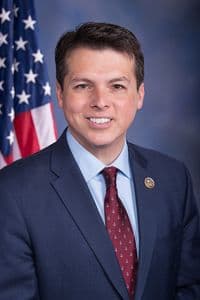
- Brendan Boyle
- Cosponsors
- - 15 - 0
- Introduced
- In Committee
What this bill would do
The Federal Employees Civil Relief Act aims to temporarily suspend judicial and administrative proceedings that could harm the civil rights of Federal workers during a government shutdown or debt limit breach. It defines a shutdown as a lapse in appropriations lasting more than 24 hours or exceeding the debt limit. The bill provides protections for various financial obligations, including rent, mortgages, student loans, and insurance premiums. It allows workers to apply for stays or adjustments to their obligations through the court system. Additionally, it includes protections against certain debt collection and eviction actions. The Act also establishes enforcement mechanisms, including civil actions and penalties for violators.
Yes· 3 of 9
Does this reduce what student borrowers owe or repay?+7
The bill allows for student loan deferment where principal payments are not required and interest does not accrue during a shutdown.
Does this make housing cost less?+6
The bill protects federal workers from eviction and provides for the stay of eviction proceedings during a shutdown.
Would households on low incomes be better off under this?+5
The bill offers significant protections for essential living expenses like rent and debt during a loss of income.
The opposite
No question was scored the opposite.
Who it would affect, and how
Potential Positive Impacts for People
-
Protection from Eviction: Landlords may be prohibited from evicting Federal workers from their residences during a shutdown without a court order, and courts may stay eviction proceedings or adjust lease obligations (Section 6).
-
Mortgage and Property Security: The bill provides for stays of proceedings or adjustments to obligations regarding mortgages, preventing unauthorized sales or foreclosures during a covered period (Section 7).
-
Lien Relief: Holders of liens on a worker's property or motor vehicles cannot enforce those liens without a prior court order, and courts may stay such proceedings (Section 8).
-
Student Loan Deferment: Federal workers may be eligible for deferment on student loans, meaning principal payments are not required and interest does not accrue during the shutdown (Section 9).
-
Tax Deferral: The collection of Federal income tax can be deferred for up to 90 days after a shutdown ends if the worker's ability to pay is materially affected, with no interest or penalties accruing during this time (Section 10).
-
Insurance Continuity: Covered insurance policies, such as health, life, disability, or motor vehicle insurance, are protected from lapsing or terminating due to unpaid premiums during a shutdown (Section 11).
-
Protection of Creditworthiness: Utilizing these protections cannot be used as a basis for lenders to deny credit, change terms, or report adverse information to consumer reporting agencies (Section 12).
-
Support for Dependents: The protections provided by this Act can be applied to the dependents of a Federal worker if the shutdown impacts the worker's ability to meet obligations (Section 12).
Potential Negative Impacts for People
-
Legal Costs and Requirements: Many protections, such as staying mortgage or student loan actions, require the worker to apply to a court (Section 5, Section 7, Section 9).
-
Limited Scope of Protection: The Act specifically does not apply to criminal proceedings or child support payments (Section 4).
-
Exceptions for Certain Taxes: The tax deferral provisions do not apply to taxes imposed on employees under section 3101 of the Internal Revenue Code of 1986 (Section 10).
Groups and Interests Ranking
Every group the model scored this bill for, from -10 to +10. Hover a score for the reason it gave.
- Demographic And Interest Groups
- Good For Low Income Households+5Good For Middle Class Households+5
- Social Issues And Justice
- Improves Affordable Housing+6Improves Poverty Reduction+4
- Economy And Finance
- Improves Consumer Protection+5Reduces Middle Class Taxes+3
- Education And Technology
- Improves Student Loan Relief+7
- Governance And Ideology
- Improves Due Process+5
- Healthcare
- Increases Affordable Care Act Support+2
- 6/18/2026
- 1 Cosponsor added.
- 10/24/2025
- 2 Cosponsors added.
- 10/21/2025
- 2 Cosponsors added.
- 10/17/2025
- 4 Cosponsors added.
- 10/14/2025
- 2 Cosponsors added.
- 10/8/2025
- Referred to the Committee on Oversight and Government Reform, and in addition to the Committees on Financial Services, Ways and Means, the Judiciary, Education and Workforce, and House Administration, for a period to be subsequently determined by the Speaker, in each case for consideration of such provisions as fall within the jurisdiction of the committee concerned.
- 4 Cosponsors added.
- Introduced in House
One bill Congress.gov lists as related to this one — companions in the other chamber, earlier versions, and bills this one absorbed or was folded into.
 Wesley Bell
Democrat · Missouri
 André Carson
Democrat · Indiana
 Troy Carter
Democrat · Louisiana
 Sarah Elfreth
Democrat · Maryland
 Jonathan Jackson
Democrat · Illinois
 William Keating
Democrat · Massachusetts
 Gwen Moore
Democrat · Wisconsin
 Jennifer McClellan
Democrat · Virginia
 Eleanor Norton
Democrat · District of Columbia
 Chellie Pingree
Democrat · Maine
 Emily Randall
Democrat · Washington
 Robert Scott
Democrat · Virginia
 Andrea Salinas
Democrat · Oregon
 Bennie Thompson
Democrat · Mississippi
 Jill Tokuda
Democrat · Hawaii