Bill · H.R. 5573· House(119-HR-5573)
Combatting Fentanyl Poisonings Act of 2025
- Introduced
- 9/26/2025
- Last activity
- 9/26/2025 — Referred to the House Committee on the Judiciary.
- Sponsored by
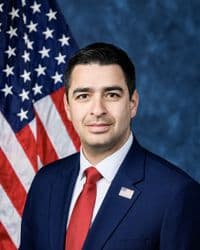
- Gabe Evans
- Cosponsors
- - 6 - 6
- Introduced
- In Committee
What this bill would do
The bill is titled the Combatting Fentanyl Poisonings Act of 2025. It amends the Omnibus Crime Control and Safe Streets Act of 1968 to authorize specific grant programs. The grants are designed to combat fentanyl poisonings through law enforcement, public awareness, and officer protection. The Attorney General awards these grants in consultation with the Secretary of Health and Human Services. Specific funding amounts are reserved for each of the authorized grant programs.
Yes· 3 of 8
Does this do more about addiction and overdose deaths?+8
The bill funds public awareness, naloxone training, and law enforcement tools specifically to combat fentanyl poisoning.
Would children be better off under this?+5
The bill funds education for parents and school personnel to protect children from online drug dealers.
Would people in their twenties and thirties be better off under this?+4
The bill targets the sale of drugs on social media platforms which are frequently used by young adults.
The opposite
No question was scored the opposite.
Who it would affect, and how
Potential Positive Impacts for People
-
State and local law enforcement agencies can receive grants to prioritize the arrest of individuals who use social media platforms to unlawfully sell, market, or distribute controlled substances, as found in section 509(a)(1)(A).
-
School personnel, clinicians, and the public can receive education and training on the dangers of ingesting controlled substances purchased on social media, especially the risk of fentanyl poisoning from counterfeit substances, under section 509(a)(1)(B)(i).
-
Parents and personnel charged with the well-being of children can receive education on commonly used methods of communication between online drug dealers and potential victims, according to section 509(a)(1)(B)(ii).
-
Non-profit organizations can receive grants up to $50,000 to operate public education and awareness campaigns that teach individuals about the dangers of fentanyl, as stated in section 509(b)(1) and section 509(b)(4).
-
Non-profit grant funds can be used to provide transportation for parents or immediate family members of individuals who died from fentanyl poisoning to speak at public events, as outlined in section 509(b)(2)(A).
-
Non-profit grant funds can be used to provide counseling or mentorship services to individuals who have had a friend or a family member die from fentanyl poisoning, under section 509(b)(2)(C).
-
Non-profit organizations and law enforcement agencies can use grant funds to provide naloxone or overdose reversal education and training services to parents, school employees, and officers, as detailed in section 509(b)(2)(D) and section 509(c)(2).
-
State and local law enforcement agencies can receive grants to equip and prepare officers at risk of fentanyl exposure on duty by procuring equipment like fentanyl test strips, field-portable ion mobility spectrometers, and naloxone, according to section 509(c)(1) and section 509(c)(2)(A).
Potential Negative Impacts for People
- Non-profit organizations are explicitly prohibited from using grant funds to purchase certain harm reduction services or supplies, including substance abuse test kits, sharps or medication disposal kits, medication lockboxes, supplies to promote sterile injection, safer smoking kits, and written educational materials on safer injection practices, as specified in section 509(b)(3).
Groups and Interests Ranking
Every group the model scored this bill for, from -10 to +10. Hover a score for the reason it gave.
- Demographic And Interest Groups
- Good For Children+5Good For Young Adults+4Good For Low Income Households+2
- Healthcare
- Improves Opioid Crisis Response+8Improves Mental Health Access+3
- Social Issues And Justice
- Improves Policing Reform+4Improves Poverty Reduction+1
- Education And Technology
- Improves School Choice+1
- 9/21/2026
- 1 Cosponsor added.
- 2/9/2026
- 1 Cosponsor added.
- 12/23/2025
- 1 Cosponsor added.
- 12/18/2025
- 1 Cosponsor added.
- 12/17/2025
- 1 Cosponsor added.
- 12/2/2025
- 1 Cosponsor added.
- 10/17/2025
- 1 Cosponsor added.
- 9/26/2025
- Referred to the House Committee on the Judiciary.
- 5 Cosponsors added.
- Introduced in House
 Lauren Boebert
Republican · Colorado
 Jeff Crank
Republican · Colorado
 Scott DesJarlais
Republican · Tennessee
 Michael Guest
Republican · Mississippi
 Laura Gillen
Democrat · New York
 Adam Gray
Democrat · California
 Dave Min
Democrat · California
 John Rose
Republican · Tennessee
 Josh Riley
Democrat · New York
 Christopher Smith
Republican · New Jersey
 Derek Tran
Democrat · California
 Eugene Vindman
Democrat · Virginia