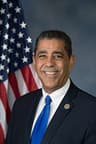
Adriano Espaillat (D-NY)
To amend the Elementary and Secondary Education Act of 1965 to provide for additional activities, resources, and data collection with respect to English learners, and for other purposes.
A Democratic bill with no cosponsors
Last activity — Referred to the House Committee on Education and Workforce.
In committee
Introduced and handed to a committee in the chamber it started in.
The committee holds it, and most bills are never heard from again. A hearing or a committee vote would be news; silence is the usual outcome, and it kills the bill without anyone voting against it.
Its path through Congress
- Introduced
- In Committee
What this bill would do
This bill proposes several amendments to the Elementary and Secondary Education Act of 1965. It aims to increase resources and data collection specifically for English learners and immigrant children and youth. The bill introduces requirements for tracking the diversity of school teachers and monitoring the progress of former English learners. It also expands subgrantee activities to include professional development and increased access to various resources. Furthermore, it directs agencies to support policies that improve educational outcomes regardless of immigration status.
Yes· 3 of 9
- Scored +6
Would children be better off under this?
The bill provides specialized academic support, professional development for educators, and language-specific resources for children.
- Scored +6
Would immigrants be better off under this?
The bill provides specific resources, legal information, and academic support for immigrant children and their parents.
- Scored +5
Would Hispanic Americans be better off under this?
The bill specifically targets resources and support for English learners and immigrant children, often a significant demographic in this group.
The opposite
No question was scored the opposite.
Who it would affect, and how
Potential Positive Impacts for People
-
Increased Transparency of Teacher Diversity: The bill requires statistics on the racial, ethnic, gender, and linguistic diversity of elementary and secondary school teachers in a State (Section 1(a)).
-
Academic Achievement for English Learners: It aims to help all English learners, including immigrant children and youth, achieve high levels in academic subjects to meet challenging State academic standards (Section 1(b)(1)).
-
Inclusion in Learning Environments: The bill states that, where practicable, English learners should not be separated from students who are not English learners and should not be denied access to dual language programs (Section 1(b)(1)).
-
Monitoring Long-Term Success: Agencies will be required to describe how they will monitor the progress of former English learners to ensure they continue to meet State academic standards (Section 1(b)(2)).
-
Access to Essential Resources: The bill seeks to increase access for English learners, immigrant children, and their parents to legal, educational, financial, and social services, providing these in their native languages (Section 1(b)(3)(A)).
-
Supportive Professional Development: It includes culturally competent and responsive training for educators, administrators, counselors, social workers, and psychologists to better support English learners and immigrant youth (Section 1(b)(3)(B)).
-
Policy Advocacy: It authorizes activities that support and advocate for the development of policies to improve educational outcomes for English learners and immigrant children and youth (Section 1(b)(3)(C)).
-
Family Notifications: It includes services to assess how State and local laws impact these students and provide notifications to parents and families about such laws in their native language (Section 1(b)(4)).
-
Detailed Accountability Data: The bill updates accountability requirements to include disaggregated data by ethnicity, race, native language, and specifically for English learners with a disability (Section 1(b)(5)).
Potential Negative Impacts for People
- No specific negative impacts or burdens are explicitly mentioned in the provided text.
Groups and Interests Ranking
Every group the model scored this bill for, from -10 to +10. Tap or hover a score for the reason it gave.
- Demographic And Interest Groups
- Would children be better off under this? — The bill provides specialized academic support, professional development for educators, and language-specific resources for children. Would immigrants be better off under this? — The bill provides specific resources, legal information, and academic support for immigrant children and their parents. Would Hispanic Americans be better off under this? — The bill specifically targets resources and support for English learners and immigrant children, often a significant demographic in this group. Would households on low incomes be better off under this? — The bill increases access to educational, financial, and social services for immigrant and English-learning families. Would people with disabilities be better off under this? — The bill requires accountability data to be disaggregated for English learners with a disability.
- Social Issues And Justice
- Does this narrow racial gaps in how people are treated? — The bill requires collecting and reporting statistics on the racial and ethnic diversity of teachers and students. Does this make it easier for immigrants already here to become citizens? — The bill provides support and resources to immigrant children and youth regardless of their immigration status. Is this likely to lift people out of poverty? — The bill increases access for immigrant families to financial and social services in their native languages.
- Education And Technology
- Does this put more money into public schools? — The bill expands the scope of authorized subgrantee activities to include more resources for English learners.
- 9/23/2025
- Referred to the House Committee on Education and Workforce.
- Introduced in House
One bill Congress.gov lists as related to this one — companions in the other chamber, earlier versions, and bills this one absorbed or was folded into.