Bill · H.R. 5505· House(119-HR-5505)
Equal Campus Access Act of 2026
- Introduced
- 9/18/2025
- Last activity
- 9/16/2026 — Placed on the Union Calendar, Calendar No. 730.
- Sponsored by
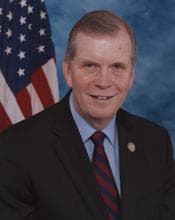
- Tim Walberg
- Cosponsors
- - 14 - 0
- Introduced
- On Calendar
What this bill would do
This bill is called the Equal Campus Access Act of 2026. It amends the Higher Education Act of 1965. The purpose of the bill is to ensure campus access at public colleges and universities for religious groups. Under this legislation, public schools cannot deny rights, benefits, or privileges to religious student organizations. This includes denying access to facilities or official recognition because of the group's religious beliefs, practices, speech, leadership standards, or standards of conduct. If a public institution denies these things to a religious student group, it will lose access to funds made available under the Act.
Yes· 3 of 5
Does this protect the freedom to practise a religion?+5
The bill protects religious student organizations by ensuring they receive campus rights and benefits regardless of their beliefs.
Does this give the federal government more power?+4
The bill increases federal oversight by conditioning higher education funding on campus access policies.
Does this protect what people are allowed to say in public life?+3
The bill addresses campus speech by protecting the rights of religious groups to engage in campus life.
The opposite
Does this leave more decisions to the states?-3
The bill limits the autonomy of public institutions to set their own standards for student organizations.
How the text last changed
Reported in House (9/16/2026), compared with Introduced in House. Each change is on the Text tab.
The newer version of the bill changes the short title year from 2025 to 2026. It also updates the title of Section 2 and the name of the organization mentioned in the new section by adding the word student, changing it from religious groups to religious student groups. These updates apply to public colleges and universities receiving funds under the Act, ensuring they cannot deny rights, benefits, or privileges to religious student organizations based on their beliefs, practices, speech, leadership standards, or standards of conduct.
Who it would affect, and how
Potential Positive Impacts for People
-
Protection for Religious Groups: Section 2 adds a new section to the law ensuring that public institutions of higher education cannot deny a religious student organization any right, benefit, or privilege that is given to other student groups. This is a positive outcome because it stops schools from treating religious groups unfairly due to their religious beliefs, practices, speech, leadership standards, or standards of conduct.
-
Equal Access to Facilities and Recognition: Section 2 ensures that religious student organizations receive full access to the facilities of the institution and official recognition by the institution. This benefits students by making sure religious groups are treated the same as all other student organizations on campus.
Potential Negative Impacts for People
- Loss of Funding for Schools: Section 2 states that none of the funds made available under the Act may be provided to any public institution of higher education that denies a religious student organization rights, benefits, or privileges. While meant to enforce the rule, this could be viewed as a negative burden if it results in a public school losing federal funds, which could impact the broader student population.
Groups and Interests Ranking
Every group the model scored this bill for, from -10 to +10. Hover a score for the reason it gave.
- Social Issues And Justice
- Improves Religious Freedom+5Improves Freedom Of Speech+3
- Governance And Ideology
- Increases Federal Power+4Improves Freedom Of Speech+3Increase States Rights-3
- Demographic And Interest Groups
- Good For Students+2
A committee approved it and sent it to the floor
What changed from Introduced in House
The newer version of the bill changes the short title year from 2025 to 2026. It also updates the title of Section 2 and the name of the organization mentioned in the new section by adding the word student, changing it from religious groups to religious student groups. These updates apply to public colleges and universities receiving funds under the Act, ensuring they cannot deny rights, benefits, or privileges to religious student organizations based on their beliefs, practices, speech, leadership standards, or standards of conduct.
Each change
-
Section 1 updates the short title year of the Act from the Equal Campus Access Act of 2025 to the Equal Campus Access Act of 2026.
-
Section 2 updates the heading and text to add the word student, changing references from religious groups to religious student groups.
Written by an AI model from a comparison of this version’s text with the one before it, not by a person. .
-
- 9/16/2026
- Reported (Amended) by the Committee on Education and Workforce. H. Rept. 119-833.
- Placed on the Union Calendar, Calendar No. 730.
- 9/2/2026
- 1 Cosponsor added.
- 8/31/2026
- 1 Cosponsor added.
- 7/30/2026
- 1 Cosponsor added.
- 6/25/2026
- Committee Consideration and Mark-up Session Held
- Ordered to be Reported (Amended) by the Yeas and Nays: 18 - 15.
- 6/24/2026
- 1 Cosponsor added.
- 6/22/2026
- 1 Cosponsor added.
- 11/12/2025
- 1 Cosponsor added.
- 10/14/2025
- 2 Cosponsors added.
- 9/18/2025
- Referred to the House Committee on Education and Workforce.
- 6 Cosponsors added.
- Introduced in House
3 bills Congress.gov lists as related to this one — companions in the other chamber, earlier versions, and bills this one absorbed or was folded into.
 Robert Aderholt
Republican · Alabama
 Mike Bost
Republican · Illinois
 Andrew Clyde
Republican · Georgia
 Charles Fleischmann
Republican · Tennessee
 Bill Huizenga
Republican · Michigan
 Erin Houchin
Republican · Indiana
 Harriet Hageman
Republican · Wyoming
 Mark Harris
Republican · North Carolina
 Julia Letlow
Republican · Louisiana
 Mary Miller
Republican · Illinois
 Nathaniel Moran
Republican · Texas
 Mark Messmer
Republican · Indiana
 Robert Onder
Republican · Missouri
 Randy Weber
Republican · Texas