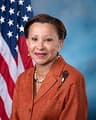
A Democratic bill with no cosponsors
Last activity — Referred to the Subcommittee on Aviation.
In committee
Introduced and handed to a committee in the chamber it started in.
The committee holds it, and most bills are never heard from again. A hearing or a committee vote would be news; silence is the usual outcome, and it kills the bill without anyone voting against it.
Its path through Congress
- Introduced
- In Committee
What this bill would do
This bill, known as the "AirFAIR Act," seeks to amend title 49 of the United States Code. It directs the Secretary of Transportation to create regulations to ensure airfare fairness following a disaster or emergency. The legislation aims to prevent ticket agents and air carriers from imposing excessive price increases on air tickets during these times. Specifically, it targets increases of 30 percent or more as being potentially excessive. Additionally, the bill requires the FAA Administrator to study and report on whether such unfair pricing practices have occurred.
Yes· 3 of 6
- Scored +7
Does this give people more protection from unfair business practices?
The bill prohibits air carriers and ticket agents from imposing excessive price increases during disasters or emergencies.
- Scored +5
Would households on low incomes be better off under this?
The bill protects low-income households from being price-gouged on essential travel during emergencies.
- Scored +5
Would middle-income households be better off under this?
The bill prevents middle-income families from facing sudden, excessive increases in airfare during disasters.
The opposite
No question was scored the opposite.
Who it would affect, and how
Potential Positive Impacts for People
-
Prevention of excessive price hikes: The bill would make it an unfair or deceptive practice for air carriers or ticket agents to charge excessive amounts for tickets during a disaster or emergency (Section 2(a)(1)).
-
Clear standards for price increases: The Secretary of Transportation would establish standards to define what is excessive, including a rule that any increase of 30 percent or more is treated as excessive (Section 2(a)(2)).
-
Increased oversight and transparency: The Administrator of the FAA is required to study if any ticket agents or carriers have used unfair practices during disasters and submit a report to Congress within one year (Section 2(b)(1) and (2)).
Potential Negative Impacts for People
- No negative impacts are explicitly stated in the text.
Groups and Interests Ranking
Every group the model scored this bill for, from -10 to +10. Tap or hover a score for the reason it gave.
- Demographic And Interest Groups
- Would households on low incomes be better off under this? — The bill protects low-income households from being price-gouged on essential travel during emergencies. Would middle-income households be better off under this? — The bill prevents middle-income families from facing sudden, excessive increases in airfare during disasters. Would people in cities be better off under this? — The bill provides price stability for travelers who may need to move or travel during regional emergencies.
- Economy And Finance
- Does this give people more protection from unfair business practices? — The bill prohibits air carriers and ticket agents from imposing excessive price increases during disasters or emergencies.
- Governance And Ideology
- Does this make what the government does easier for the public to see? — The bill requires the FAA Administrator to study and report to Congress on whether unfair pricing practices have occurred.
- Environment Energy And Infrastructure
- Does this improve help for people hit by a disaster? — By capping excessive airfare hikes, the bill helps mitigate the financial burden of travel during declared disasters.
- 9/19/2025
- Referred to the Subcommittee on Aviation.
- 9/18/2025
- Referred to the House Committee on Transportation and Infrastructure.
- Introduced in House