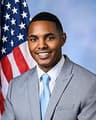
Ritchie Torres (D-NY)
Investing in Safer Traffic Stops Act of 2025
A Democratic bill with no cosponsors
Last activity — Referred to the Subcommittee on Highways and Transit.
In committee
Introduced and handed to a committee in the chamber it started in.
The committee holds it, and most bills are never heard from again. A hearing or a committee vote would be news; silence is the usual outcome, and it kills the bill without anyone voting against it.
Its path through Congress
- Introduced
- In Committee
What this bill would do
This bill, known as the "Investing in Safer Traffic Stops Act of 2025," directs the Attorney General to create a specific grant program. The goal of this program is to fund the enforcement of traffic violations by civilians or through traffic monitoring technology rather than law enforcement officers. The Attorney General must establish this program within 180 days of the Act's enactment. Funding is intended for local, State, or Tribal government entities to use for hiring civilians or purchasing technology. The bill authorizes $100,000,000 for each fiscal year from 2026 through 2031.
Yes· 3 of 8
- Scored +7
Does this change how police departments operate?
The bill directs the transition of traffic enforcement duties from law enforcement officers to civilians or automated technology.
- Scored +5
Would Black Americans be better off under this?
The shift from police enforcement to civilian or technological enforcement may reduce the frequency of potentially biased police traffic stops.
- Scored +5
Would Hispanic Americans be better off under this?
The shift from police enforcement to civilian or technological enforcement may reduce the frequency of potentially biased police traffic stops.
The opposite
No question was scored the opposite.
Who it would affect, and how
Potential Positive Impacts for People
-
Shift in Enforcement Personnel: The bill allows for the enforcement of traffic violations to be carried out by a civilian or traffic monitoring technology instead of a law enforcement officer (Section 2(a)). This could change how traffic laws are enforced in various communities.
-
Funding for Technology and Personnel: The program provides funds that can be used for the purchase of traffic monitoring technology and the hiring of civilians (Section 2(c)).
-
Financial Support for Local Governments: The Act authorizes $100,000,000 for each fiscal year from 2026 through 2031 to support these initiatives (Section 2(d)). This funding is directed toward local, State, or Tribal government entities (Section 2(b)).
Potential Negative Impacts for People
- No negative impacts are explicitly stated in the provided text.
Groups and Interests Ranking
Every group the model scored this bill for, from -10 to +10. Tap or hover a score for the reason it gave.
- Demographic And Interest Groups
- Would Black Americans be better off under this? — The shift from police enforcement to civilian or technological enforcement may reduce the frequency of potentially biased police traffic stops. Would Hispanic Americans be better off under this? — The shift from police enforcement to civilian or technological enforcement may reduce the frequency of potentially biased police traffic stops. Would households on low incomes be better off under this? — Reducing police traffic stops may decrease the frequency of high-cost interactions that disproportionately affect low-income individuals. Would people in cities be better off under this? — Municipalities can utilize these funds to implement new traffic monitoring technology or civilian staff.
- Social Issues And Justice
- Does this change how police departments operate? — The bill directs the transition of traffic enforcement duties from law enforcement officers to civilians or automated technology. Does this narrow racial gaps in how people are treated? — The bill aims to replace law enforcement officer traffic stops with civilians or technology, which can reduce racial profiling in traffic enforcement.
- Economy And Finance
- Is this likely to create jobs? — The bill provides funding for the hiring of civilians to enforce traffic violations.
- Governance And Ideology
- Does this leave more decisions to the states? — The bill provides grants to local, State, and Tribal government entities to implement their own enforcement programs.
- 1/17/2025
- Referred to the Subcommittee on Highways and Transit.
- 1/16/2025
- Referred to the Committee on the Judiciary, and in addition to the Committee on Transportation and Infrastructure, for a period to be subsequently determined by the Speaker, in each case for consideration of such provisions as fall within the jurisdiction of the committee concerned.
- Introduced in House